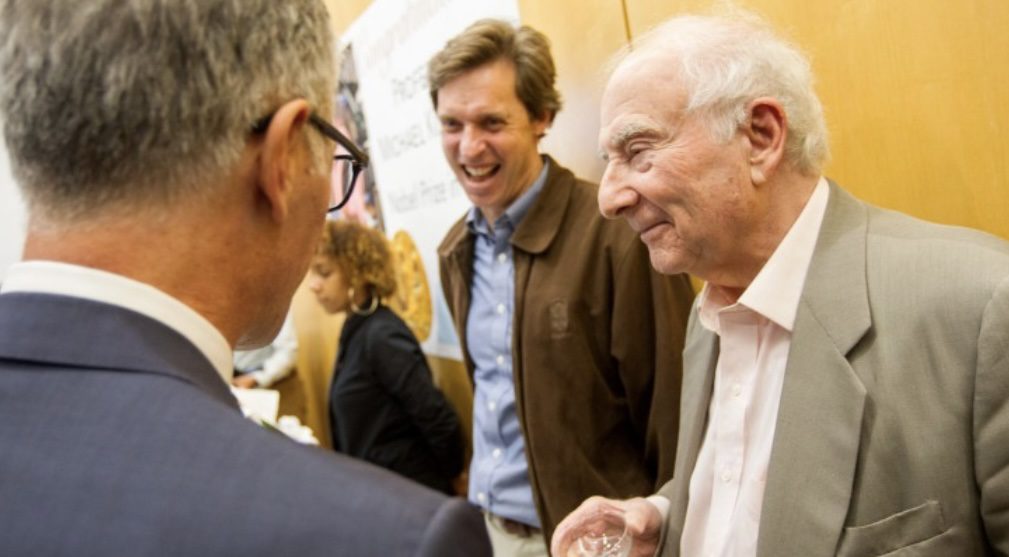
Leon Cooper was a scientist who made two major discoveries in his lifetime, and what’s most interesting is that he did it almost intuitively. He was never fully immersed in either subject. So how did he win the Nobel Prize for a theory that even Einstein couldn’t solve, and how did he make a breakthrough in neuroscience that revolutionized our understanding of memory and the brain from the very beginning? This article on bronx1.one will tell you all about it.
Childhood and Youth
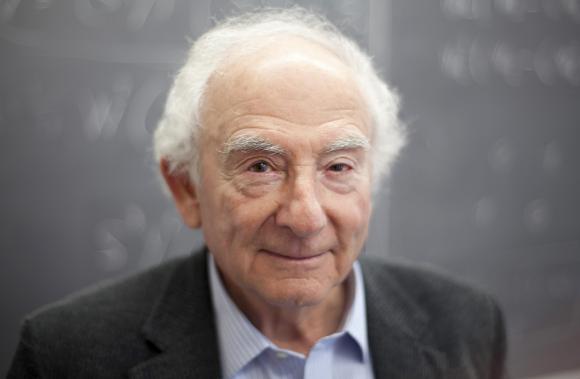
Leon Cooper was born in the Bronx on February 28, 1930. His parents immigrated to the U.S. from Belarus, which was part of the Russian Empire at the time. Their surname was Kupchik, but they changed it to Cooper in America. Leon’s father, Irving Kupchik, was a fierce opponent of the Bolsheviks and participated in protests and uprisings. After 1917, it became too dangerous for all Mensheviks to remain in Belarus, so Irving and his wife Anna went abroad. He found work as a typesetter at a printing press, while Anna took care of the children and the home.
When Leon was just 7 years old, Anna became seriously ill and passed away. Irving was devastated, and Leon and his younger sister Lorraine were taken in by a foster family for several years. Later, Irving remarried and brought the children back home.
From an early age, Leon showed a keen interest in science and loved conducting experiments. His passion almost led to a major fire when he was 12. He accidentally blew up a small cabinet while mixing different chemicals. Fortunately, his parents were nearby and quickly contained the aftermath of his chemical exploration.
Leon was a bright and diligent student, with a particular love for the hard sciences and hands-on chemistry and physics classes. He graduated from the Bronx High School of Science and Columbia University, where he earned a bachelor’s degree in physics in 1951 and a doctorate in 1954. After his studies, Leon Cooper began working at the Institute for Advanced Study.
A Legendary Discovery
The mysterious phenomenon of superconductivity had captivated many scientists and researchers since the early 20th century. Superconductivity was actually discovered by accident in 1911 by Dutch physicist and Nobel laureate Heike Kamerlingh Onnes. He was experimenting with mercury when he cooled it to -452°F, which is about 7 degrees above absolute zero. Physicists were amazed by this discovery because, in a superconducting material, current theoretically doesn’t dissipate.
Many of the 20th century’s most brilliant physicists, including Albert Einstein, Niels Bohr, Werner Heisenberg, Wolfgang Pauli, and Richard Feynman, tried to explain the mechanisms of superconductivity, but without success.
Dr. Cooper, along with two colleagues from the University of Illinois — John Bardeen and J. Robert Schrieffer — finally solved the puzzle. The theory they developed is known as “BCS” theory, named after their initials.
Dr. Bardeen was the most experienced of the trio at the time. He had already established his reputation as a brilliant scientist for his invention of the transistor in 1947, a crucial step in the development of computer technology and electronics. For this, he received the Nobel Prize in 1956. Inspired by his success, John Bardeen decided to tackle another scientific challenge and solve the mystery of superconductivity. He brought Dr. Schrieffer on board, and then reached out to Dr. Cooper, who was working at the Institute for Advanced Study in Princeton and had a solid reputation among his peers.
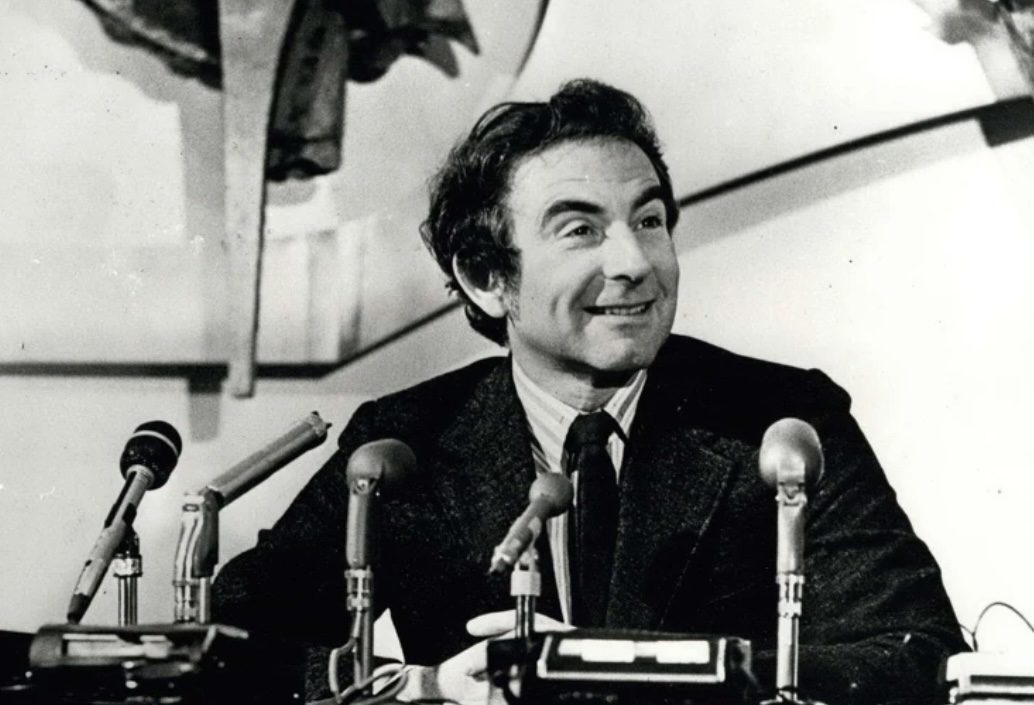
Leon Cooper later recalled that this was his first contact with the subject of superconductivity. He noted that had he known about the numerous attempts by other famous scientists to crack the problem, he might not have accepted Dr. Bardeen’s offer. The main question the scientists were trying to answer was, “Why is superconductivity only observed at low temperatures and only in certain metals?”
After a year of failed attempts, deep thought, and hypotheses, Dr. Cooper found the answer. He proposed that electrons could attract positive ions in the atomic lattices of metals. This creates an imbalance of charges, making one side of the lattice more positive. In a superconducting state, this is enough to attract other electrons passing through the metal. Each electron interacts with another electron in the atom, forming bonds. Many such electron pairs, now known as **Cooper pairs**, can exist in the same space, allowing superconductivity to occur. But these bonds are quite weak. If the metal’s temperature rises, the electrons gain more kinetic energy, and the bond is lost. This is why superconductivity can only exist at low temperatures and in metals with the right lattice structure.
Leon Cooper wrote an article with his preliminary theory and results and published it in “Physical Review” in September 1956. Based on his work, Dr. Schrieffer developed a mathematical formula in early 1957, scribbling it “on the fly” during a subway ride.
Shortly after, Cooper serendipitously ran into Schrieffer at the Champaign airport as both were returning from a conference. The only topic of conversation was their superconductivity research. As they exchanged their assumptions and hypotheses, the scientists realized they had made a real breakthrough. In a 2010 article for the “World Scientific Review,” Dr. Cooper recalled, “We jumped for joy, oblivious to the stares of others in that airport on that cold winter evening.”
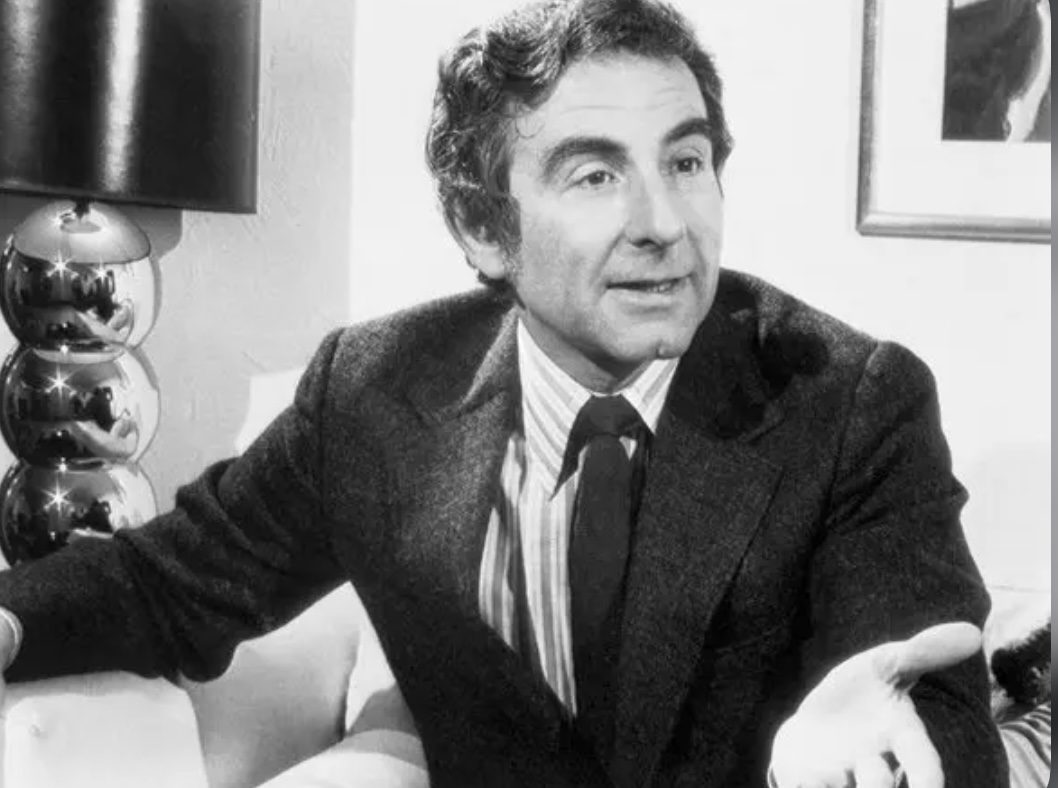
After many months of refinement, Drs. Bardeen, Cooper, and Schrieffer submitted their article to “Physical Review” in July 1957. It was published in December under the title “Theory of Superconductivity.” Subsequent experiments confirmed the B.C.S. theory, and in 1972, the scientists were awarded the Nobel Prize. Dr. Bardeen became the only person in history to receive two Nobel Prizes in physics.
A Breakthrough in Neuroscience
After solving one of the most complex problems in physics, Cooper turned his attention to neuroscience. In 1973, the interdisciplinary Center for Neuroscience was founded at Brown University, where Cooper was working, and he was appointed its director. Along with his graduate students, Elie Bienenstock and Paul Munro, he created a model known as the Bienenstock–Cooper–Munro (BCM) theory, which describes changes in the strength of neural connections in the brain during learning. His groundbreaking theoretical work in neural networks placed Cooper alongside other physicists like John Hopfield and Geoffrey Hinton—2024 Nobel laureates in physics who developed algorithms that model the learning process in the brain.
Back in 1949, Canadian psychologist Donald O. Hebb had proposed a theory that learning is based on the random generation of electrical signals between neurons, which strengthens their synaptic connections. His concept of synaptic plasticity—that “cells that fire together, wire together”—quickly gained recognition. However, questions remained about the mechanisms of memory, specifically why the connections between active neurons don’t become fully saturated and lose their ability to store information.
It wasn’t until the early 1970s that scientists realized that memory retention could be improved if synapses could be weakened, not just strengthened, through the synchronization and strength of neuronal electrical signals. Together with his graduate students, Cooper conducted a detailed analysis of how this weakening and strengthening could occur without saturating the connections. They hypothesized that as synapses approach saturated levels of activity, electrical signals become less effective, and the synaptic connections revert to a less saturated state. Thus, the connections fluctuate between saturated and unsaturated, much like a skier gliding between two fences without hitting either.
The theory was published in the “Journal of Neuroscience” in January 1982. Mark F. Bear, a professor of neuroscience at the Massachusetts Institute of Technology, called it a “fundamental” theory in neuroscience.
Personal and Interesting Facts About the Scientist
- As a child, Leon Cooper once told his father he wanted to be a physicist because there was no other way to know about everything.
- Dr. Cooper, who worked at Brown University for many years, was a notable figure on campus, where he was often seen driving a 1968 Chevrolet Camaro convertible.
- Cooper taught abroad extensively and had a special interest in teaching physics to humanities students.
- It’s said that the character Sheldon Cooper, played by Jim Parsons on the popular TV show “The Big Bang Theory,” was partially named after Dr. Cooper.
- Leon Cooper passed away at his home in Providence, Rhode Island, on October 23, 2024, at the age of 94.