

Monroe University is a private educational institution with a history of over 90 years, founded and still led by the Jerome family. The university is a recognized leader in urban and international education. It’s known as a place where quality education is combined with practical experience, where students from diverse backgrounds find support, and where graduates find real opportunities for professional success. Learn more on bronx1.one.
Founding and Development
The history of this educational institution began in 1933, when teacher Mildred King founded Monroe Secretarial School in the West Farms section of the Bronx. The institution was exclusively for women and consisted of four small classrooms where only seven female students studied. The school was named after nearby James Monroe High School. King hoped that graduates of the high school would easily transition to her newly founded school. The first classes were held in a former ballroom at the Starlight.
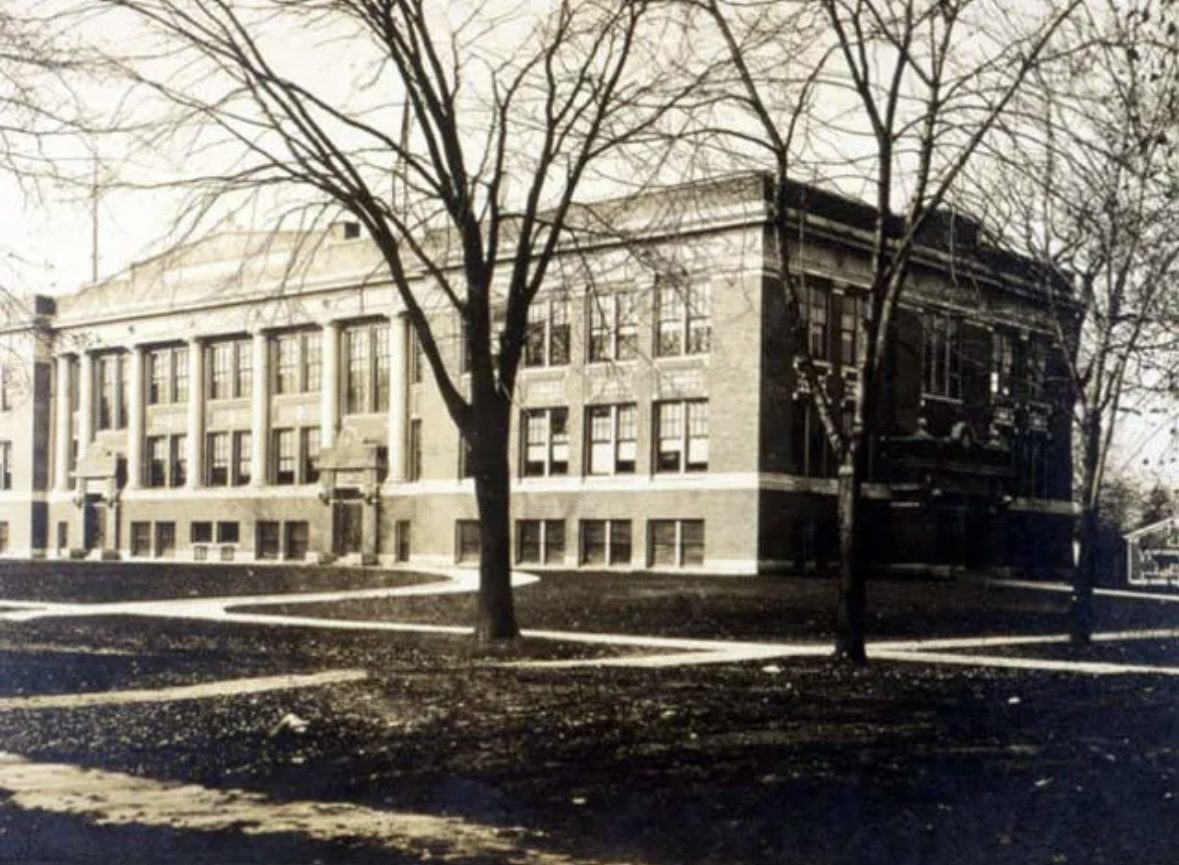
In 1963, due to an expansion of the curriculum, the institution was renamed the Monroe Business Institute. Then, in 1972, it became an accredited junior college, authorized to award associate degrees. By this time, new classrooms had opened on Morris Avenue. The old building in West Farms was finally closed in 1977, and all educational programs were moved to the Fordham Road area of the Bronx.
In July 1990, the educational institution was officially accredited by the Middle States Commission on Higher Education and became known as Monroe College.
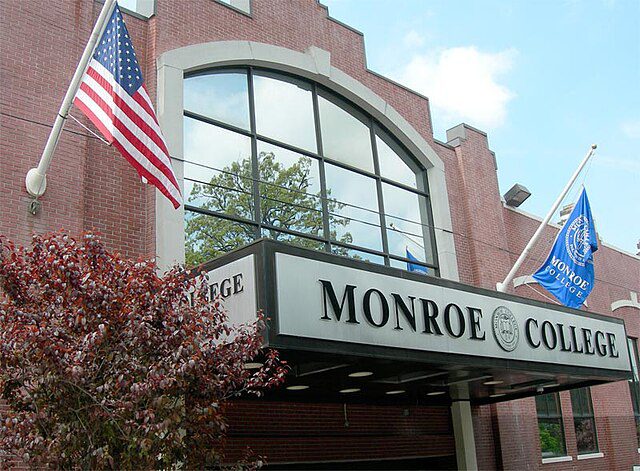
In 2007, in response to growing interest among students from the Caribbean, Monroe opened a new campus on the island of St. Lucia. The institution’s historical development culminated in July 2024, when the college officially received university status. But we’ll talk more about that in a bit.
Accredited Programs
Monroe University offers a wide range of academic programs and specializations that have been developed and expanded over the last few decades. Today, the university employs over 250 faculty members, both full-time and visiting. The student-to-faculty ratio is 15:1, which ensures a personalized approach to learning. The academic year is divided into three standard semesters, each lasting 15 weeks.
The main academic programs are:
- Medical and Nursing Programs.
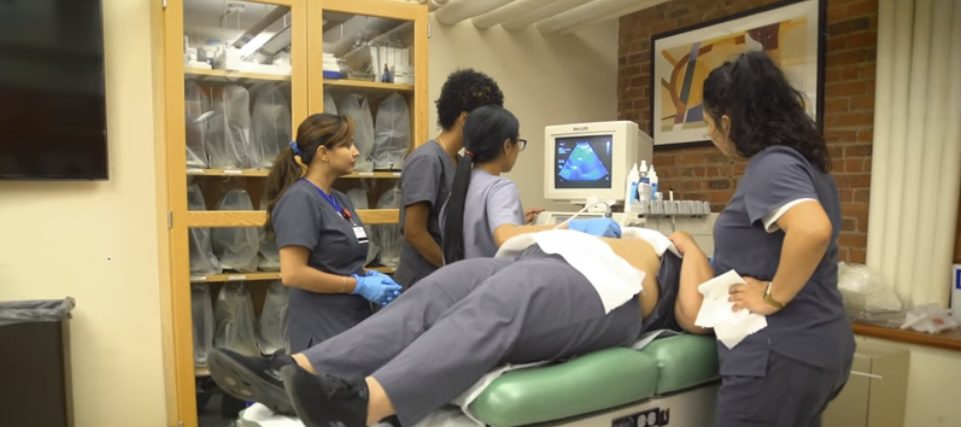
The School of Allied Health Professions was founded in 2000. It offers both clinical and non-clinical programs. It includes the School of Nursing, which trains students in three main areas:
- Practical Nurse Certificate (LPN);
- Associate in Applied Science (AAS) degree;
- Bachelor of Science in Nursing (BSN), which qualifies for a registered nurse license.
Since 2006, the nursing education programs have been licensed by the Office of the Professions of the New York State Board of Regents.
- Business and Information Technology.
In 1996, Monroe College launched bachelor’s degree programs in accounting, business management, and information systems. In 2005, the institution was approved to start a Master of Business Administration (MBA) program. Additionally, it offers associate and bachelor’s degree programs in information technology.
- Culinary Arts.
This school was established in 2009. It offers associate degree programs in culinary arts, as well as baking and pastry arts. Culinary students gain practical experience by preparing meals and managing the student-run restaurant.
- Education Programs.
The School of Education was founded in 2011. It prepares students for a bachelor’s degree in early childhood education. Students complete their practical training in nurseries, day care centers, and facilities for children with special educational needs. The school collaborates with the AmeriCorps Jumpstart program, which supports early education in low-income communities.
Monroe University also offers additional certification programs and courses through the Monroe Online platform. Online courses include:
- medical sciences;
- business and accounting;
- criminal and social justice;
- education;
- hospitality management;
- information technology;
- liberal arts.
Student Life
Monroe University has three main campuses, each with its own atmosphere, specialization, and role in student life.
- The Bronx Campus.
Since 1967, the campus in the Fordham area has been the college’s main educational base. It’s located in the heart of a bustling urban environment, consisting of seven buildings near a shopping district with over 300 businesses. This blend of education and active commerce creates a unique setting where learning is easily complemented by access to modern city services, internships, and jobs.

- The New Rochelle Campus.
Just a 30-minute train ride from Midtown Manhattan, in the scenic suburb of New Rochelle, is Monroe University’s second campus. It houses six buildings, including the modern Culinary Arts Center, which opened in 2006. Its highlight is the student-run restaurant, The Dining Lab, which has received critical acclaim and become a hallmark of hands-on learning.
In 2011, the Monroe Athletic Complex (MAC) opened here—an innovative sports center that replaced a former ice rink. The centerpiece is a 45,000-square-foot arena with a wooden basketball court, running tracks, spacious locker rooms, coaches’ offices, and spectator stands. This is where the Monroe Mustangs basketball and volleyball teams play. The Locust Hall and Gaddy Hall residence halls not only provide students with comfortable living spaces but also integrate residential functions with academic ones. Locust Hall is a six-story, 94-unit building with a landscaped terrace, common areas, and its own garage. Gaddy Hall accommodates 300 students and is also home to the business school and the accounting department.
- The St. Lucia Campus.
In 2018, the college opened a third campus on the island of St. Lucia, near the capital city of Castries. This is the International Institute for Professional Training, which offers local residents practical certification programs to start a career in tourism and hospitality. The island campus not only expands the college’s geographical reach but also highlights its focus on global development and inclusive education.
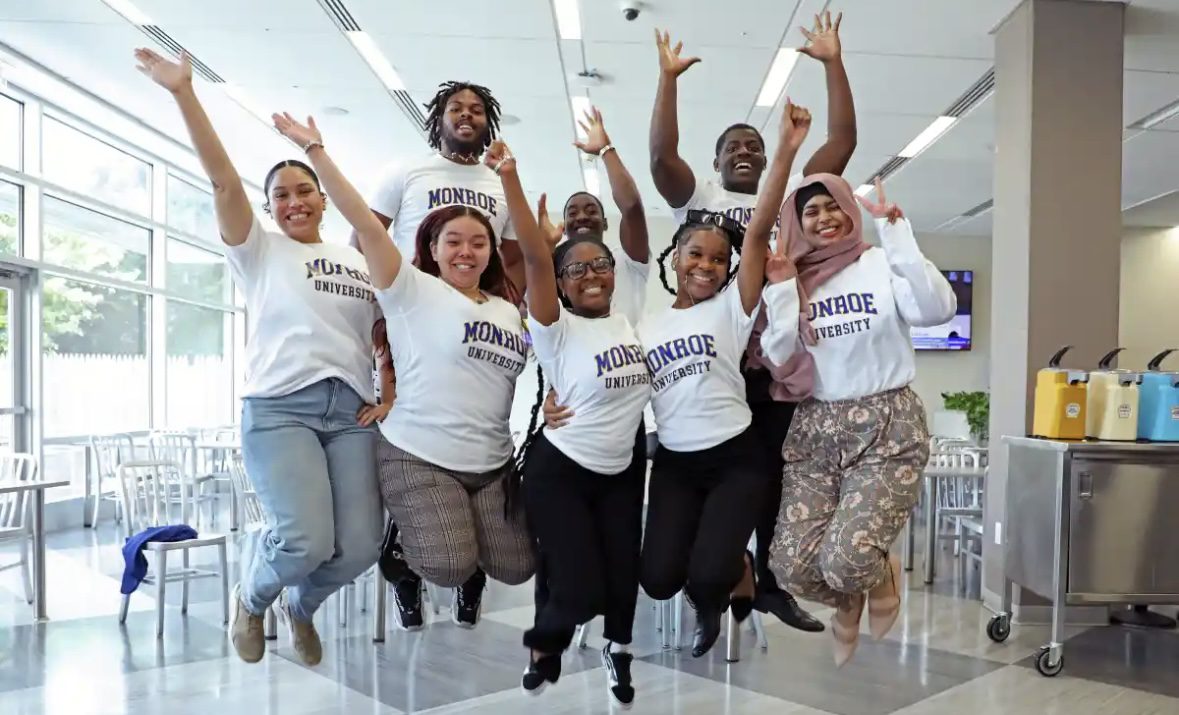
Around 64% of students at Monroe University are women, and 36% are men. Nearly half of the students are African American (48%), and another 44% are Hispanic or Latino, making this university an example of true multiculturalism. In total, over 8,000 students from 93 countries study here, which is why it’s jokingly called a “mini United Nations.”
Becoming a University and Community Involvement
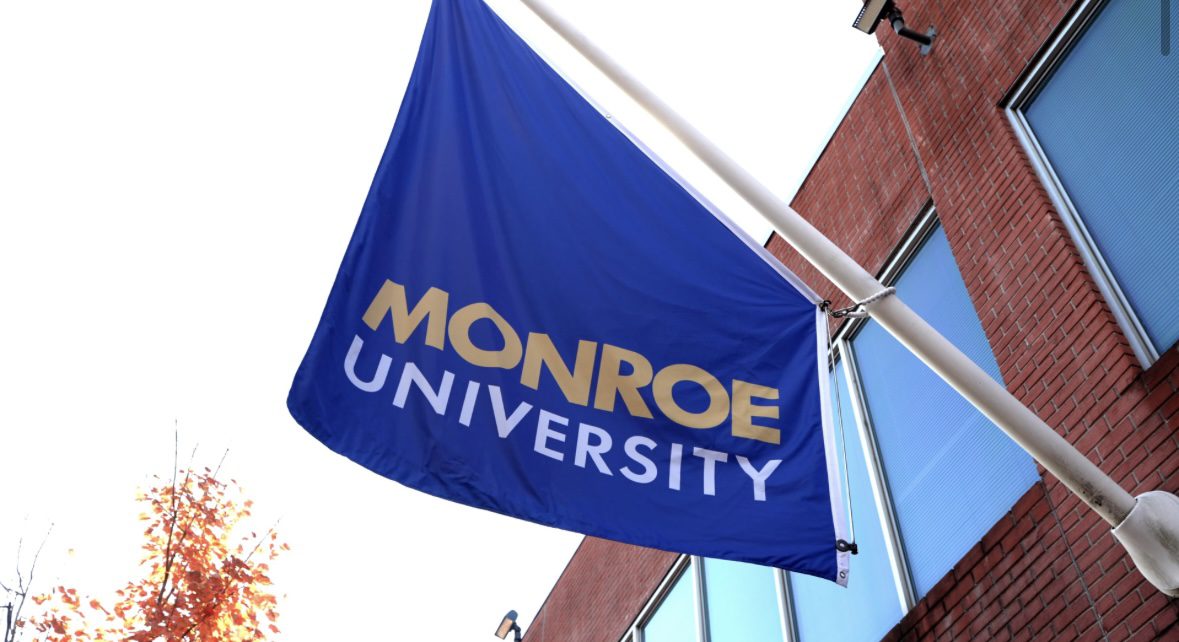
Since 2024, the institution has been officially known as Monroe University. This decision was made by the New York State Department of Education, and it’s more than just a name change. As President Marc Jerome explained, the new name better conveys the scale and level of education the institution provides, especially in the eyes of an international audience, where the word “college” is often perceived as something in between a high school and a university.
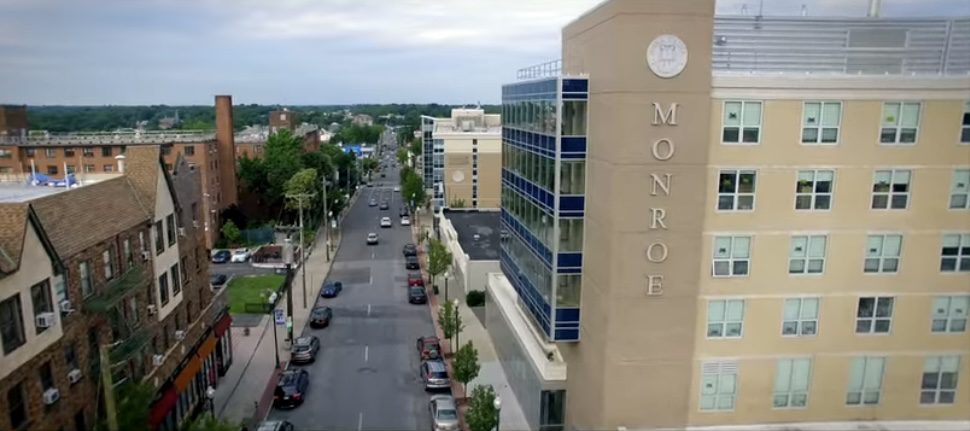
The name change was not a simple process; everything had to be updated, from signs and documents to online platforms. But the result was worth it. The atmosphere at the university filled with pride and enthusiasm. And it was met with a response: in the fall of 2025, the university recorded a record number of new students.
“It’s hard to go into a hospital, a restaurant, an IT company in this city where we don’t have an alum or an alum’s relatives working,” Jerome notes with a smile.
Monroe University became the fourth institution in the Bronx to make a similar transition—following Manhattan College, College of Mount Saint Vincent, and Mercy College. Monroe never loses sight of its mission and the borough it calls home.
“We were, are, and will be a vital, stable part of the Bronx for a very long time to come,” Jerome concludes.
Unlike many universities that focus primarily on high school graduates, Monroe has deliberately expanded its pool of potential students. The university actively recruits adults raising children, formerly incarcerated individuals, and parents of high school students. This inclusive approach makes higher education accessible to those who are often left out of the traditional academic system.
President Jerome emphasizes that the university’s commitment goes beyond education. Monroe is an active participant in the life of the borough, supporting initiatives in public safety, sanitation, and urban infrastructure.
“The Bronx is our home, which makes this honor so special to us. This borough is part of our DNA—it’s where we started, and where many of our students, faculty, staff, and alumni live, learn, and work today,” said President Jerome.