

On June 30, 2024, Salif Mane won the U.S. Olympic Trials in Eugene, Oregon, with a personal best of 17.52 meters. This victory opened the door for him to the world of Olympic sports. In Paris, the athlete took sixth place overall. In this article, bronx1.one will explain how a simple guy from the Bronx with Senegalese roots managed to reach such heights and become known worldwide.
From Childhood in Sports
Salif Mane was born to Senegalese immigrants Thierno Mane and Fatou Seyé. The couple moved to the Bronx in the 1990s. His father worked at a restaurant in Rockefeller Plaza in New York, while his mother braided hair at a local salon. From a young age, Salif was passionate about sports. In the first grade, he was attracted to track and field. He started as a runner but quickly realized it wasn’t for him. He liked to run but knew he lacked the necessary speed. So, Salif turned his attention to jumping, particularly the triple jump.
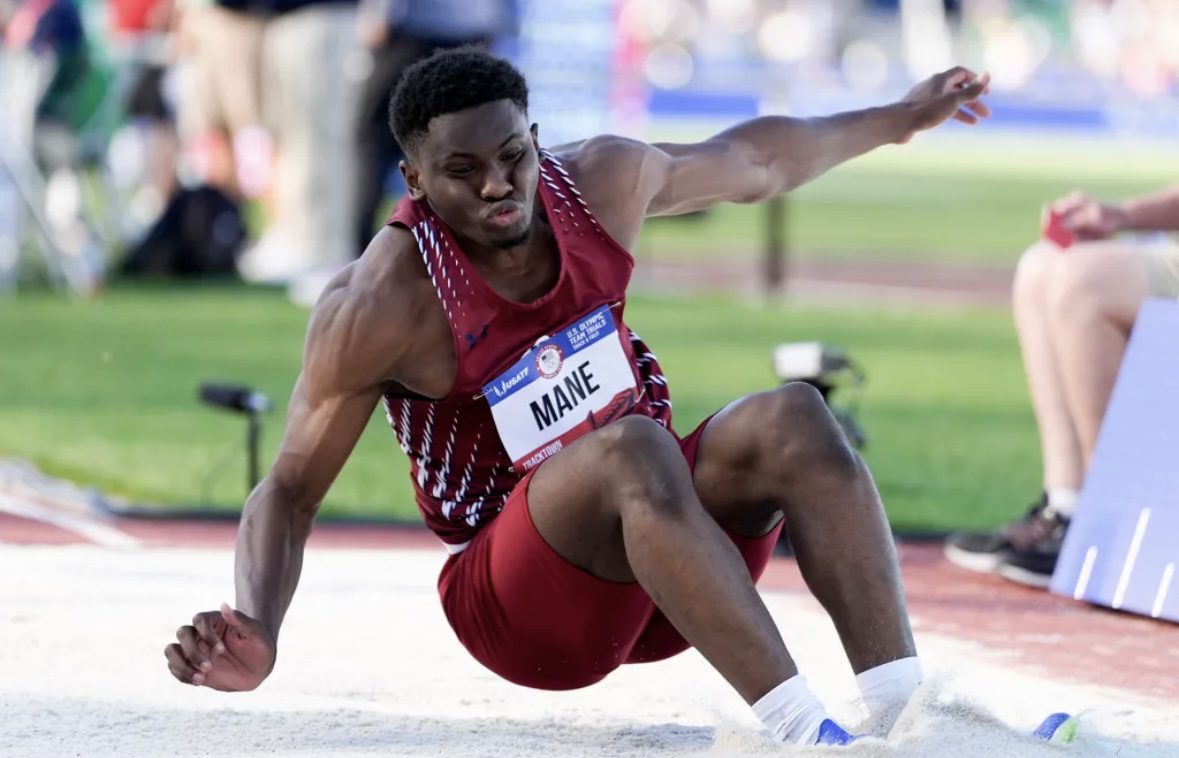
It all started with an interest—he watched videos on YouTube to learn the correct technique, and then he began training with a coach. This combination yielded results. Competing for his Bronx high school, Mane made it to the state championship finals, and that’s likely where he was noticed by scouts from Fairleigh Dickinson University (FDU), who often look for promising athletes at such high school competitions.
In his senior year of high school, Salif significantly improved his results—he jumped over 50 feet in the triple jump, earned 4 stars, and entered the top ten in the U.S. in his discipline. With these results, Mane could have aimed for a spot at better American universities, but he ultimately chose FDU, which isn’t known for significant achievements in NCAA Division I track and field competitions.
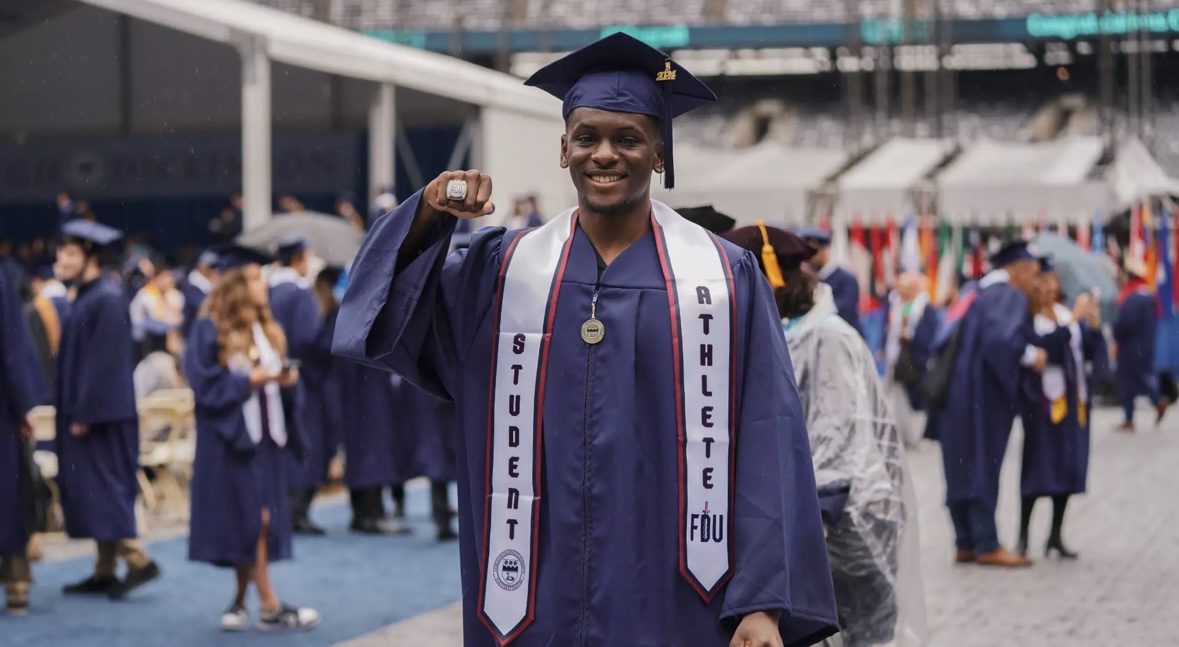
At the university, Salif immediately began to prove his skill. In his freshman year, he placed third in the long jump at the conference championships and won the triple jump. Since then, within his NEC conference, Mane has never lost. Over four years of competition, he was a champion in the triple jump and was almost always the best in the long jump as well. His only losses occurred at prestigious events like the NCAA, and only in the final stages.
Undying Parental Support
For the last few years, Salif Mane’s competition days have started with the same ritual: he grabs his phone, opens his voicemail, and plays a saved message from the person who, though no longer with him, still inspires him to push forward.
“Hello, Salif Mane. How are you? I hope you are doing well. I am praying for you. Good luck.”
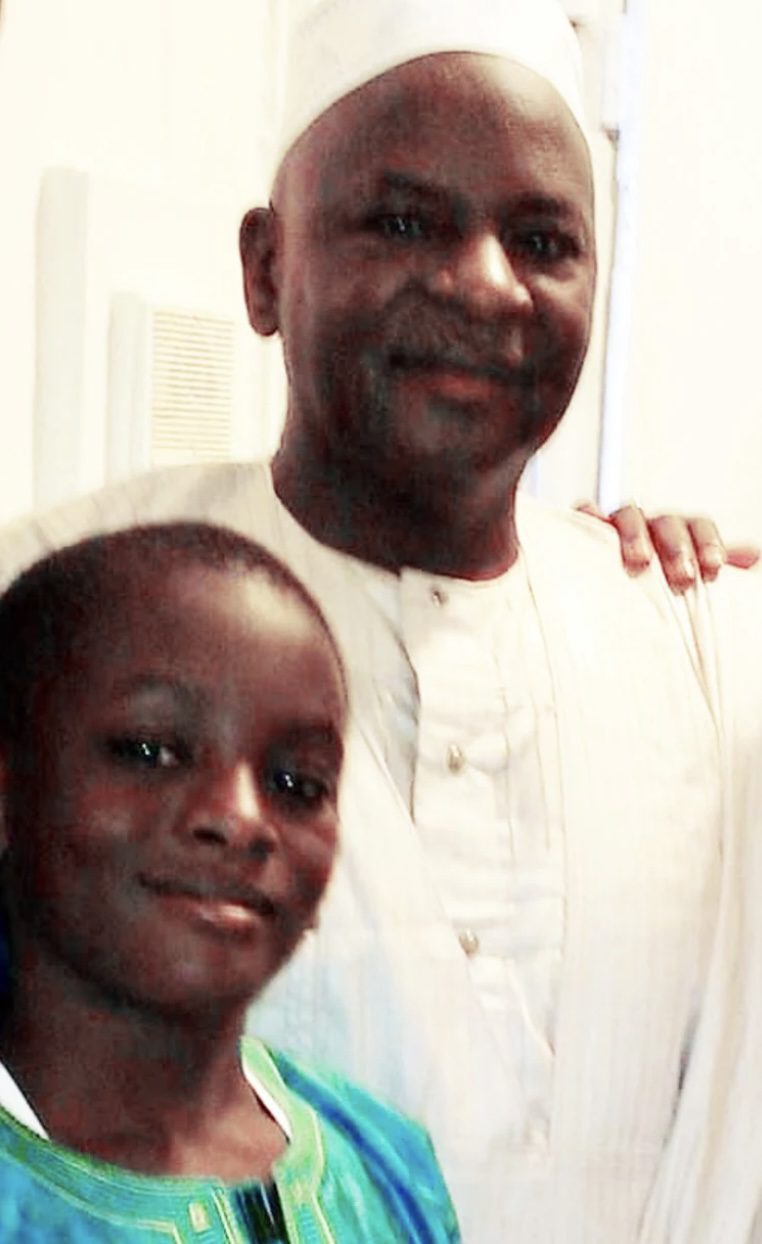
These are the words of his father, Thierno Mane, a man whose love and support remain with Salif even after his passing. At the beginning of the pandemic, Thierno Mane contracted COVID-19 and, after a long battle, died at the age of 67. His mother has also always supported Salif. He shows her videos of his jumps, explaining the rules and techniques—but he misses his father.
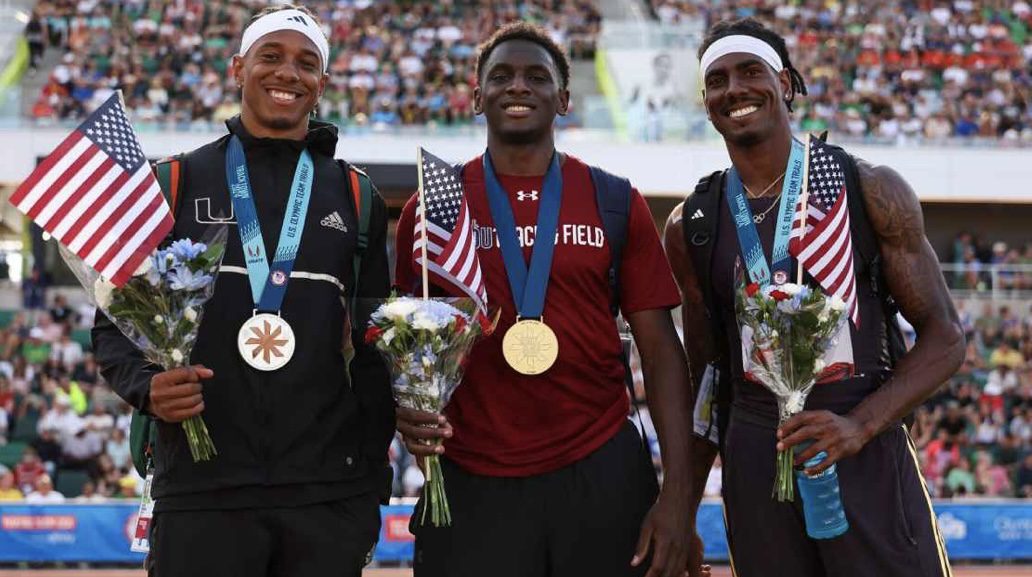
At the Olympic trials in Oregon, Mane achieved the best result of his career—17.52 meters. This jump not only secured him the gold medal and a ticket to the Paris games, but it was also the sixth-best result in the world at that time. FDU, not the most famous university in track and field circles, had unexpectedly produced an Olympic medal contender.
“I couldn’t believe it. It was crazy,” Salif recalls the moment the number 17.52 appeared on the scoreboard.
It was a pure explosion of emotion—a contrast to the losses he had experienced in recent years. Salif admits that his father was his biggest fan. He remembers how Thierno proudly showed his colleagues videos of his son’s first appearances on television. When Salif first made the news, his dad even made him record a video of the screen to have his own copy.
“In high school and my freshman year, I probably did sports more for him. I just wanted to make him happy, I wanted him to be proud of me,” Mane says.
And today, performing at the highest level, he continues to jump with the same goal—so that his dad, even from heaven, can see how far he has soared.
Olympic Idols and a Favorite Coach
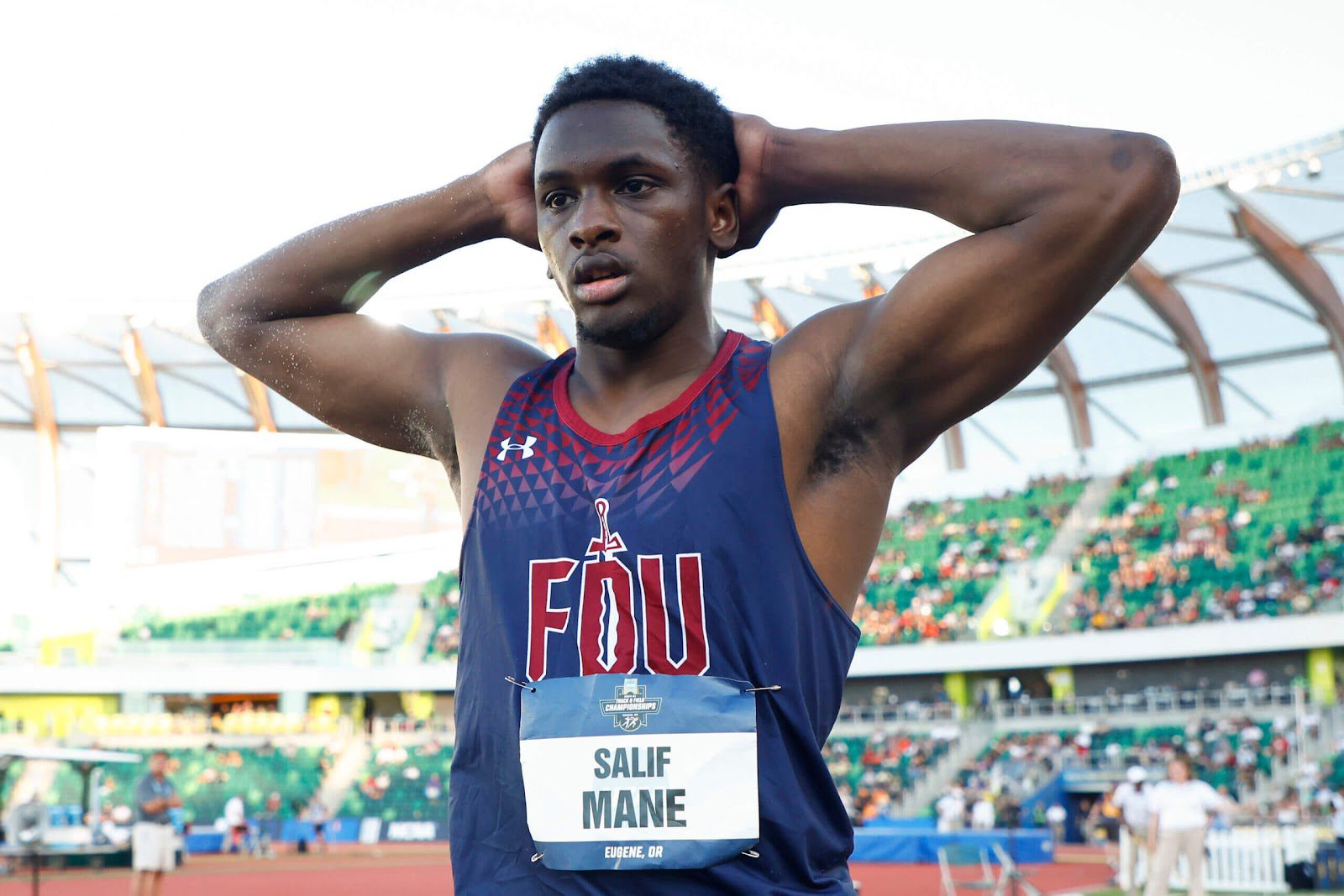
Salif Mane always followed the legends of the triple jump: Christian Taylor, who won Olympic gold in London and Rio; Will Claye, a two-time silver medalist; and Pedro Pichardo, the current champion from Tokyo who competes for Portugal.
But at the U.S. domestic trials, Mane managed to surpass two of these legends—Taylor and Claye—and earned the right to represent the country at the Paris Olympics. Incredibly, seasoned athletes with great achievements, Olympic medals, and championship titles were bested by a little-known guy from the Bronx.
Salif was very nervous at the trials. It’s not surprising. These athletes had always been his role models. He watched their jumps and recorded videos, and now they were watching him. After the trials, Salif admitted that the inspiration from his idols helped him achieve such an impressive result. Thanks to this energy, he gave his all on his final jump. He was also struck by their respectful attitude toward him as a competitor. Despite the fact that few people in the world of professional sports knew Salif, all the famous athletes were very friendly and welcoming to him. They cheered him on—and that pushed him to make that special jump.
At the competition, he was supported by his longtime mentor, Leroy “Sollie” Solomon, a well-known track and field coach from New York.
Mane’s success is truly remarkable, especially considering that FDU doesn’t have a proper outdoor training facility. As a result, he and his coach often trained at nearby schools or on public tracks.
“It wasn’t easy, but that’s how we learned to get by in the Bronx,” Solomon adds. “We know how to make things work and do our best in any conditions.”
Success at the Paris Olympics
When 22-year-old Salif stepped onto the Stade de France for his debut Olympic qualifying jump, his father’s words echoed in his head again. Salif Mane finished sixth in the men’s triple jump final at the Paris Olympics. His best result of 17.41 meters came on his final, sixth attempt. This jump was his longest of the tournament. Earlier, on his first attempt, he jumped 17.28 meters—enough to advance to the final round and get three more attempts.
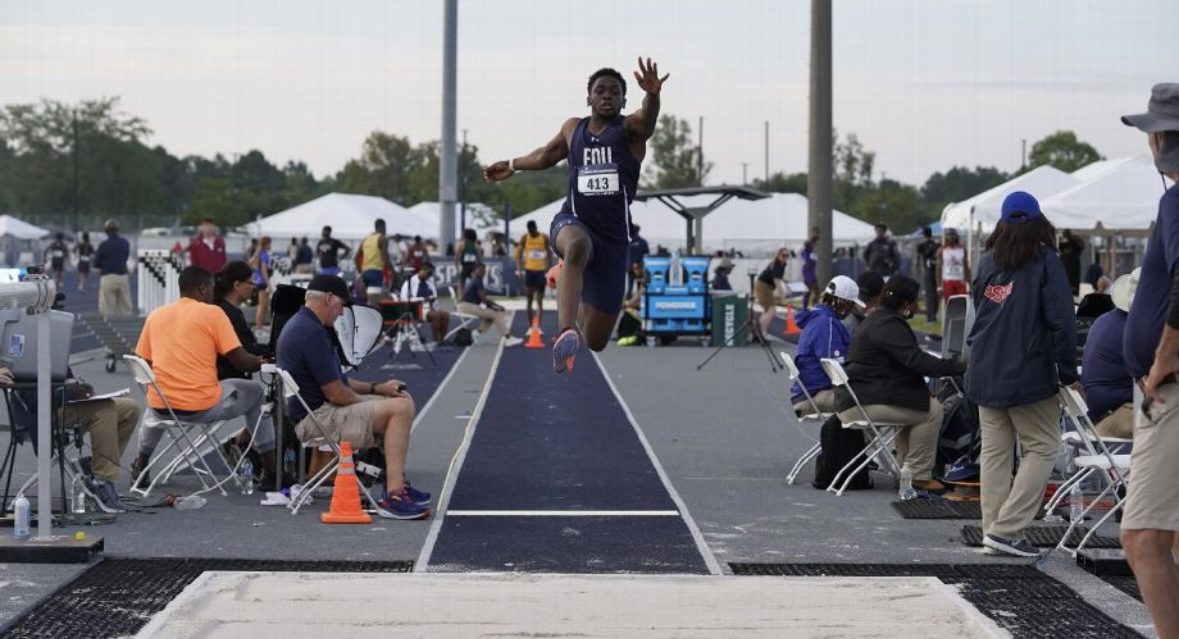
“For us, Salif is a true champion,” said Bradford Herlbut, Senior Assistant Vice President and FDU Director of Athletics. “The fact that he overcame so many difficulties and became the only American in the final is a huge accomplishment. We are all incredibly proud of him. He is an example of everything we value in our community: integrity, pride, resilience, respect, and unity.”
Salif Mane’s rise to the world stage began at the 2024 NCAA championships in Eugene, where he won the national gold with a result of 17.14 meters, beating another future Olympian, Russell Robinson from the University of Miami, by just one centimeter. A few weeks later, he surprised again by winning the U.S. national team trials with a jump of 17.52 meters—a personal record that earned him a trip to Paris. Salif Mane had the honor of throwing out the first pitch at Yankee Stadium on Independence Day during a New York Yankees game three days after his triple jump victory at the U.S. Olympic trials. Throwing the first pitch in front of a packed Yankee Stadium as a lifelong fan of the team was a thrilling experience for Mane, but he said he didn’t feel fear—only excitement.
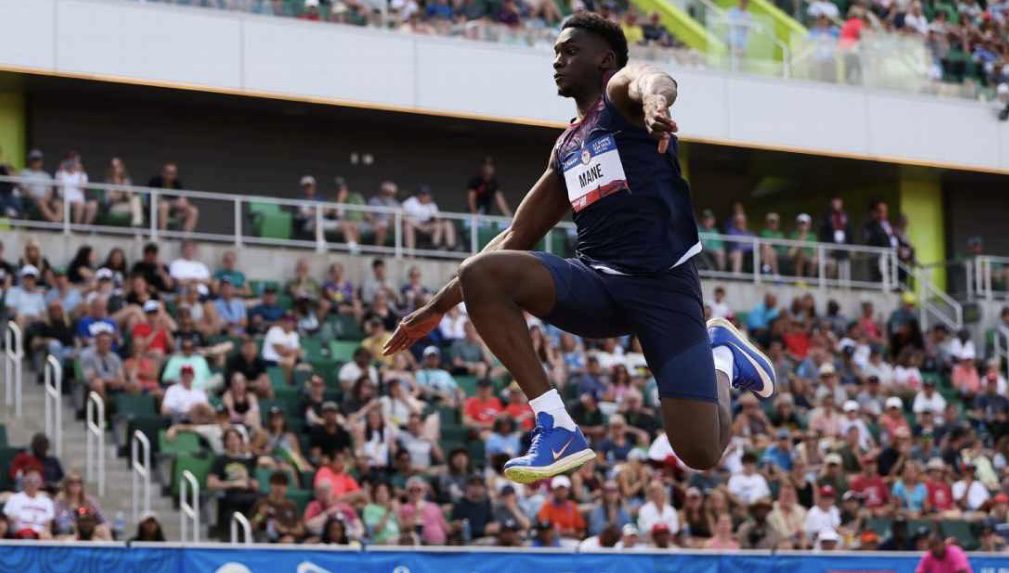
Salif became only the third student in history to win both the NCAA championship and the Olympic trials in the triple jump in the same year. In the 75-year history of FDU track and field, he is the most decorated athlete. He is also only the fourth university athlete ever to represent Team USA at the Olympics, and the first since 1988.