

Today, an Estey piano is one of the most sought-after lots at antique auctions and a point of pride for respected collectors. The impeccable quality, elegant design, and charm of a long history make these instruments unique and authentic. At the end of the 19th and beginning of the 20th century, there were countless piano factories in New York, but the Estey Piano Corporation is arguably the most famous. In this article on bronx1.one, we’ll tell you about its origins, architectural features, and history of development.
Expanding the Piano Market in New York
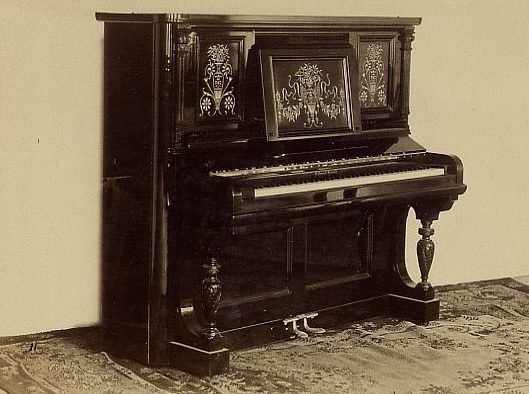
In 1889, the magazine Musical Courier noted that the eastern part of New York, located beyond Harlem and east of Third Avenue, was rapidly transforming into an important center for piano production. The magazine believed that the construction of the Estey factory was the decisive impetus for this process.
By the beginning of the 20th century, the area was literally filled with piano manufacturers. Among them were Ludwig, Kroeger Piano Company, Henry Spies, Haines Brothers, Schubert Piano, Newby & Evans, and Decker.
“The Bronx became a perfect place for artisanal production thanks to a large number of Italian and German immigrants, many of whom were experienced craftsmen,” wrote historian Harvey Lubar.
By the end of the 19th century, piano manufacturing had become the signature industry of the Bronx. In 1908, there were already 24 piano factories in the area south of 149th Street. According to data from the same year, more than half of all New York’s factories were located in the Bronx, providing two-thirds of the annual production. By 1913, their number had grown to 40, and another 14 companies were manufacturing parts. In 1919, according to a publication in the Times, the Bronx had become the main center of New York’s piano industry: out of 191 companies in the country, 63 were operating here, producing over 115,000 instruments annually and employing over 5,000 people. Of these, 43 firms were concentrated in the Mott Haven area, south of 149th Street. These businesses produced pianos of varying quality—from inexpensive to high-end instruments.
Many firms relocated to the Bronx from Manhattan. However, by 1925, due to an industry downturn and consolidation, the number of factories here had shrunk to about 40. By the 1930s, most of them had also disappeared, although a few survived the Great Depression. The last remaining company in the industry was Krakauer, but it too ceased to exist by the mid-1970s.
Founding of the Estey Piano Corporation
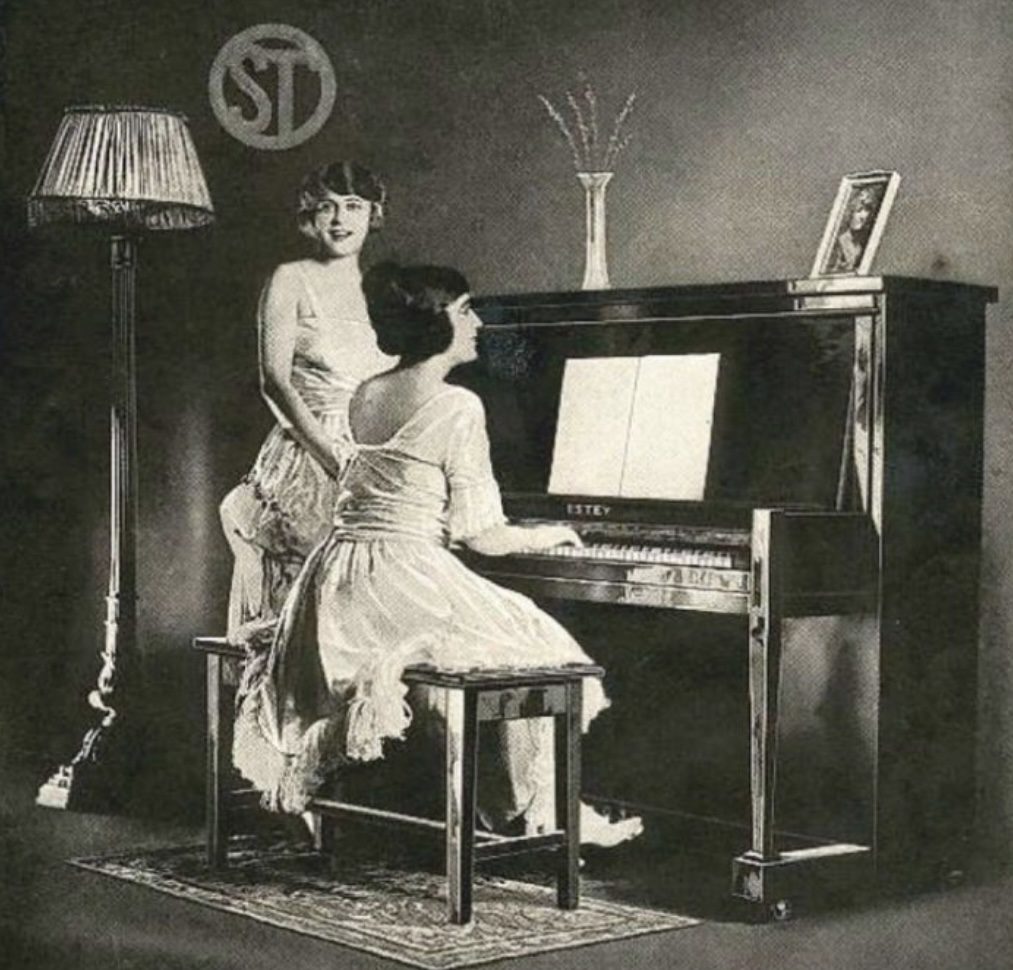
The Estey Piano Corporation was actually founded in 1869 by Jacob Estey with his partners—Levi Fuller, John Boulton Simpson, and Julius Estey—although this exact name didn’t appear until much later.
Even earlier, in 1846, Jacob Estey and Levi Fuller created the Estey Organ Company in Vermont, which specialized in manufacturing reed organs, and later, electric organs. Their products became famous in the U.S. as part of the early American organ tradition, with production located at a mill with a water dam.
When Estey Organ merged with Arion Piano, the Estey Piano Corporation was formed—a company that combined the expertise of both brands and their customer bases.
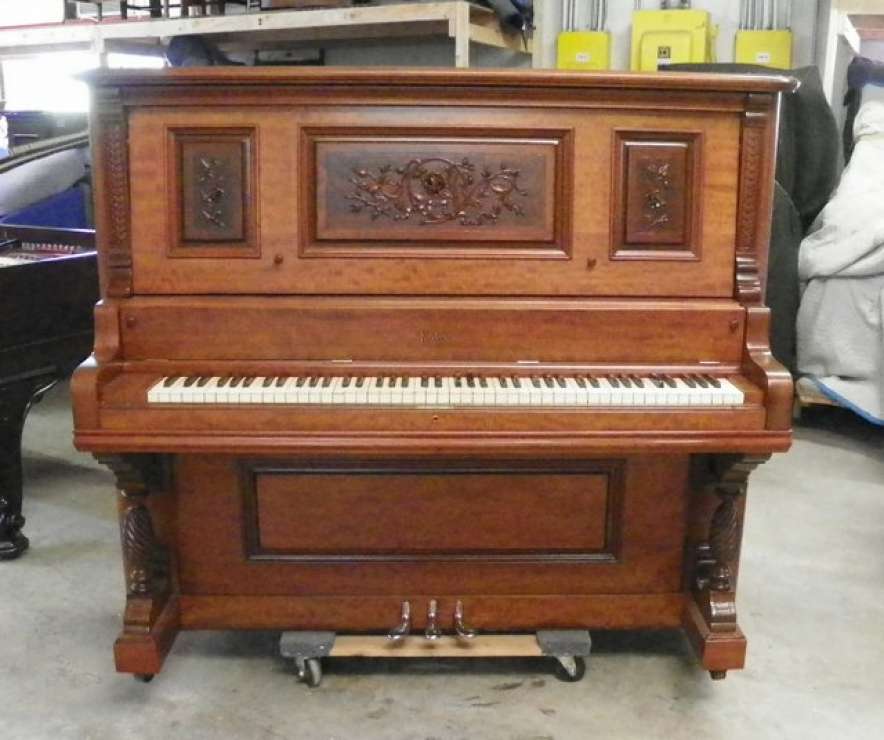
Throughout the 20th century, various piano models were produced under the Estey brand, including those with names like:
- Alexander;
- Anderson Bros;
- Chase & Baker;
- Lancaster;
- Malcolm Love;
- Metropolitan;
- N.W. Nelson;
- Schumann;
- Settergren;
- Vough;
- Wegman;
- Drachman;
- Meldorff;
- Bellmann;
- Soward;
- Purcell;
- Wanamaker.
Estey Piano’s instruments were distinguished by their high-quality craftsmanship, thoughtful design, and durable materials, and were created in various styles, from classical to modern.
Architectural and Interior Features
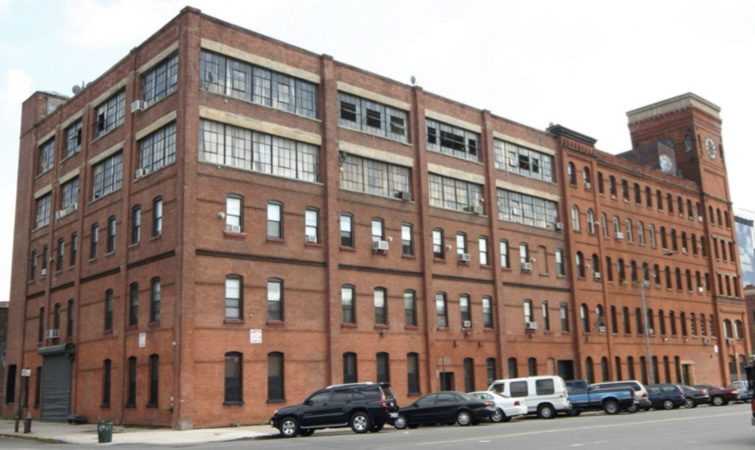
The Estey Piano factory is a prime example of late 19th-century industrial architecture. Its original part consists of a clock tower and two building wings that stretch north along Lincoln Avenue and east along Bruckner Boulevard. The building’s narrow width (about 40 feet) and its L-shape were designed to maximize natural light, as this was before the widespread use of electricity.
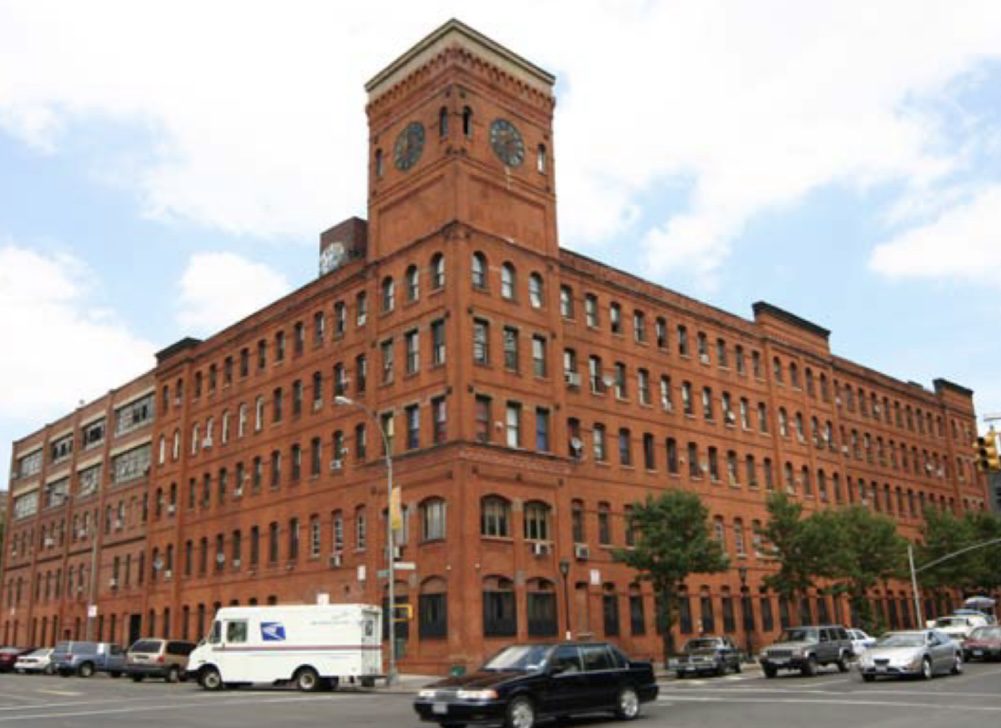
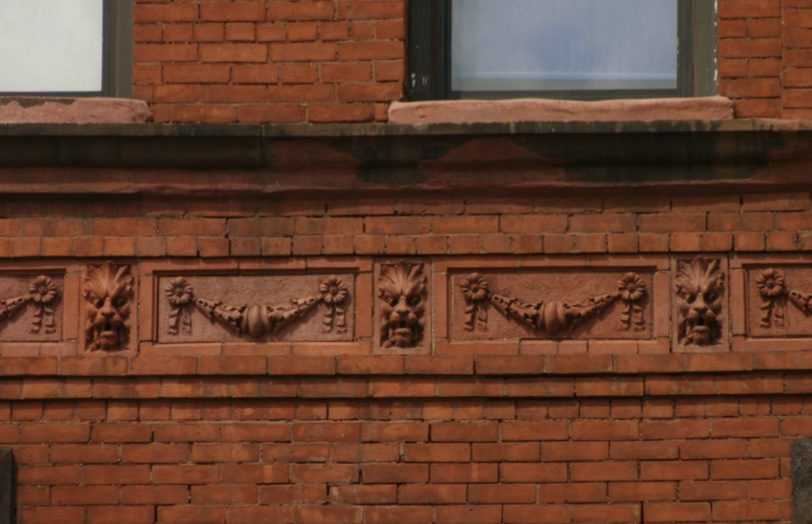
The factory has a flat roof—a typical feature of industrial buildings of that era, which replaced older gabled roofs due to fire hazards. Philadelphia brick was chosen for the facade, as it was fire-resistant and gave the structure a neat appearance without excessive cost. Terracotta was used for decoration, featuring leaf motifs, festoons, and lion heads, instead of expensive stone.
The tower was not only an architectural highlight but also a kind of marketing tool of the time: its clock and the company’s name were clearly visible from bridges, the waterfront, and major city streets. This underscored the brand’s public presence and reliability. The factory was often featured in advertisements—on postcards, in catalogs, and even in drawings of interiors where Estey pianos stood in elegant living rooms.
The clock tower, in addition to its decorative function, played an important social role. In an era before personal watches were common, it served as a source of accurate time for workers and local residents. Such towers became symbols of order, punctuality, and modernity.
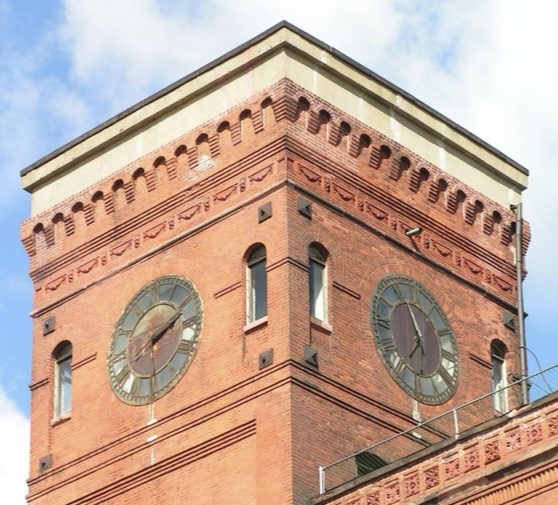
Architecturally, the factory is a prime example of the American version of the Rundbogenstil style, which combines elements of classical and medieval architecture, using brick, stone, and ornamental masonry. The segmented or round-arched windows create a structurally balanced backdrop, while parapets and gables add dynamism to the facade.
Over the years, the factory was expanded several times while maintaining its stylistic integrity. The 1890 addition, in particular, exactly replicated the motifs of the original tower, and the 1895 and 1919 additions adapted to new requirements, such as those of “daylight factories,” which featured large windows for better natural lighting of work areas.
Estey Piano: A Timeline
- First pianos and collaborations.
The company began as Manner & Company, which operated from 1866 to 1869. Its piano was called “Arion.” In 1869, the company was renamed the Arion Piano-Forte Company after a merger of several partners, and in 1872, production moved to 149th Street in what is now the Bronx. In 1871, John Boulton Simpson became the company’s secretary and soon took over control. By 1875, a factory had opened on St. Ann’s Avenue, which sold over 7,500 instruments a year.
- A new name and a new owner.
In 1876, the company was renamed Simpson & Company. The factory occupied a significant area between Brook Avenue and St. Ann’s Avenue. By the late 1870s, it was the largest piano factory in the county. But in 1880, Simpson sold the company to the firm of William E. Wheelock.
- The mysterious factory.
Simpson continued to work independently, maintaining a showroom at 5 East 14th Street and registering new addresses in Manhattan. But exactly where and with whom he was making instruments is unknown. Information about his activities, factory addresses, and the production process has not been preserved. It’s only known that from 1880 to 1885, Simpson worked closely with the famous master craftsman Stephen Brumbach.
- The emergence of Estey Piano Company.
Estey Organ Company, known for organ production, decided to expand into the piano market. In 1885, it formed a partnership with Simpson, who became president of the new Estey Piano Company. Simpson’s pianos were rebranded as Estey. Construction of a new factory in the Bronx began, designed by A.B. Ogden & Son. In February 1886, the new factory opened its doors.
- Rapid development.
The company quickly gained popularity. Brumbach continued to improve the mechanics of the instruments. Pianos from Estey had an exceptional reputation and a lot of fans. In 1890, a large-scale expansion of the factory began.
- A period of difficulty.
During these years, the company experienced the deaths of three key figures: Jacob Estey (1890), Levi K. Fuller (1896), and Julius Estey (1902). Then a major workers’ strike occurred in 1912. In 1917, George B. Hittins, the former president of Kohler & Campbell, acquired a controlling stake in the company. He modernized production and streamlined the model lineup to standard models.
- Merger with Welte.
Hittins purchased the American division of the German company Welte. In 1919, architect George F. Hogue added two stories to the factory. By 1921, new buildings for Welte had appeared in the Bronx.
- The fall of an empire.
In 1922, the Estey-Welte Corporation was created. The company produced both traditional and player pianos. In 1925, anticipating a change in the market, Hittins began manufacturing pipe organs. But in 1927, the company had to be reorganized due to financial difficulties.