

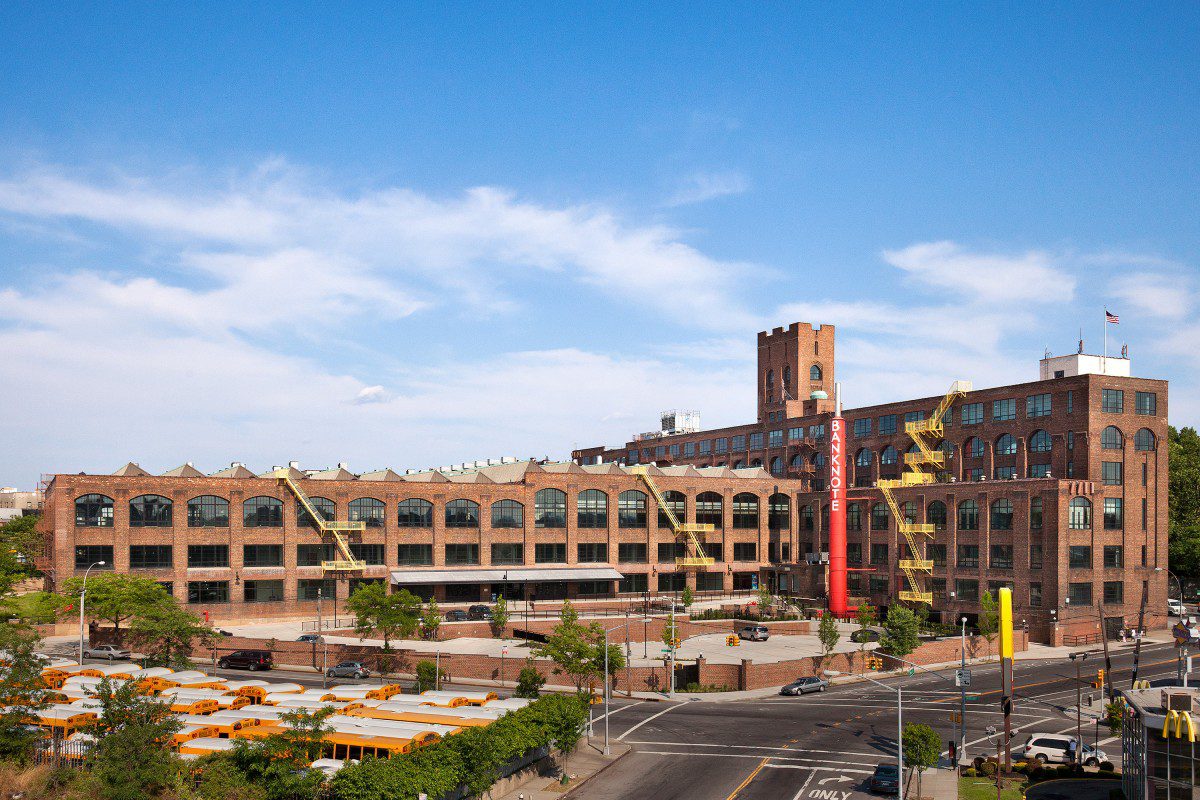
Today, the massive building between the Hunts Point and Longwood neighborhoods is a hub of entrepreneurship and creativity. Businesses, non-profit organizations, schools, and medical facilities lease spaces there. Among the tenants are Start Small Think Big, Luscious Wines, the office of Congressman Jose Serrano, and two public schools. But the old facade, with its aged brick, is a reminder that the structure was built back in 1909. It was once a place where currency for 115 countries was printed. This article on bronx1.one will tell you the history of this building, once called the “penny factory.”
The Foundation of the American Bank Note Company Printing Plant in the Bronx
The American Bank Note Company was created on April 29, 1858, from the merger of seven leading engraving and printing firms. The company was first located at the corner of Wall Street and William Street in Manhattan, in a building that later became the U.S. Custom House and then the National City Bank. In 1867, the company moved to 142 Broadway, and in 1884 to 86 Trinity Place. By 1908, it had production facilities not only in New York, but also in Boston and Philadelphia.
In that same year, the company built a new administrative building at 70 Broad Street in Manhattan, where it housed its offices and sales departments. At the same time, management decided to move production outside of the city center to increase efficiency. This plan was the start of the famous Bronx printing plant’s story.
The Printing Plant Arrives in the Bronx
The choice of a location in the Hunts Point area for the printing plant was the result of a careful study of all options within New York City. One of the key factors was the proximity to the railway, with which they had a prior agreement to transport a large quantity of materials—about 10,000 tons of paper and other raw materials each year.
The deal to purchase the plot was completed on November 20, 1908. The total cost of the new project was expected to exceed $2 million (the equivalent of approximately $70 million in 2024). The wages for most employees ranged from $40 to $75 per week (from $1,400 to $2,600 in 2024). So there was no shortage of people from the impoverished Bronx who wanted to work at the new, modern factory, but the selection process was strict.
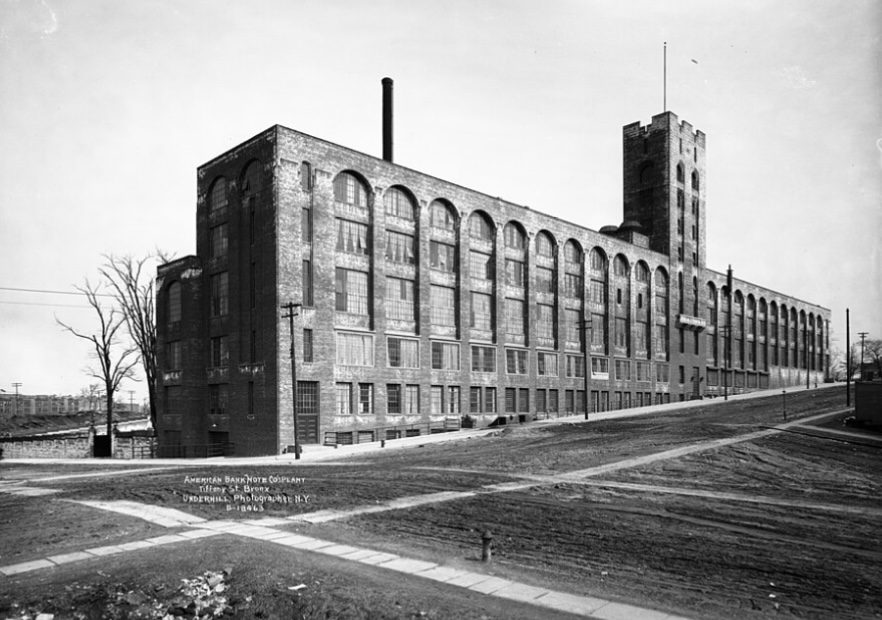
The building’s design was entrusted to the architectural firm Kirby, Petit & Green, which had previously worked on the company’s offices in Midtown Manhattan. This same firm was also designing other printing facilities during those years, including the Hearst Building in San Francisco (1908) and the Country Life Press plant in Garden City, Long Island (1910).
Architectural Features and Expansion
Typical for printing industry buildings, the structure had open interiors, concrete floors, and high ceilings to accommodate large equipment. In some places, the distance between columns reached 12 meters, and in some rooms, the ceilings rose to over 6 meters.
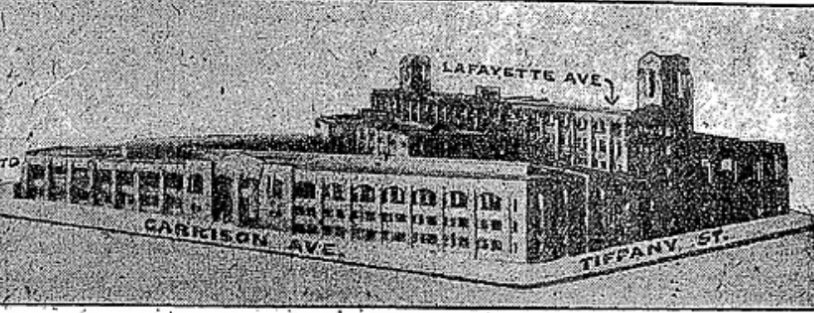
The complex occupied a pentagonal block bordered by Garrison Avenue, Tiffany Street, Lafayette Avenue, and Barretto Street. In 1913, Harry Cook described the printing plant as a “mammoth,” and The New York Times in 1992 noted its “uncompromisingly industrial look.”
The printing plant contained about 200 printing presses, as well as its own restaurant, a medical station, a laundry, workshops, laboratories, and a special ink production shop. Initially, there were two main wings:
- The Lafayette Wing was an elongated, narrow structure with a facade almost 142 meters long that served as the administrative center and housed the engraving rooms. A nine-story tower stood in the center of the complex. The structure had a steel frame faced with brick, with large arched windows that let in maximum daylight, which was important for controlling print quality. Stylistically, the building references the German architectural style of Rundbogenstil, popular in the 1830s-1840s.
- The Printing Wing (now known as the Garrison Wing) was perpendicular to the Lafayette Wing. It had more spacious interiors, stronger floors, and high ceilings for the large printing presses. The lower floor stored over 130,000 printing plates, while the upper floor housed the presses.
In 1910, a separate garage was built at the corner of Garrison Avenue and Barretto Street, also designed by Kirby, Petit & Green. It was doubled in size in 1928 and became the site of ink production. Today, it’s known as the North Building. In 1912, another room was added on the Barretto Street side for a laundry and pulp mill.
In 1925, another floor was added to the Lafayette Wing, and in 1928, architect Oscar P. Cadmus added two more floors to the annex along Barretto Street, housing new printing presses and mechanical workshops. After these expansions, the total area of the complex was about 37,600 m².
The Printing Plant’s Operations
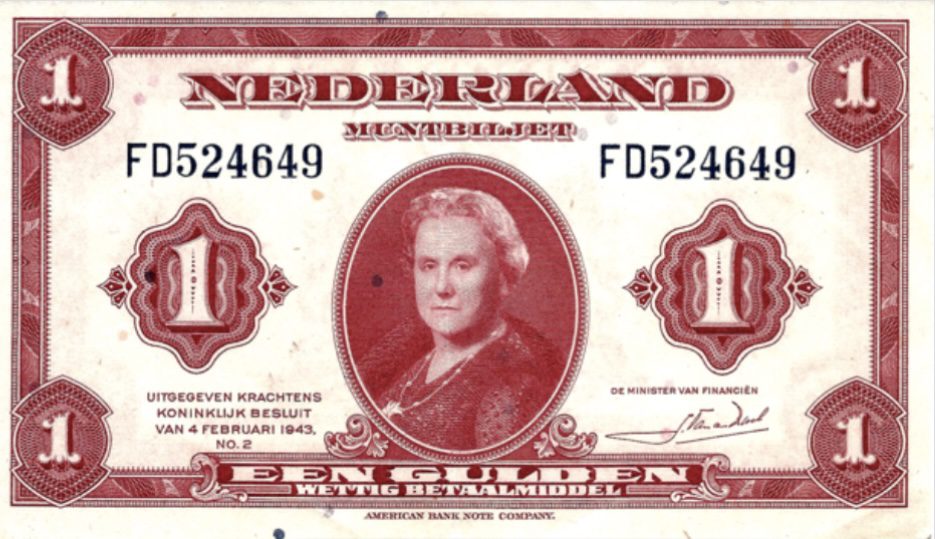
Once all the construction work was finally completed, the Bronx printing plant reached a colossal output. It processed over five million sheets of paper a day and produced over 50% of all securities for the New York Stock Exchange. The products included banknotes, stamps, certificates, checks, traveler’s checks, catalogs, brochures, letters of credit, lottery tickets, food stamps, and more. It also produced its own paper from a special fabric, as well as packaging boxes.
Although the company printed money for 115 countries, it was especially famous for its cooperation with Latin American countries such as Mexico, Brazil, Cuba, Haiti, Ecuador, and Costa Rica.
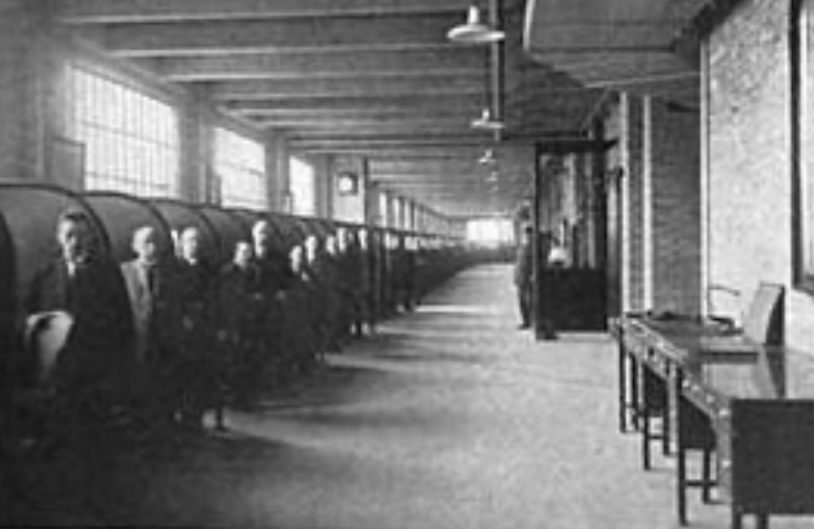
The engravers in the Bronx were among the best in the world; some trained for over ten years, and many represented multi-generational dynasties of masters. In 1958, Will Ford, who had worked for the company for 46 years, became the chief engraver. In 1963, the plant had 33 engravers who created classic images—nude or semi-nude figures in draped cloaks. This style met the stock exchange’s requirements, which stipulated the presence of an image of the human body, which is difficult to counterfeit.
The American Bank Note Company was proud of its technological level, engineering solutions, design team, and employee benefits system. Unique to the company was the position of “official counterfeiter”—a person who tried to create forgeries of the company’s products to improve their security. If a fake was too good, the product was changed—the engraving was improved, or the paper or ink was altered.
Security at the plant was exceptional: every sheet of paper was checked 33 times, and defective ones were burned.
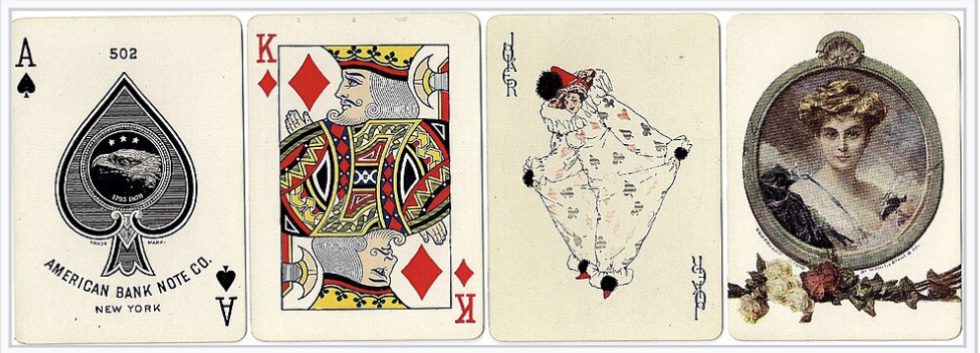
Among the company’s unsuccessful projects was the production of playing cards, which lasted six years starting in 1908. Although the financial documents were of the highest quality, the playing cards were of poor quality; due to the lack of an opaque middle, they could be “read” in good light. In 1914, this business was sold to the Russell Playing Card Company.
There was another interesting episode in the printing plant’s history—a real act of terrorism. On March 20, 1977, the Bronx printing plant building was damaged by an explosion set by the FALN, a radical Puerto Rican organization that was against capitalism. They chose the printing plant as a target because of its involvement in what they considered global economic exploitation. The force of the explosion shattered windows up to the fourth floor. A statement sent on behalf of the organization said that the printing plant was chosen as a target as a symbol of “Yankee repression and exploitation,” since it printed securities that, in the attackers’ opinion, determined who would live in prosperity and who would live in poverty.
The Building’s Fate After the Printing Plant Closed
The printing plant effectively ceased large-scale production in 1985. The American Bank Note Company moved its main operations to Blauvelt. At the same time, Walter Kahn and Max Blauner bought a part of the building, investing $8.3 million to create the Bronx Apparel Center. It housed textile companies, art studios, a wine cellar, and even a homeless shelter. The events unfolded with the following timeline:
- 1997: The Wildcat Academy school opened in the building, occupying several floors and including a culinary program, a student cafe, and a hydroponic greenhouse.
- 1998: The Academy of Arts and Dance set up a 70-seat performance space in the building, working with the famous Latino LGBTQ company of Arthur Aviles.
- 2007: Taconic Investment Partners bought the building for over $32 million, intending to transform the space into creative lofts for small businesses and creative professionals. They even invested $25 million in restoring the complex, but the 2008 economic crisis halted those plans.
- 2008: The building was designated a city landmark, emphasizing its significance as a part of New York’s industrial history.
- 2010: The Sunshine Business Center opened, offering flexible rental terms for startups in media, technology, and healthcare.
- 2014: The complex was sold for $114 million to Madison Marquette and Perella Weinberg.
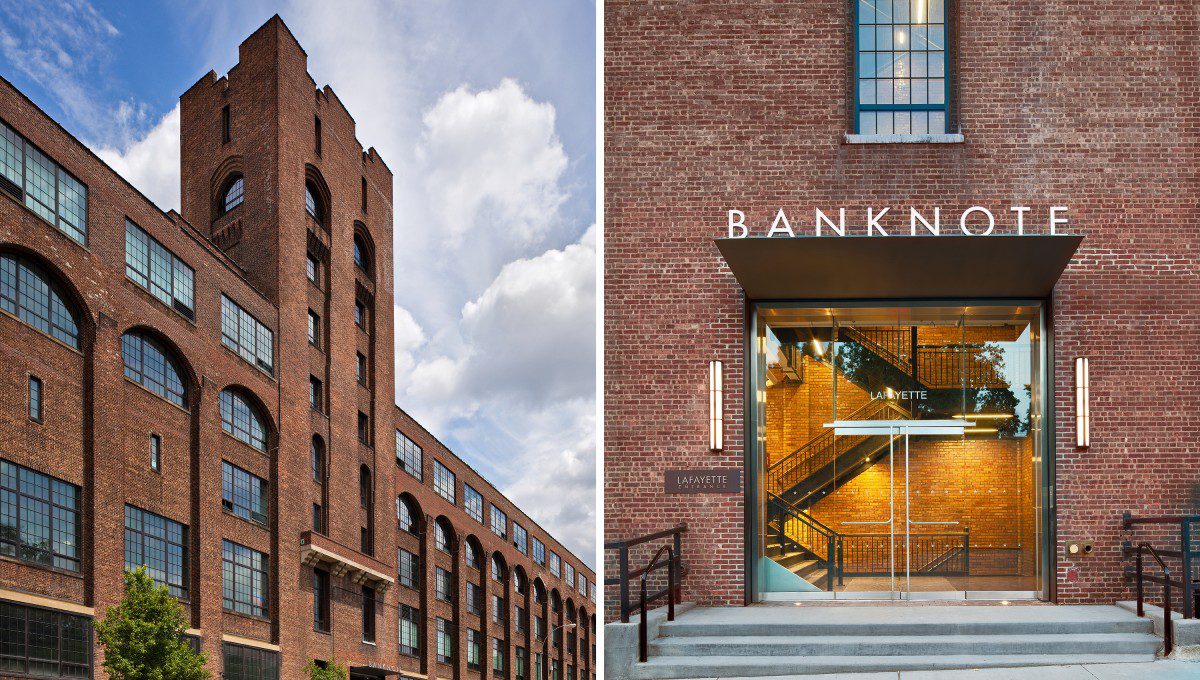
As of 2024, the building is managed by Madison Marquette, which positions the property under the name The BankNote as one of the most attractive office buildings in the Bronx.