

Post offices are not just service centers, but also true architectural gems that reflect a neighborhood’s rich history. Their elegant design and meticulous attention to detail reveal an era when aesthetics in public buildings were highly valued. These buildings hold significant cultural importance, as they not only serve a practical function but also offer a chance to feel the spirit of the past, telling the story of how postal communication evolved over time. Elaborate facades, sculptures, and murals vividly show how functionality and beauty were once combined. Today, bronx1.one will tell you about the Bronx’s main post office, which played a major role in the city’s overall infrastructure and stands as a magnificent historical landmark.
The Background of the Post Office’s Construction
In the early 20th century, the Bronx experienced rapid population growth due to the expansion of the subway. By 1930, more than a million people lived here. This population boom led to a corresponding increase in mail volume. From 1907 to 1915 alone, the number of postal deliveries nearly doubled, from 27 million to 50 million.
The first attempts to establish a central post office began as early as 1902, when Congressman Cornelius A. Pugsley proposed allocating $250,000 for it. However, the bill did not pass, and further progress stalled for nearly eight years. It wasn’t until 1910 that the federal government purchased a plot of land on Spencer Place between 149th and 150th Streets for $100,000. The location was considered strategically important due to its proximity to the subway and commercial areas. The government later bought the entire block, expanding the property to Mott Avenue (now Grand Concourse), spending a total of $285,000.
Over the next decade, the advocates for building a large post office that would meet all the needs of the city’s residents repeatedly tried to secure funding, but all attempts were unsuccessful. Local businessmen, members of Congress, and Bronx trade organizations promoted the idea of building a post office, proposing budgets ranging from $850,000 to $1.5 million. It was only in 1929 that the government finally agreed to build a general post office on Mott Avenue. In 1930, Postmaster General Walter F. Brown announced that the site was being considered as a potential postal center, similar to the main office in Manhattan. In 1932, an appropriation of $1.42 million was included in a bill, but funding was delayed once again.
How and Who Built the New Post Office
Finally, in February 1934, Postmaster General James A. Farley announced that the Post Office Department had decided to create a major mail collection and distribution center at the intersection of Mott Avenue and 149th Street in the Bronx. By June of that same year, funds for the project were allocated through the Public Works Administration (PWA) program.
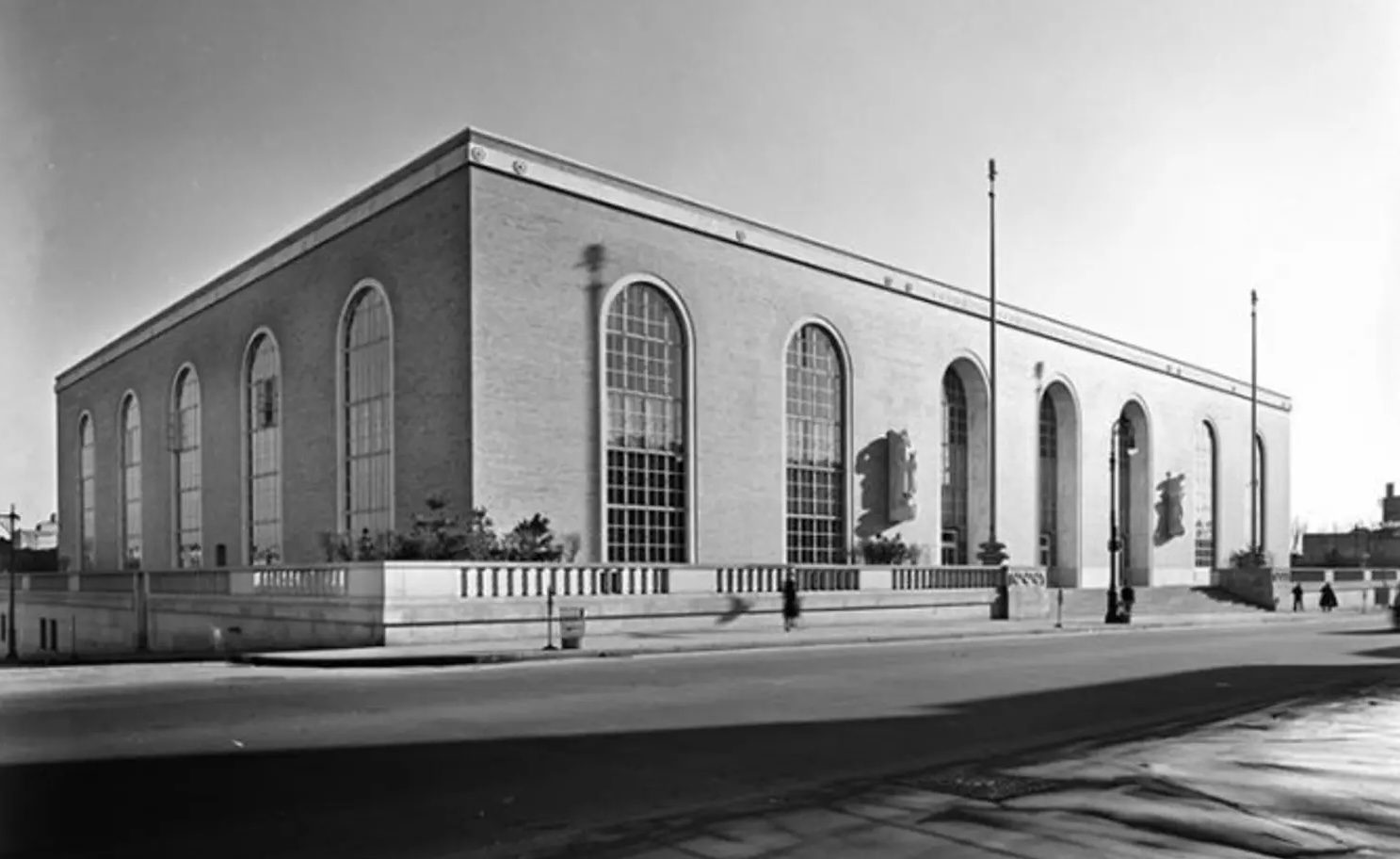
The design was handled by architect Louis A. Simon, who oversaw PWA projects, but due to the large number of new buildings, he had to temporarily hire 21 architects and 300 draftsmen. Among them was Thomas Harlan Ellett, who was tasked with designing the Bronx post office. He completed the plan in December 1934, and the documents were submitted to the city’s building department in early 1935.
In September 1935, the Cauldwell-Wingate company was awarded the construction contract, valued at $1.032 million. Philip C. Smith Jr. was appointed as the builder. The groundbreaking ceremony took place on June 13, 1936, and was celebrated as an official borough holiday, declared by Bronx Borough President James J. Lyons.
That same month, sculptors Charles Rudy and Henry Kreis were commissioned to decorate the facade. They won a selection process among nearly 400 candidates, each receiving $7,500. A total of about 180 people worked on the project. In September 1936, construction was temporarily halted due to a stonemason strike, who protested the use of non-union workers to process the Vermont marble. The conflict was resolved within a week. The building was completed in April 1937, with a total cost ranging from $1.03 million to $1.25 million.
Architectural and Interior Features
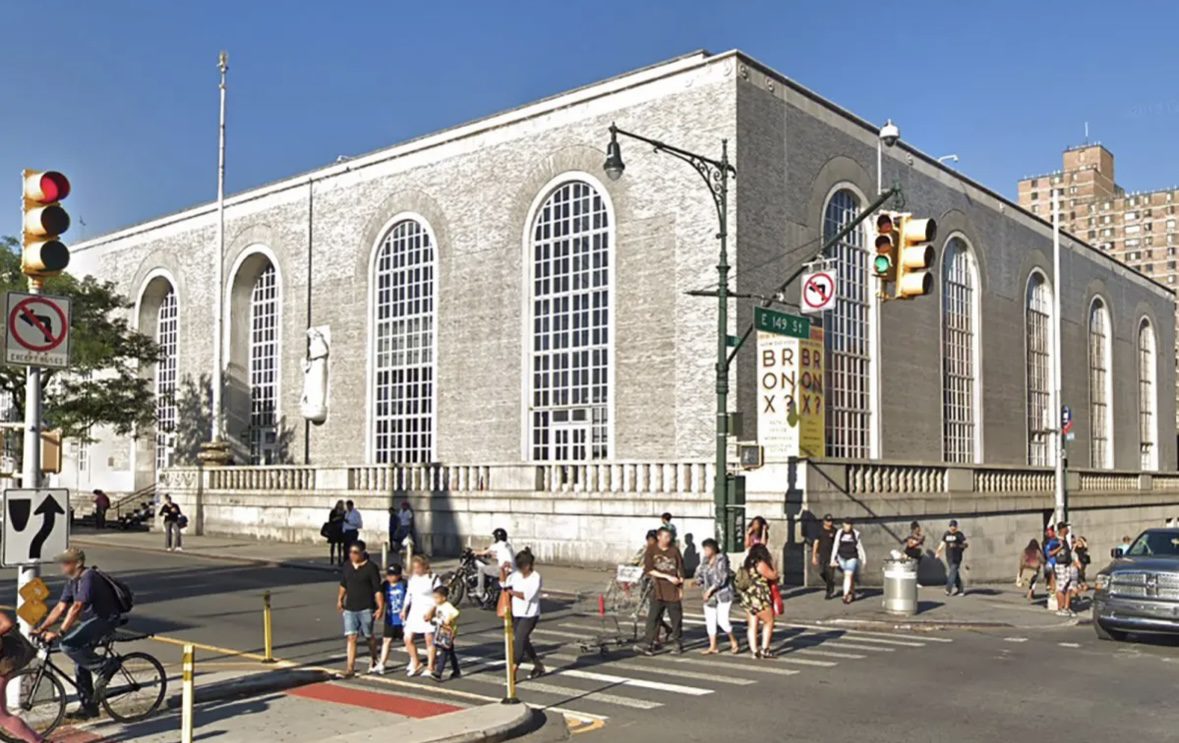
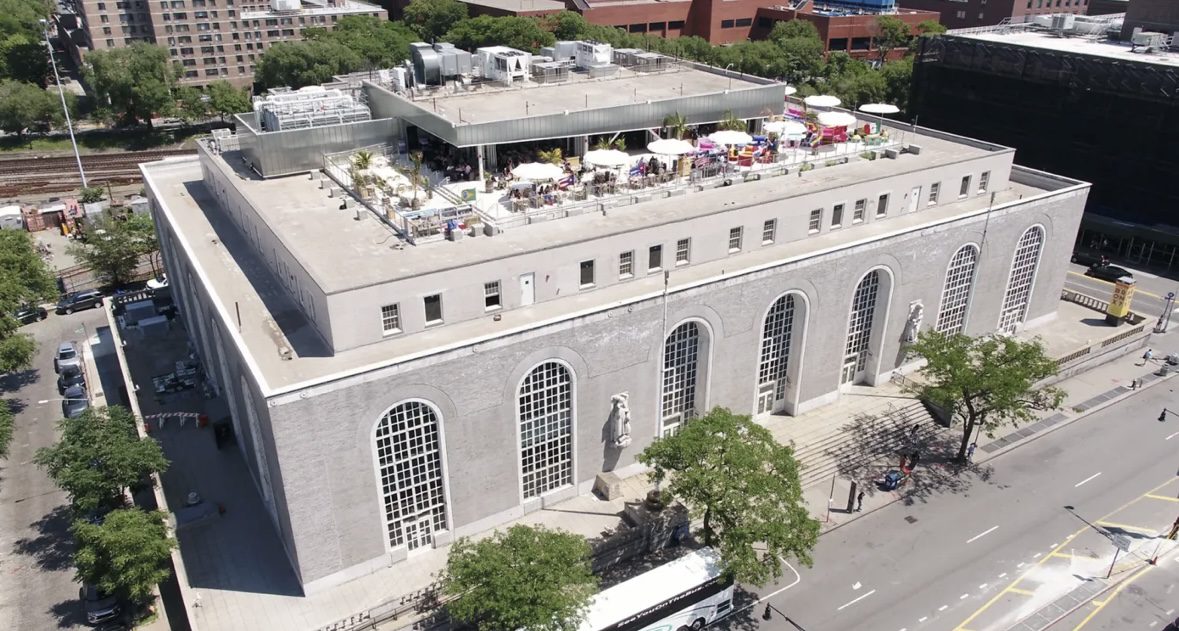
The Bronx General Post Office was designed by architect Thomas Harlan Ellett in an interesting combined style with Georgian and Classical elements. A granite terrace with a balustrade extends around the entire building. On the western side, a staircase leads to the main entrance, with pedestals on both sides decorated with rosettes and dentils. Bronze flagpole holders are installed on the pedestals.
The basement level is faced with granite, while the main facade is laid with gray brick. The windows and doors are framed by arches made of Vermont marble. Above the main entrance is the inscription: “Bronx – United States Post Office – New York,” adorned with a floral ornament.
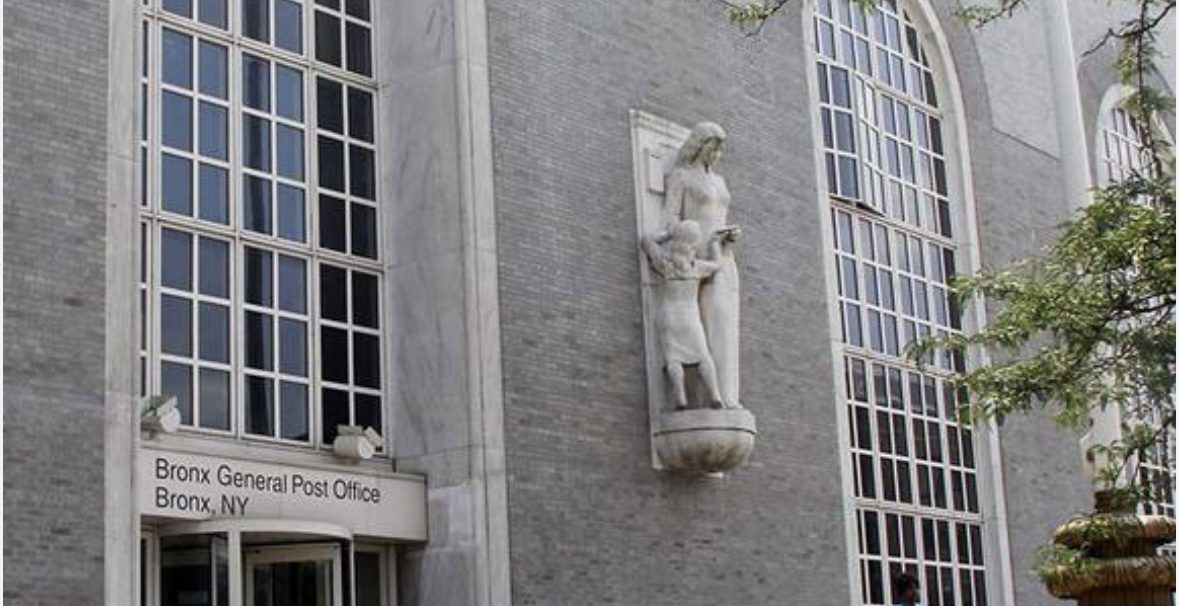
On either side of the entrance to the Great Hall are two sculptures: “The Letter” by Henry Kreis and “The Ark” by Charles Rudy. They are carved from white marble and are 4 feet wide and 14 feet tall. Kreis’s sculpture depicts a man delivering a letter to a mother and child—a symbol of postal communication in the family. Rudy’s sculpture illustrates the moment a dove brings a message to Noah after the flood—an allusion to the famous U.S. Postal Service motto: “Neither snow nor rain nor heat nor gloom of night stays these couriers from the swift completion of their appointed rounds.” For this work, Rudy received an honorable mention from the Architectural League of New York and was nominated for the Henry O. Avery Prize.
The Bronx General Post Office spans approximately 172,000 square feet. The first floor housed the main lobby, a Bureau of Internal Revenue branch, and work areas for mail carriers who served the South Bronx and Washington Heights in Manhattan. Mail from these areas was processed here. The second floor handled mail bound for those same neighborhoods. It also contained sorting equipment and staff areas. The penthouse was used for storage and offices. The basement included a garage for over 100 vehicles, a machine room, a power plant, and a rooftop shooting range for security guards.
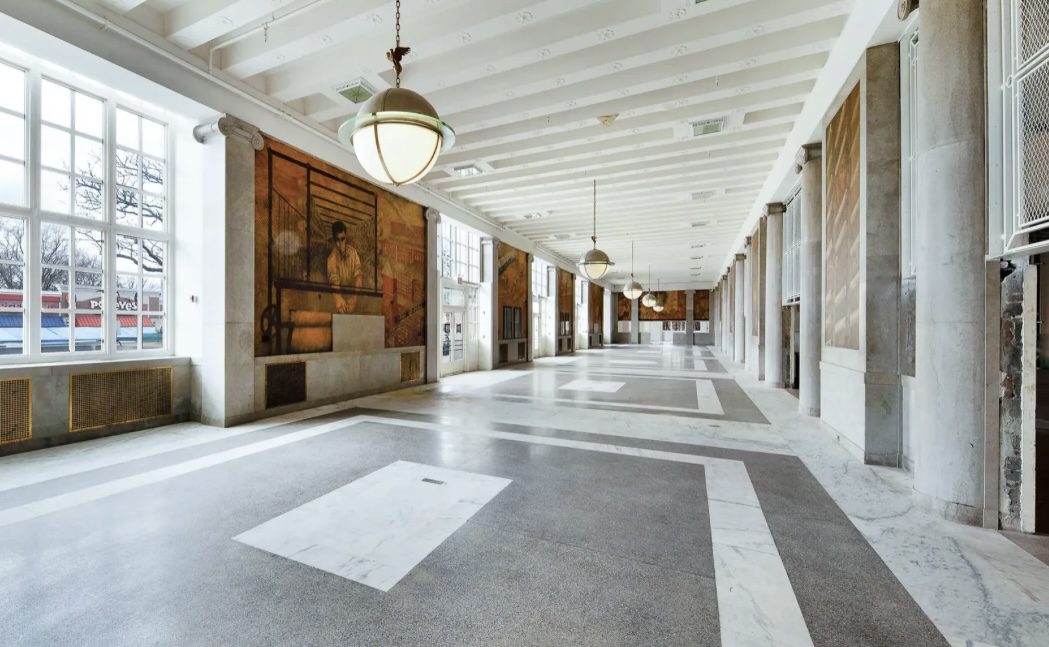
The main lobby was the only area accessible to the public. The floor here is covered with patterned dark gray terrazzo and light gray marble. The walls are adorned with marble and frescoes. Ionic pilasters line the walls. The ceilings are made of plaster and divided into coffers, from which globe-shaped light fixtures hang. Polished brass and painted metal were used in the design. Over time, some of the original furniture was replaced with kiosks and new equipment.
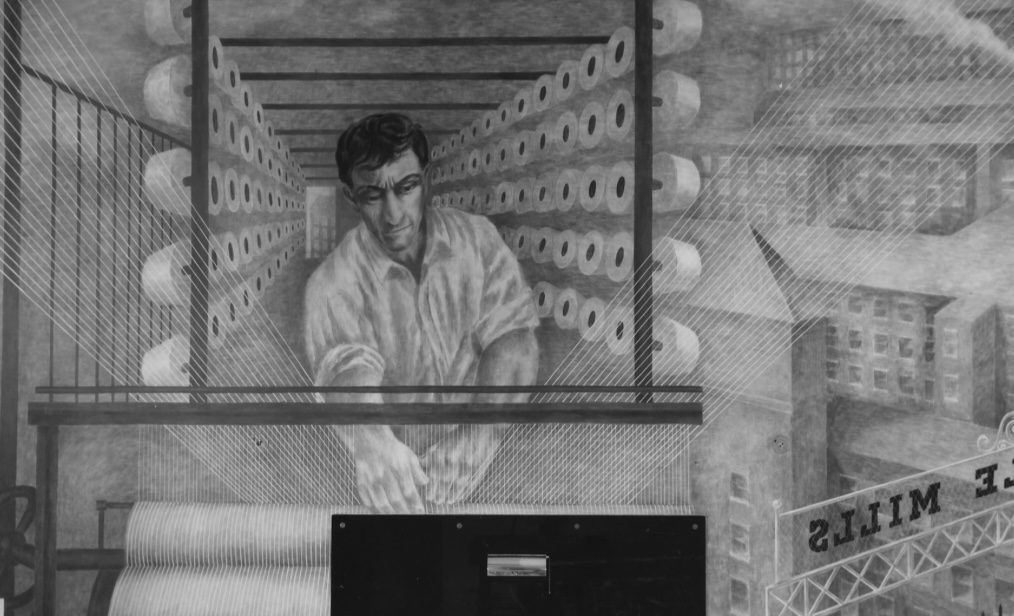
The lobby features 13 frescoes inspired by the works of Walt Whitman. The series has been referred to differently over the years: “America at Work,” “Resources of America,” or simply “America.” They were created in 1939 by artist Ben Shahn and his partner, who would later become his wife, Bernarda Bryson, after she won an art competition. The frescoes, painted in tempera on wet plaster, depict American workers.
The Operational History of the Bronx General Post Office
- 1937–1940s.
The Bronx Central Post Office building opened on May 15, 1937. It was designed to handle up to 500,000 pieces of mail daily and also housed other government services. Its first superintendent was William H. Farrell Jr. In the 1940s, machines for stamps and parcels were installed, and the building was designated as the main post office for New York’s District No. 51.
- 1950s–1970s.
In the 1950s, new services were introduced, including a curbside mailbox for motorists and a mobile X-ray machine. In 1963, a separate sectional center for mail sorting (SCF) was established, which sped up delivery. The interior frescoes were restored in 1971, and in 1976, the facade was designated a city landmark.
- 1980s–2000s.
In 1980, the building was added to the National Register of Historic Places. In the 1990s, the USPS was unable to modernize the building due to landmark restrictions. Due to a lack of space, some mail was moved to other areas for processing, which caused delays. The frescoes were restored again in 1996.
- 2000s–2010s.
In the early 2000s, activists and politicians began fighting to preserve the building when plans emerged to move mail processing to Manhattan. In 2011, the mail processing center was finally relocated, but the post office itself remained.
- 2010s–Present.
In 2012, the USPS announced its intention to sell the building. The public and politicians actively protested. In 2013, the interior was designated a historic landmark. In 2014, the building was sold to Youngwoo & Associates for $19 million. The new owner planned to preserve the frescoes and redevelop the space into a post office, offices, shops, and a restaurant.
Youngwoo began renovations, preserving the historic elements, but the project faced difficulties and delays. In 2019, a restaurant called Zona de Cuba opened on the roof. In 2024, the building was put up for sale again.