

In the past, the morning for almost every family started with a fresh newspaper at breakfast. Now, all news and interesting articles can be found online. People are less and less likely to pick up real, physical newspapers and books. But times are changing; some publishers have been able to adapt to the new reality and shift their operations to a digital format, while others have faded into the past. In this article, bronx1.one will tell you about the Bronx’s main newspaper, which was and remains a favorite source of news and important information for borough residents.
Trends of Decline in the U.S. Newspaper Industry
According to research from Northwestern University’s Medill School of Journalism, an average of two newspapers disappear each week in the United States. This decline most affects areas with less affluent, older, and less educated populations. And while the 2019 pandemic did not cause the expected industry collapse, publications continue to close annually, mostly weeklies that served small communities.
The number of newspaper journalists has dropped from approximately 75,000 to 31,00 in the last few years. The industry’s annual revenue has fallen from $50 billion to $21 billion.
Despite increased attention from philanthropists and politicians, the industry’s main problems remain unresolved. According to report author Penelope Muse Abernathy, the growth of digital media has not been able to offset the overall decline. Most news and opinion websites are concentrated in metropolitan areas and rely on donor funding.

The number of so-called “news deserts”—regions with no local news source or minimal coverage—is constantly growing. By some estimates, about 70 million Americans live in such areas. Abernathy emphasizes that this threatens democracy and social cohesion.
True daily print newspapers are becoming a rarity; already 40 of the 100 largest U.S. newspapers have only digital editions. Inflation is expected to only accelerate the shift away from print.
Another reason for the press’s decline is the rise of newspaper chains that are buying up local papers. Currently, less than a third of the more than 5,000 weeklies and only 10 of the 150 largest daily newspapers in the U.S. are locally owned.
The Birth of The Bronx Times
In 1980, two neighbors—29-year-old Michael Benedetto and 33-year-old John Colazzi—both active members of the local community and the Democratic Party, started thinking about how to increase the influence of their political club (the Thomas Paine Independent Democratic Club) in the Throggs Neck and Pelham Bay areas. The idea they came up with one October evening over a drink at Dominick’s restaurant on Westchester Avenue was ambitious: the men decided to create an independent community newspaper that would appeal to all residents, regardless of their political views.
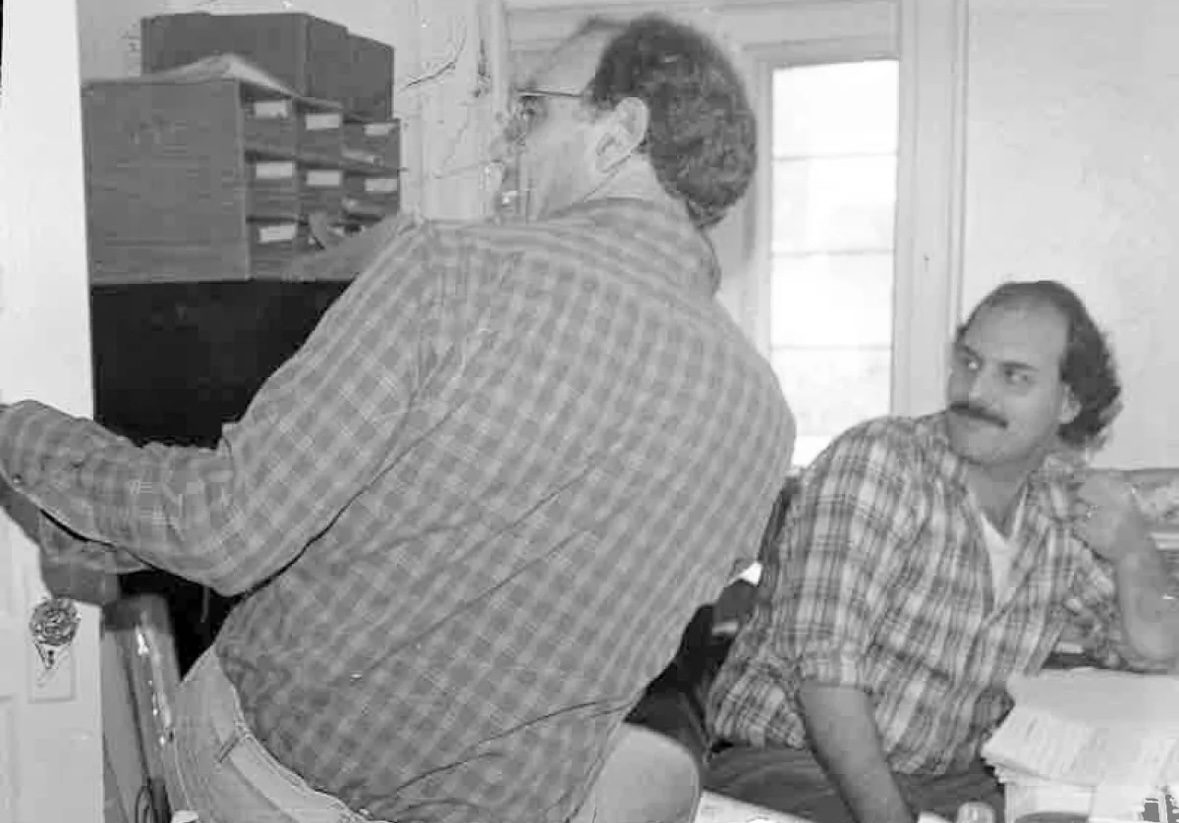
They had zero experience in journalism; Michael was a school teacher, and John was a researcher in Manhattan. In addition, two strong newspapers were already operating in this information space—the Bronx Press-Review with its long history and the aggressive Bronx News. Both publications were owned by millionaires, so the decision was risky.
“I had run for office three times—in 1976, 1978, and 1980. After losing the third time, I realized that I wanted to continue working for the community, and that’s how the idea to create a newspaper came about,” Benedetto recalled.
The founders divided the responsibilities simply: Michael handled advertising, and John wrote the articles. The main focus was on carefully prepared local content.
By December 1980, everything was ready, and the newspaper was named the Bronx Times Reporter. It was a free monthly publication for residents of Throggs Neck, Locust Point, Silver Beach, Edgewater Park, Waterbury LaSalle, Pelham Bay, Country Club, and Spencer Estate.

The first issue was published in June 1981. The cover featured a letter of welcome from New York Mayor Ed Koch, wishing the new publication success. Michael and John focused on the problems and needs of local residents. The first issue included a major article on residents’ requests for a new sewer system in Country Club, a piece on the terrible condition of Pelham Bay Park, news from the little league, several columns, and a “Mystery Photo” contest with a prize of dinner for two at a local restaurant.
Each month, Michael and John hired groups of four teenagers to deliver the newspaper to homes. The initial print run was 15,000 copies, but it quickly grew to 21,000. The paper gradually gained popularity, and thanks to its distinctive color banner, which was very rare at the time, it became known as the “Green Book.”
From a Free Amateur Press to the Bronx’s Main Newspaper
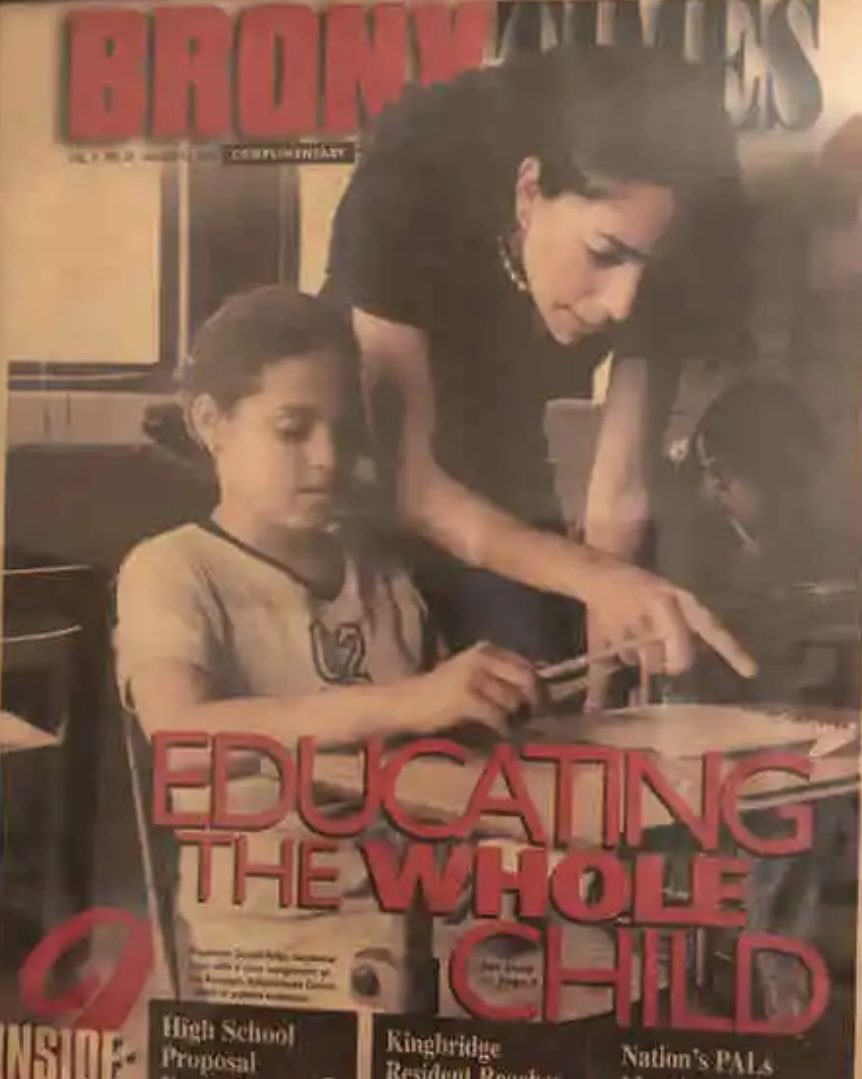
Two years later, the Bronx Times Reporter switched to a paid model; the paper could be purchased at over a hundred locations, including every newsstand, or by paid subscription.
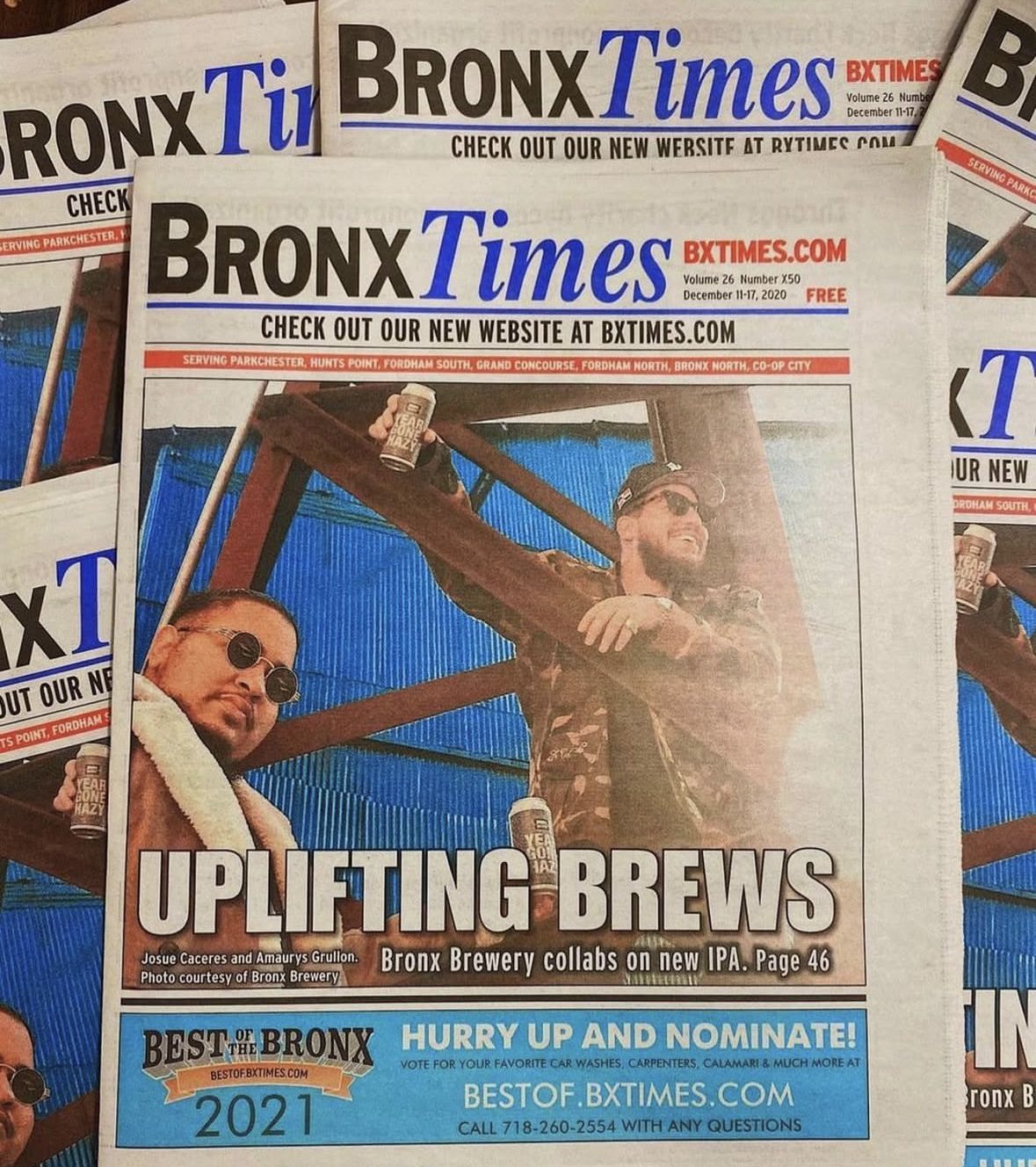
In 1987, Michael Benedetto left the project to try his hand at politics again, becoming the district leader for the 82nd Assembly District. Meanwhile, the Bronx Times Reporter became a weekly, and in 1996, four more regional publications under the name Bronx Times were added, covering other parts of the Bronx. By the late ’90s, most local readers had switched to the Bronx Times and the Bronx Times Reporter, which offered clear, positive news about the borough, unlike their competitors.
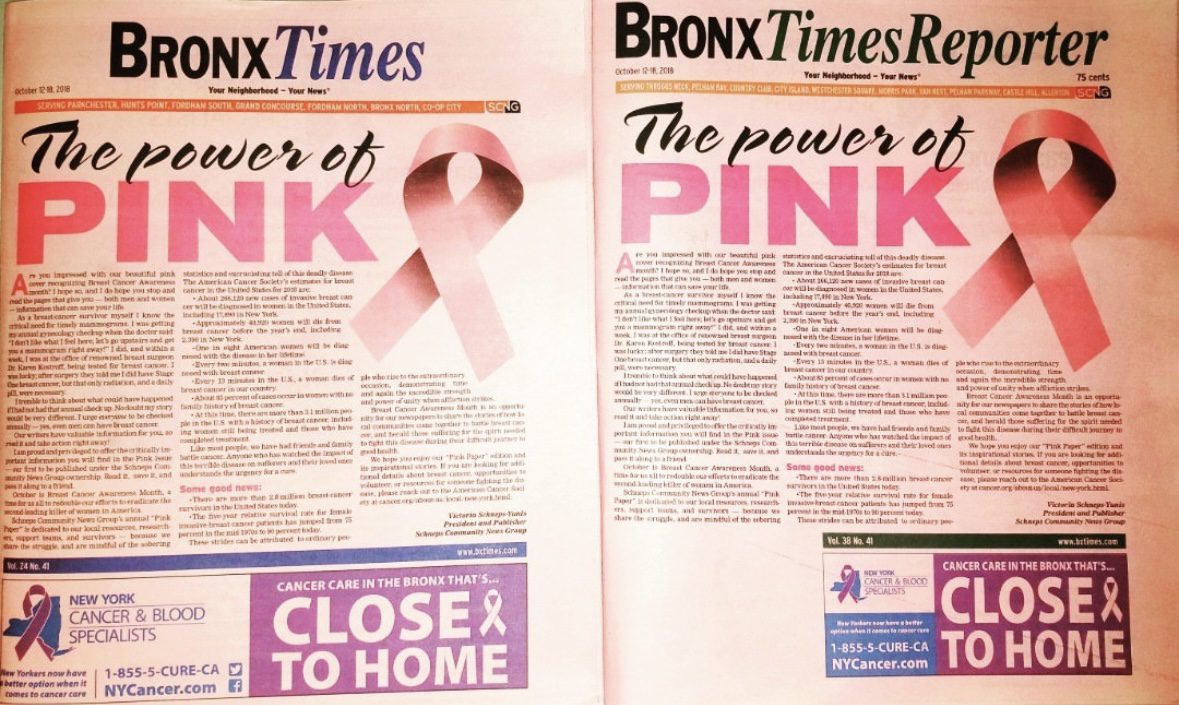
After 26 years of successful operation and with annual revenues of over $3 million, the newspaper was acquired by News Corporation, which was actively buying up local media outlets in New York. John Colazzi remained the publisher until his retirement in 2011, after which Laura Guerriero, who had worked at the paper since 1987 and had been deputy publisher since 2004, took the helm. In 2018, the media group was acquired by Schneps Media Inc., run by Victoria Schneps-Yunis and Joshua Schneps.
“An idea that was born over dinner in a restaurant grew into the leading newspaper in the Bronx in 40 years. We are proud to have been part of that journey,” the founders said.
In early 2022, the Bronx Times decided to speak directly with residents to find out what they wanted from their local newspaper and what readers felt was missing.
Lynn Musich, a 65-year-old artist, felt that too much attention was paid to crime: “I’m interested in crime to a point, but not in an over-the-top way. And I think what’s really important to focus on more is the good stuff that’s going on, and the stuff that’s being done for young people at a local level. Being an artist myself, I’m interested in what they’re doing in the arts. … I’m more interested in what’s fruitful and useful to the community.”
Nancy Hidalgo, 61, stressed the need for news about events for senior citizens. There are not many events for older people in the area. She said it would be good if the newspaper reported what was happening nearby.
Zenon Aponte, 45, said he would like local news to cover everything happening in the city, from crime rates to positive changes and achievements. He also mentioned that as a father of a 10-year-old, he particularly appreciates news about events for young people.
So, Bronx residents want their local newspaper to remain a source of relevant and important information, but also not to forget about humanity, inspiration, and positive change.
What Keeps The Bronx Times Afloat
After updating its editorial approach, the Bronx Times won seven awards at the prestigious New York Press Association contest, a significant achievement for the publication.
This success came after an editorial restructuring in mid-2021, when the newspaper began to cover more complex topics and a wider range of events in the borough. The publication focused on analytical journalism, in-depth stories, and socially important issues.
As one of the few U.S. weeklies that is locally owned, the Bronx Times stands out favorably against the general decline of local media. Readers confirm that the connection to real life in the Bronx is what makes the newspaper so meaningful.
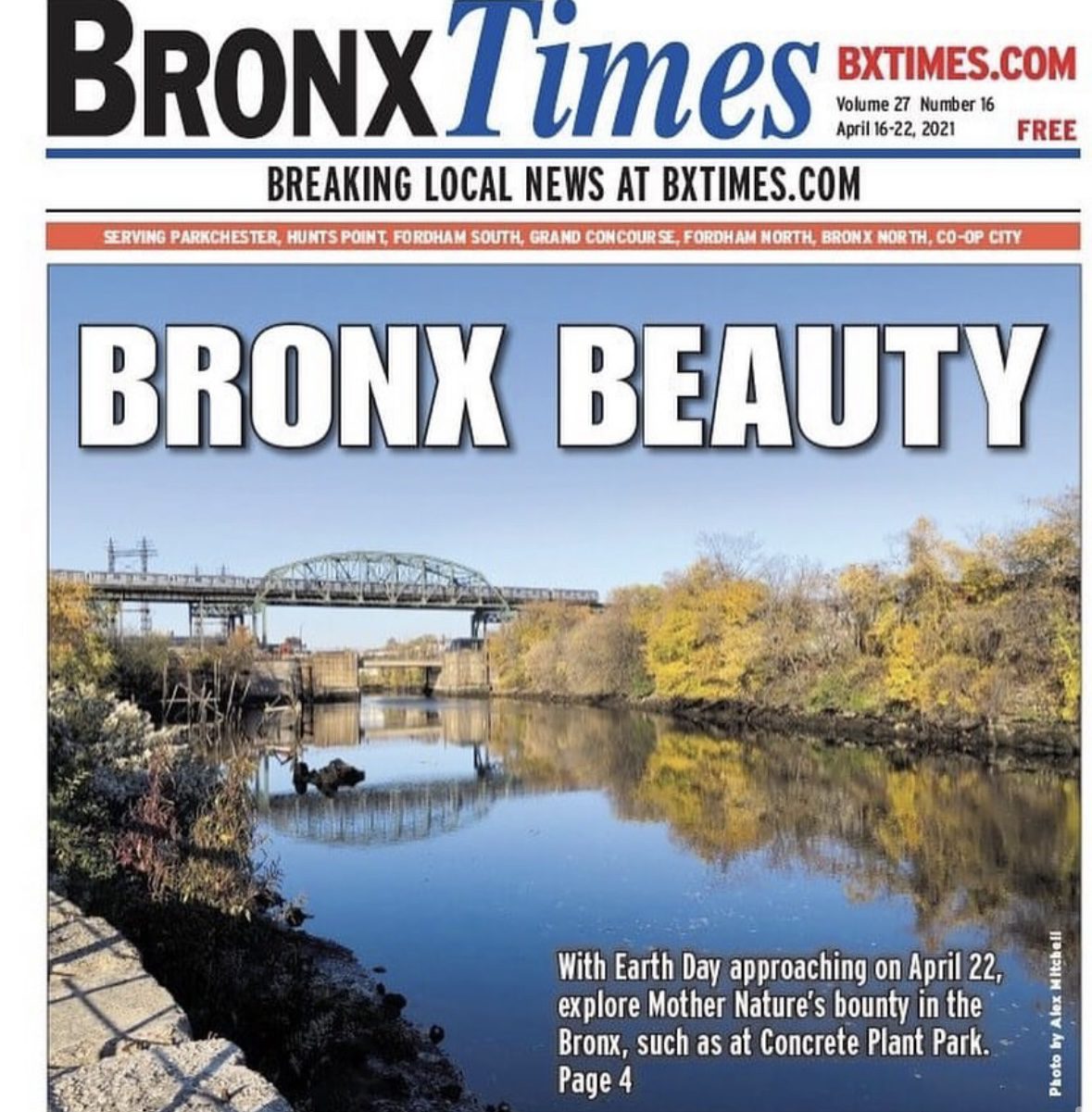
A quick response to external changes and audience demand, a user-friendly website, and a professional team are what allow the Bronx Times to maintain high ratings and reader attention.
Evidence of this is the publication’s annual receipt of editorial awards. Judges often praise the Bronx Times journalists’ best stories, their thorough research, and strong delivery. Bronx Times publisher Laura Guerriero added that these awards confirm not only the team’s professionalism but also the trust of its readers.