

This isn’t your typical school. Its educational philosophy is built on interdisciplinary learning, research projects, travel, sports, and a wide variety of clubs. At Riverdale Country School, they believe that true education happens through action: students create, experiment, and express their own ideas.
And the results speak for themselves. According to Niche’s 2025 rankings, Riverdale is ranked first among private K–12 schools in the U.S. and is recognized as New York’s best private high school. Read on to learn more about this flagship Bronx school on bronx1.one.
A School Amidst Forests and Dreams
Imagine New York City in the early 20th century—a bustling, rapidly growing metropolis, and at the same time, a quiet corner on the banks of the Hudson where fields, orchards, and forests still held memories of rural life. It was here, in 1907, that Frank Sutliff Hackett and his wife, Frances, founded Riverdale Country School. It started modestly, with just 12 boys and 4 teachers. But they had a big dream: to create a school that nurtured not only the mind but also the body and spirit.
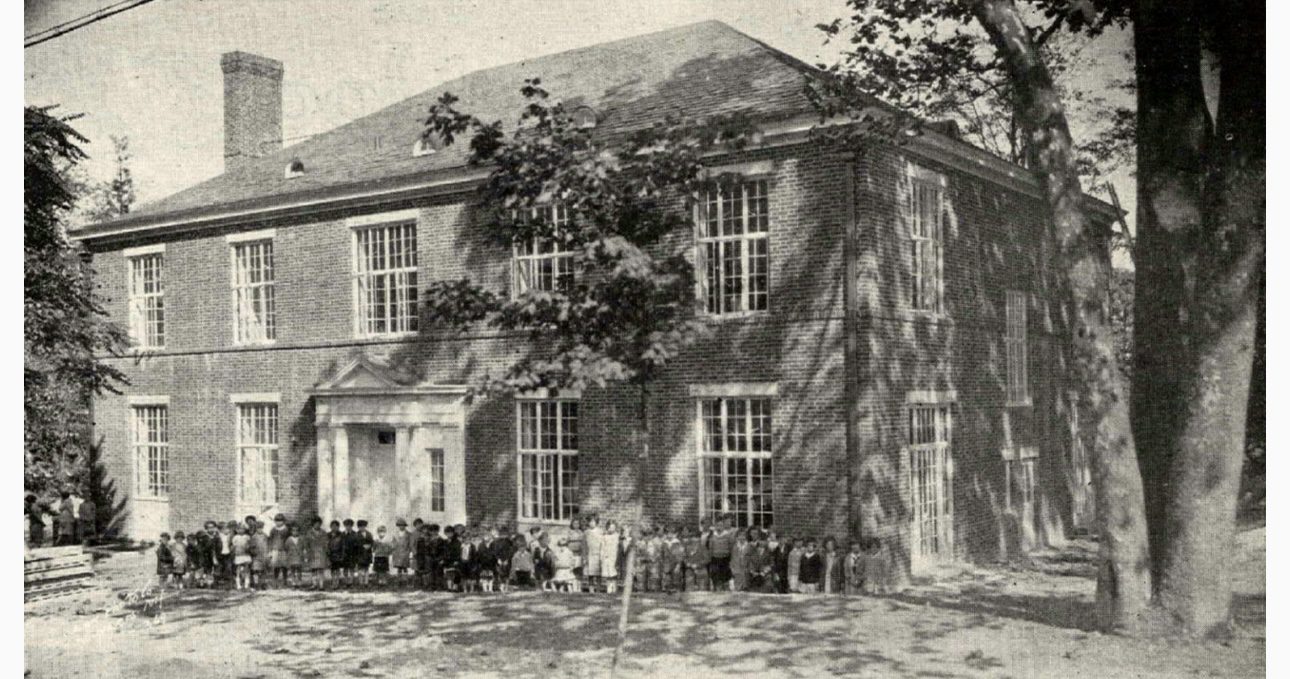
Hackett called this project “the American experiment in education.” His idea was groundbreaking: children should learn in nature, in spaces where they could run, climb trees, play sports, and explore the world. To this end, he opened a summer camp in the Adirondack Mountains and built a school building and a large dormitory—Hackett Hall—on Fieldston Road.
Over the years, the school expanded, adding classes for younger children and a separate institution for girls. Before World War II, students even came from other countries. Hackett dreamed of turning Riverdale into “the American World School,” and although he didn’t fully realize this vision, the school had already become an international community.
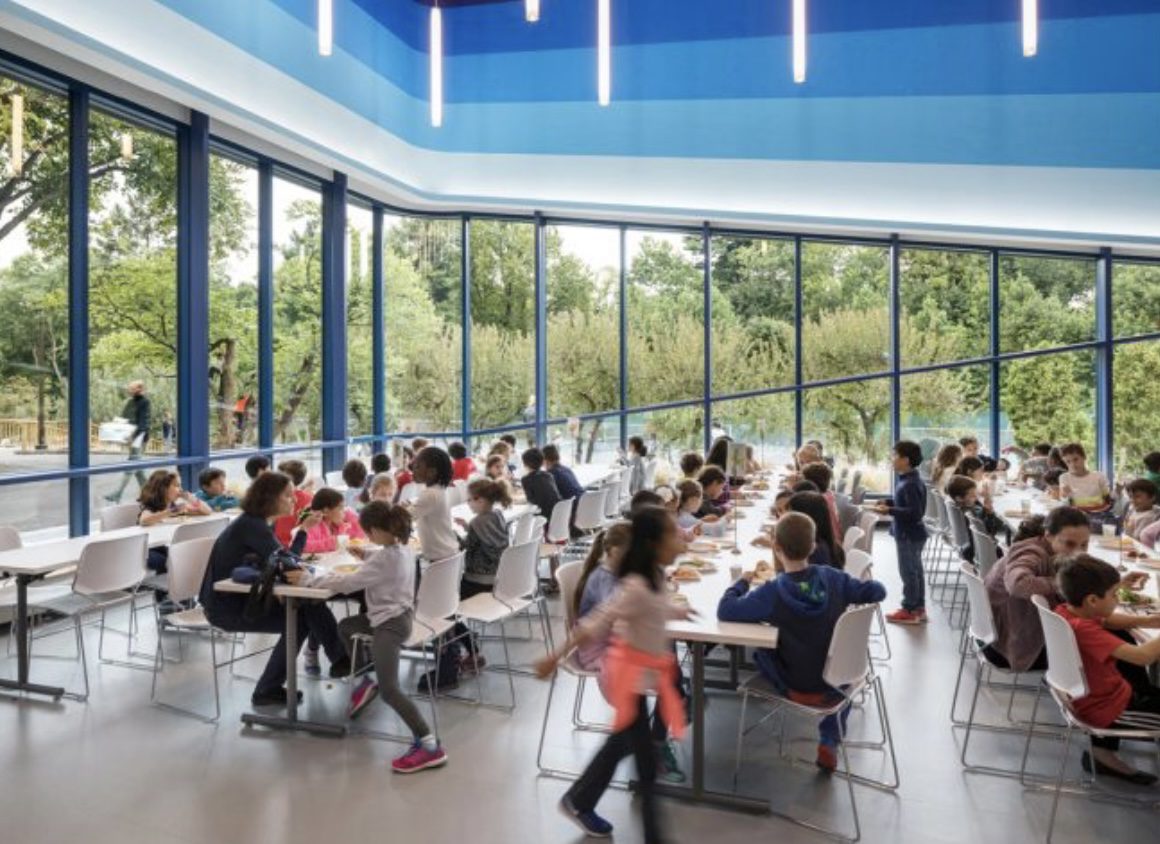
After the founder’s death, the growth continued. In 1972, the separate schools for boys and girls were merged, and they later formed the modern structure of two campuses—the Hill and the River. President John F. Kennedy, who attended the school in the late 1920s, once humorously recalled:
“I used to say that I was a Bronx resident. Nobody ever believed it, but it’s true. No other presidential candidate can claim that.”
The school has maintained its character—it’s not just a place of learning but a living space within an urban forest. Right next to the classrooms are sports fields, theaters, gardens, and outdoor labs. And although Riverdale has changed over more than a century, its spirit remains constant: a combination of intellectual rigor with the joy of discovery, freedom, and play.
Shadows and Controversies Surrounding Riverdale
Riverdale’s history isn’t just about traditions and innovations; it also has moments that have sparked heated debates. The school has been at the center of several scandals where issues of education, politics, and social values intersected.
In the 1960s, the media criticized the school for racist practices. Another controversy arose in 1962 when future Senator Richard Blumenthal, then student council president, founded “Slavery Day”—an event where students performed menial labor to raise money for a scholarship for a foreign student. The initiative was later renamed “Freedom Work Day,” and the money raised was donated to the NAACP.
In more recent history, specifically from 2019 to 2021, Riverdale was accused of having a unique approach to fostering its school community. Some parents protested that students were allegedly encouraged to monitor and report on each other, checking the level of their “allyship behavior.” This practice caused a wave of criticism and even led some families to leave the school.
So, Riverdale appears not only as a prestigious educational institution but also as a mirror of American social debates—a place where the ideals of freedom, political contradictions, and the challenges of the times intertwine.
Two Campuses and the Educational Philosophy
Riverdale Country School is located on over 27 acres of green space in the Bronx. The school has two separate but interconnected campuses.
The Hill Campus on Fieldston Road, which offers a view of Van Cortlandt Park, spans 19.5 acres and is home to the middle and upper schools. This is where the academic core is formed, with grades 6–12, sports fields, labs, and spaces for creativity.
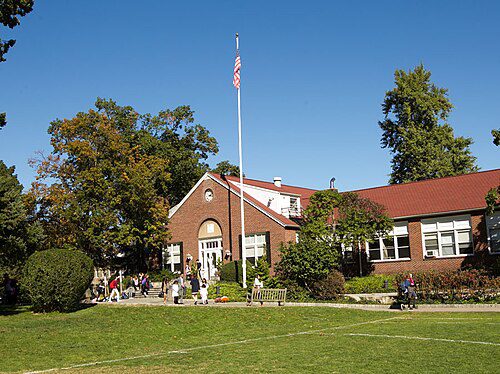
The River Campus is located along the Hudson River. It covers 8 acres and is designed for the youngest students—from pre-kindergarten to fifth graders. Here, learning is combined with play and world exploration. Separate buildings house the lower school classrooms, art studios, a gym, and administrative offices. This land was donated to the school by the family of George Walbridge Perkins, leaving a legacy that continues to serve as a ground for children’s development.
Riverdale’s academic program goes far beyond standard college preparation. Alongside math and science, students have the opportunity to dive into “making,” robotics, programming, and art. The study of languages, from Latin and Greek to French, Spanish, Chinese, and Japanese, opens doors to different cultures. In the upper school, all students take an integrated humanities course that focuses on values, identity, social justice, and ecology.
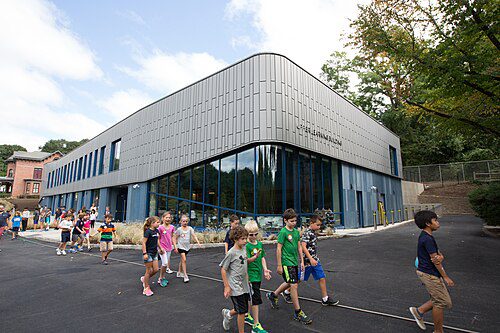
“Riverdale is a place for exploring new ideas, where teachers are encouraged to implement research-informed innovations to prepare students for the future,” says Head of School Kari Ostrem. “These innovations make the school a living organism that continues to fulfill our founder’s dream from over a hundred years ago.”
Sports, Arts, and Student Life
Riverdale has always aimed to educate not just the mind but also the body and talent. Therefore, athletic competitions, artistic performances, and student initiatives are an integral part of the school’s spirit.
The school has more than three dozen varsity-level teams. Students can choose activities by season:
- Fall: Cross country, football, field hockey, girls’ tennis, volleyball, fencing club.
- Winter: Basketball, fencing, ice hockey, squash, swimming.
- Spring: Baseball, softball, rowing, golf, lacrosse, boys’ tennis, track and field, ultimate frisbee.
In 2013, Riverdale became one of the few schools in New York to grant the official status of a varsity sport to team running for both boys and girls. Wrestling, on the other hand, was removed from the list of disciplines.
Theatrical life is also vibrant here. Each year, upper school students produce a musical and a dramatic play. Those drawn to music can join jazz and concert bands, the orchestra, chamber ensembles, the choir, or the dance troupe.
Over 40 clubs and student organizations allow students to try their hand at various roles: from community projects and volunteering to scientific experiments and debates.
Riverdale also has several of its own media outlets that reflect the community’s voice:
- The Riverdale Review—the main school newspaper.
- Impressions—an almanac of creative works and visual art by upper school students.
- Crossroads—the middle school’s literary and art magazine.
- The Falcon Times—a newsletter.
- The Riverdale Reader—an online journal of essays and non-fiction.
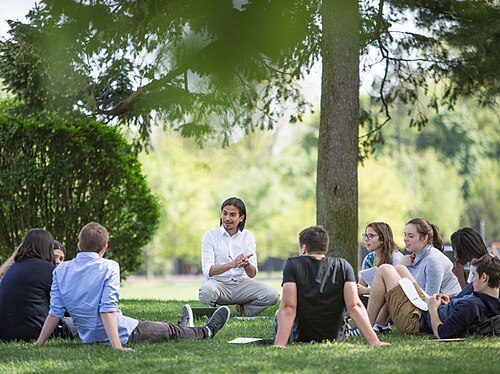
In this way, sports, arts, and creativity form not just extracurricular activities at Riverdale but a holistic environment where children discover their talents and find their own calling.
A New Exclusive Project in Singapore
June 2, 2025, marked an important milestone for international education. RD American School (RDAS)officially announced its launch in Singapore, opening applications for students from kindergarten through 12th grade. This school became the first private institution under a U.S. brand in the city, established in an exclusive partnership with Riverdale Country School.
The school plans to officially begin classes in January 2026, offering a modern, research-based curriculum. The campus in Changi Business Park was designed by architect Chung Le and features open, transformative spaces that encourage movement, exploration, and collaboration. This structure has been proven to enhance students’ attention, memory, and interaction.
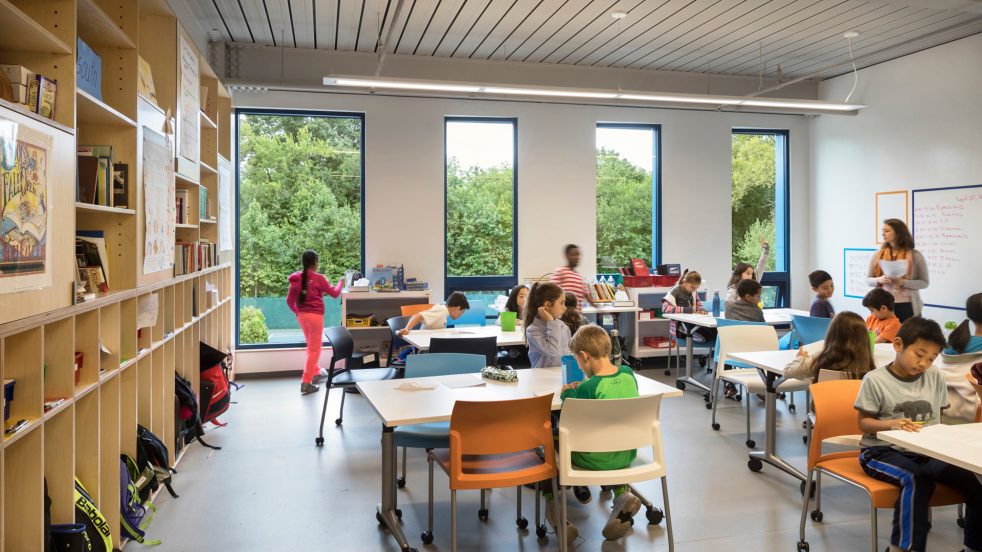
The RDAS faculty undergoes intensive training led by Dr. Kevin Mattingly, Riverdale’s Director of Teaching and Learning and an adjunct professor at Columbia University’s Teachers College. His team implements research-backed teaching strategies to ensure that every lesson is a deep and meaningful experience, helping students develop critical thinking, curiosity, and resilience.
“Riverdale is a school that constantly strives to help students achieve the confidence, competence, and commitment to make the world a better place. We are bringing that spirit to RD American School,” says Nathaniel Conard, Head of RDAS.
The school’s team brings together distinguished educators with leadership experience at top American independent schools. Together with expert support from Riverdale, they are creating a learning environment that prepares children not just for exams but for a life where every student can thrive, develop their talents, and feel their own value.