

An American educator, educational reformer, and talented administrator, Morris Meister left a profound mark on the history of two of the Bronx’s leading educational institutions. He became the founder and first principal of the prestigious Bronx High School of Science, and later headed the newly established Bronx Community College. Here’s more about the life and career of this distinguished educator on bronx1.one.
The Beginning of His Journey
Morris Meister was born on October 20, 1895, in the Polish town of Honitsa, to Harris and Jenny Meister. His childhood began happily, but at the age of seven, he experienced an adventure that could have been a movie plot.
In 1902, his mother sold their home and all their belongings to travel to America to join her husband, who had left a year earlier. But the journey proved dangerous. An unscrupulous agent used part of their money to bribe a guard at the German border and pocketed the rest. The family spent a week in the dark basement of a barrack, waiting for the right guard to come on duty. One night, with his mother holding his younger sister and Morris holding his three-year-old brother, they stealthily crossed a series of ditches. When the little boy started to cry, the hired guide hit him, and seven-year-old Morris, in a fit of rage, rushed to his brother’s defense. Even then, he felt the strength and the desire to help children. His mother and the children eventually made it to Germany and from there, they journeyed to New York.
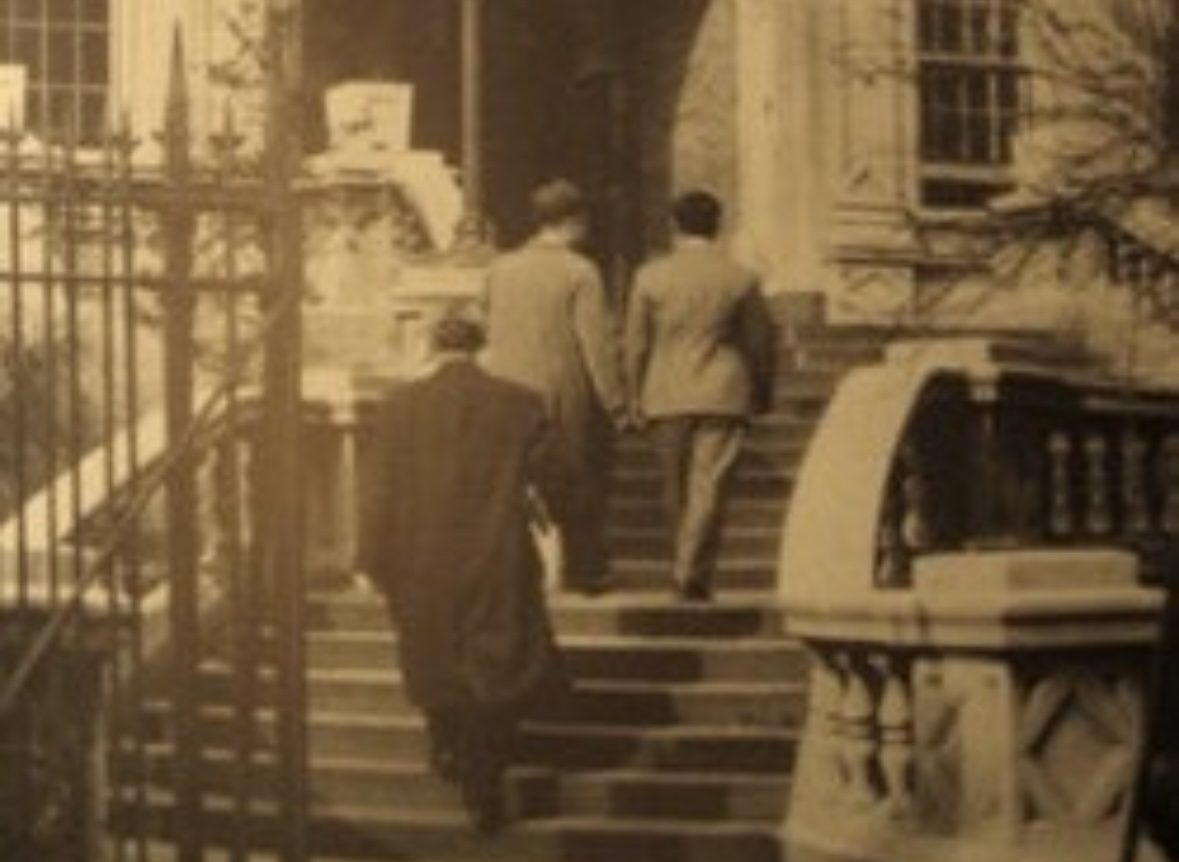
The family settled in the Lower East Side, where his father worked as a milliner. Morris attended public schools in the area and later enrolled at City College of New York, where he became a member of the Phi Beta Kappa honor society. Even then, his academic interests combined scholarly rigor with a practical approach. His 1921 doctoral dissertation at Columbia University was dedicated to the role of toys in the study of natural sciences.
Morris began teaching even before completing his degree. He taught science at well-known New York schools, including Stuyvesant, Speyer, and Horace Mann.
The Bronx High School of Science
By the late 1930s, Meister was the science supervisor for the New York City school system and had conceived of creating a specialized school for gifted students with a focus on mathematics and science. This vision came to life, and a new star appeared on New York’s educational map: the Bronx High School of Science. The school’s first home was an old building with Gothic gargoyles at the corner of Creston Avenue and 184th Street in Fordham. Its history was already rich: it had previously housed students from Evander Childs High School, then Walton, and later DeWitt Clinton. Some of the new school’s first faculty came from Stuyvesant. Meister had a knack for imbuing symbols with meaning. He chose the school colors himself: green for chlorophyll and gold for the sun, as both are essential for the “chain of life.” In 1946, Meister achieved a true breakthrough. The school became co-ed, admitting girls two decades before other leading specialized schools in New York. This wasn’t just a step toward equality; it was a signal that talent in science has no gender boundaries.
Twenty years after its opening, in 1958, Meister handed over the reins to his chosen successor, Dr. Alexander Taffel, and went on to build Bronx Community College. In 1959, the students ceremoniously moved to a new building on 205th Street. The structure impressed everyone: with its labs, technical studios, a spacious lobby, and a 62-foot Venetian glass mosaic. Under the gaze of Marie Curie and Charles Darwin, a quote from John Dewey shone brightly:
“Every great advance in science has issued from a new audacity of the imagination.”
Students jokingly called it the “science swimming pool,” claiming the mural was funded instead of the pool they were hoping for.
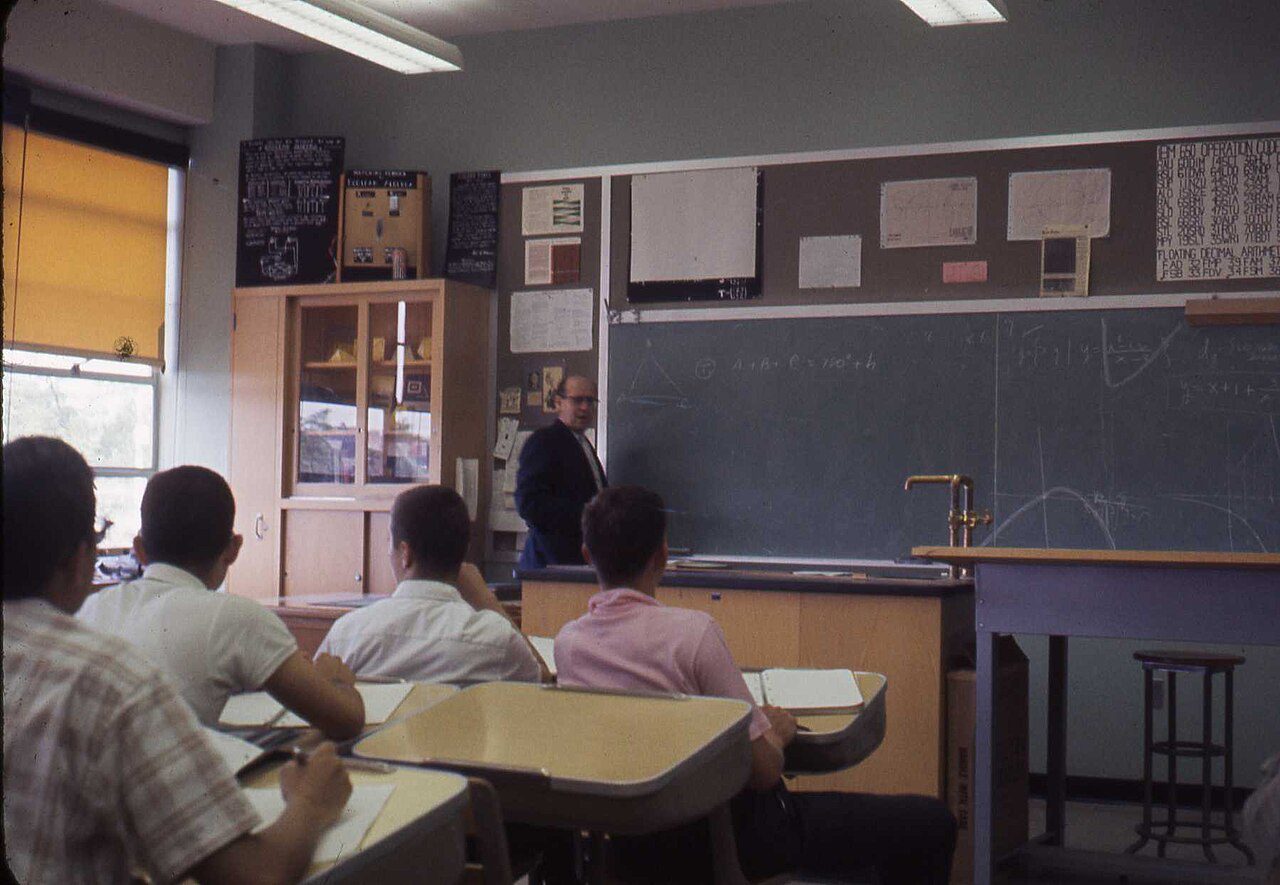
Over the years, the Bronx High School of Science became a talent forge. More than 95% of its graduates went on to higher education, and in terms of the number of graduates with doctoral degrees, the school was unmatched in the U.S. President John F. Kennedy called it a pioneering example of a program dedicated to developing talent in science and mathematics.
Bronx Community College
After Meister finally secured an expanded space for the Bronx High School of Science and passed leadership into reliable hands, he set a new goal: to fill the gap of the so-called “middle educational class.”
In 1966, the building that had previously housed the Bronx High School of Science became the home of Bronx Community College (BCC). Its first president was Morris Meister himself. He launched an initiative called “Operation Second Chance”—a two-year program aimed at the “middle 70 percent” of students, those who didn’t fit into either gifted or low-proficiency programs.
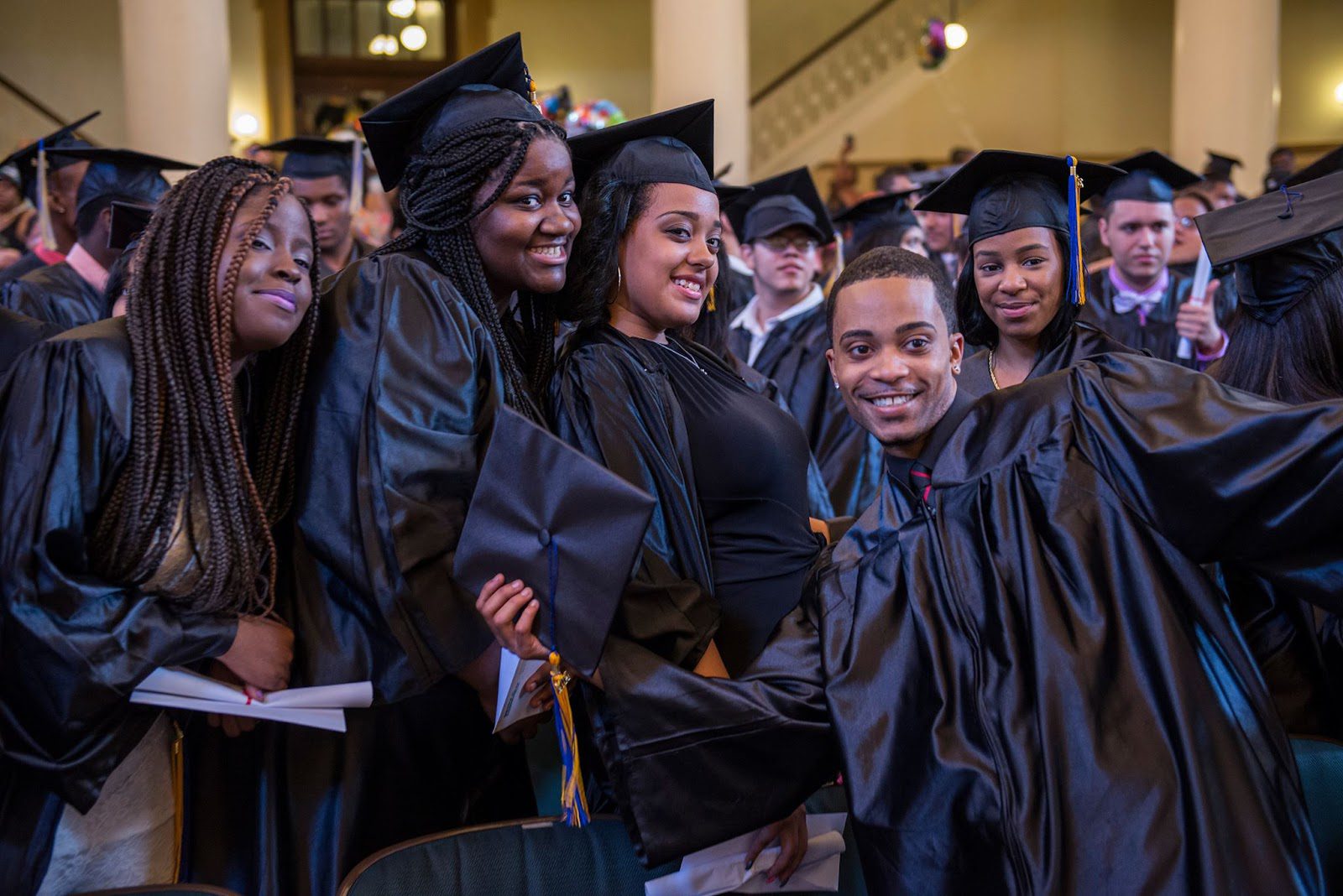
Meister believed that education should combine theory with practice, so he placed special emphasis on laboratory sessions and research. Under his leadership, the college grew rapidly—the number of students increased, curricula expanded, and the faculty was filled with new instructors. He created an atmosphere where academic rigor was combined with respect and openness.
Recognition and Legacy
The most striking confirmation of Morris Meister’s foresight came more than three decades after his work at Bronx Community College, when one of its graduates, Dr. Richard Carmona, was appointed U.S. Surgeon General by President George W. Bush in 2002. Carmona, a Puerto Rican American, had dropped out of DeWitt Clinton High School, served as a combat medic in Vietnam, earned his GED in the army, and after his service, earned an associate degree at BCC.

Another part of Meister’s legacy is the spirit of public service that became ingrained in the culture of the Bronx High School of Science and its alumni. Among them are U.S. Secretary of Defense in the Carter administration Harold Brown, Congressional Budget Office Director June Ellenoff O’Neill, Congresspeople Nita Lowey, Alan Grayson, and Donald Ritter, Assistant Attorney General for Civil Rights Bill Lann Lee, Ambassador to Austria Ronald Lauder, and federal judges Victor Marrero and Dora Irizarry. In New York, notable graduates include city comptrollers John Liu and Harrison Goldin, Columbia University President Michael Sovern, Parks Commissioner Henry Stern, astrophysicist Neil deGrasse Tyson, businessman and philanthropist Leonard Lauder, New York Public Library President Anthony Marx, and City Schools Chancellor Harold Levy.
During Meister’s leadership, the Bronx High School of Science also nurtured future scientific stars: five Nobel laureates in physics (Roy Glauber, Leon Cooper, Melvin Schwartz, Sheldon Glashow, and Steven Weinberg), Nobel laureate in chemistry Robert Lefkowitz, and six recipients of the National Medal of Science. His students not only reached global scientific pinnacles but also actively advocated for their civil and political beliefs.
As early as 1921, a section of Morris Meister’s doctoral dissertation laid the foundation for school science fairs in the U.S., and his textbook series, Science for a Better World, became official instructional materials in many school systems. During World War II, Meister developed special courses that prepared students for the technical and scientific demands of the wartime era. He was a co-founder and president of the National Science Teachers Association, and after retiring, he helped establish the New York Hall of Science in Flushing Meadows.
In his honor, two important places bear his name: the Meister Auditorium at the Bronx High School of Science and Meister Hall on the Bronx Community College campus, where a portrait of the doctor greets every visitor. It’s a reminder of a man who managed to transform education into a driving force in the lives of thousands of students.