

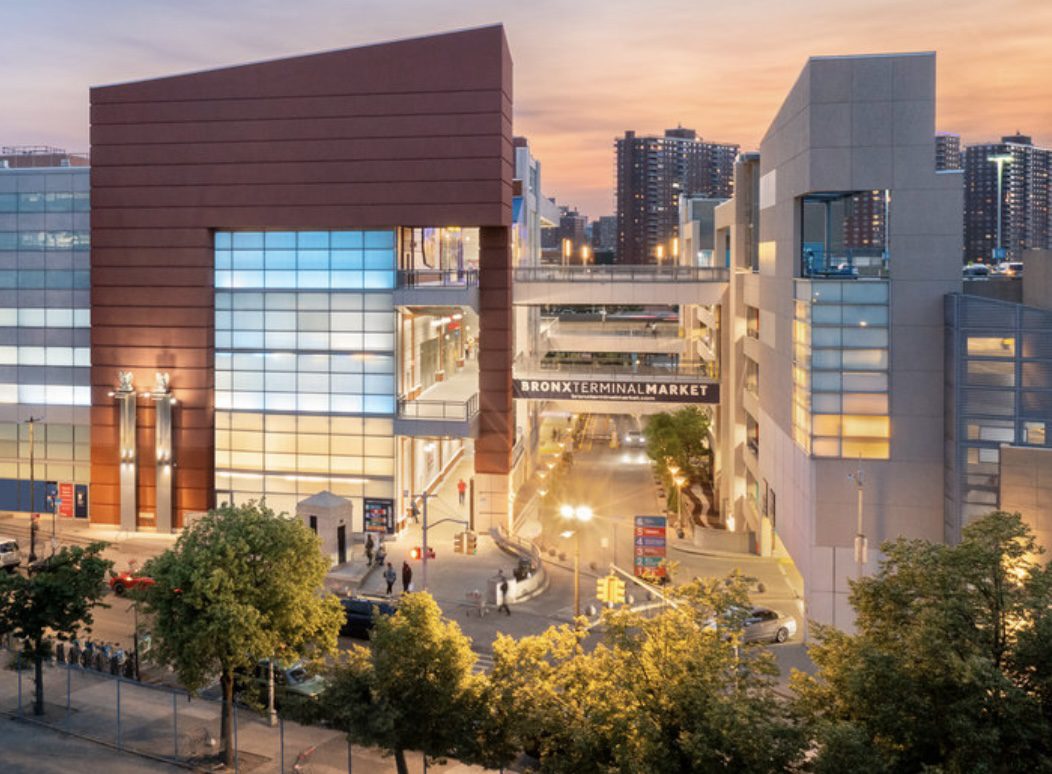
Bronx Terminal Market is a modern shopping center with a fascinating past. Back in the 1930s, it served as a bustling vegetable market for local farmers. Today, the landscape is entirely different. Instead of old warehouses, towering multi-story buildings with bright storefronts, cozy cafes, escalators, and well-known chain stores now stand. Visitors appreciate having everything in one place and often call Bronx Terminal Market one of the best shopping options in the Bronx. Read on bronx1.one to discover the history of this vibrant retail hub.
Historical Roots of Its Creation
The idea for Bronx Terminal Market first emerged in 1914 when Cyrus Miller, a former borough president, advocated for a centralized agricultural trading space. However, the project truly gained momentum during the tenure of legendary Mayor Fiorello LaGuardia. He initiated a program of municipal markets to provide street vendors with proper workspaces. Between October 1934 and May 1935, construction began just south of an unfinished structure, leading to a complex of small, two-story, light-yellow concrete pavilions that were both functional and minimalist. Architects Samuel Oxhandler, John Churchill, and Albert Lewis designed them.
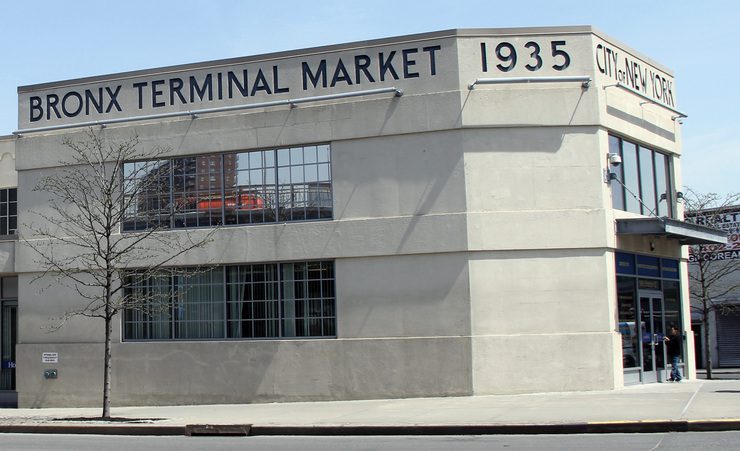
In 1936, the main market building, a small Cubist structure with a raised “Bronx Terminal Market” inscription on its facade, was erected on 149th Street. It was envisioned as a bank and hotel for farmers who came to sell their goods. Products arrived not only by truck but also by rail, with special barges transporting train cars directly to the market.
Over time, Bronx Terminal Market transformed into the largest wholesale market for Latin American produce in the U.S. Hundreds of merchants and over a thousand workers operated within its grounds. However, by the 1960s, the market began to decline as urban maintenance costs rose and infrastructure became outdated. To save the site, the Merchants Association approached developer David Buntzman. In 1972, he secured a 99-year lease and took over market management. Buntzman managed the market for over 30 years until 2004, when he sold his stake for $42.5 million after prolonged legal disputes with the city.
Adjacent to the market, another notable building once stood: the Bronx House of Detention, opened in 1937. Built as a Works Progress Administration project, it featured original Art Deco architecture. The jail closed in 2000 and was later demolished, but some architectural elements were preserved as a reminder of its past.
The Market’s Grand Transformation
A new phase in the transformation of Bronx Terminal Market began in August 2006. That’s when large-scale construction of a modern shopping complex started on its site.
The project, valued at $500 million, was completed in 2009 and blended contemporary architecture with elements of the historical development. Portions of the authentic stone masonry, including facade friezes, entrances, and the former jail’s guardhouse, were successfully preserved and integrated into the new infrastructure. Special attention was given to the Prow building, a V-shaped structure from the market’s past. It was restored, maintaining its original appearance and historical context.
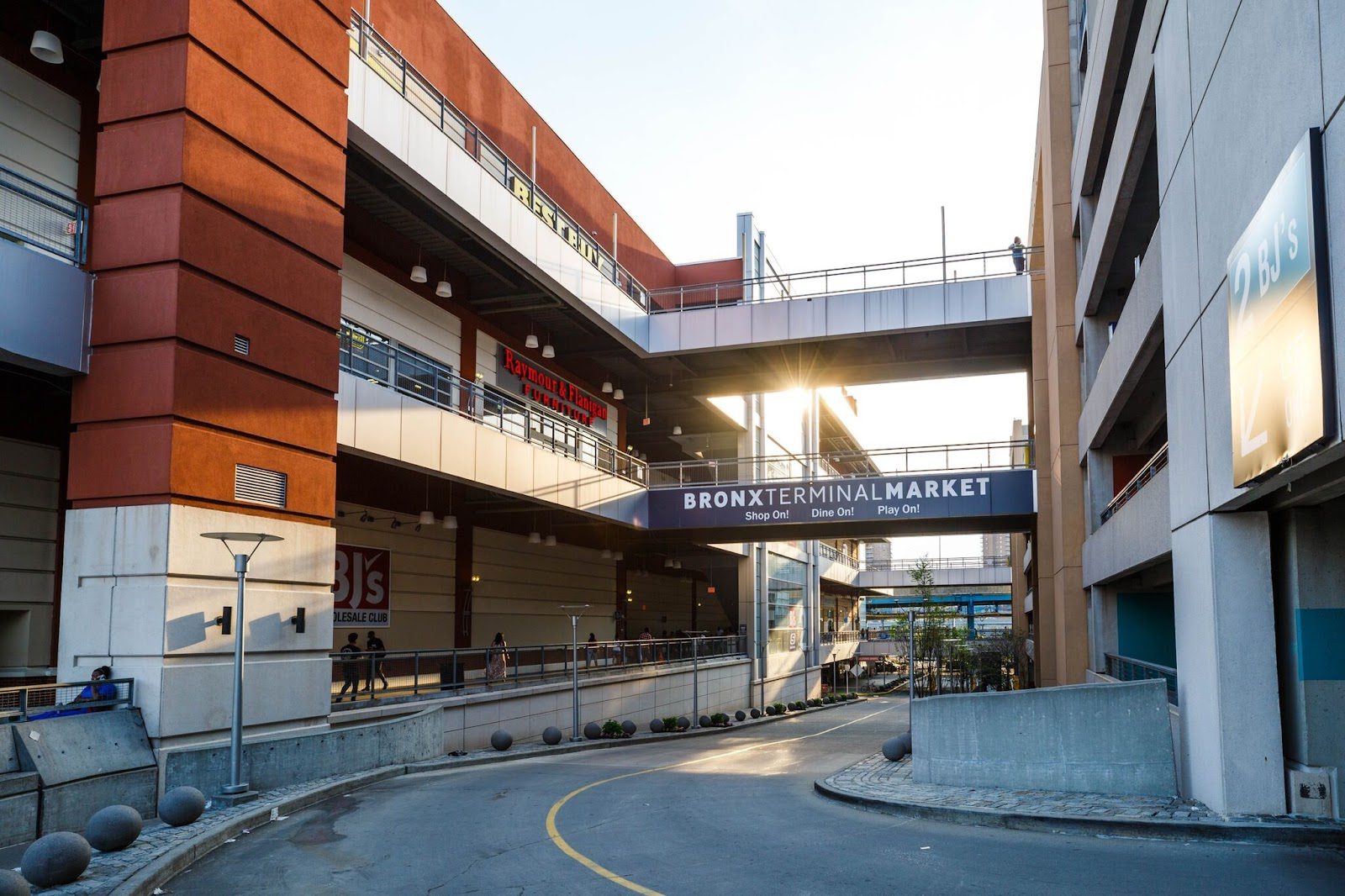
The shopping center features two large, multi-story buildings, each spanning 500,000 square feet, along with smaller structures for medium and small shops, cafes, and restaurants. The space was conceived as a convenient hub for residents of the Bronx and Upper Manhattan, boasting excellent transportation accessibility with nearby subway and bus stops, and direct access to Interstate 87.
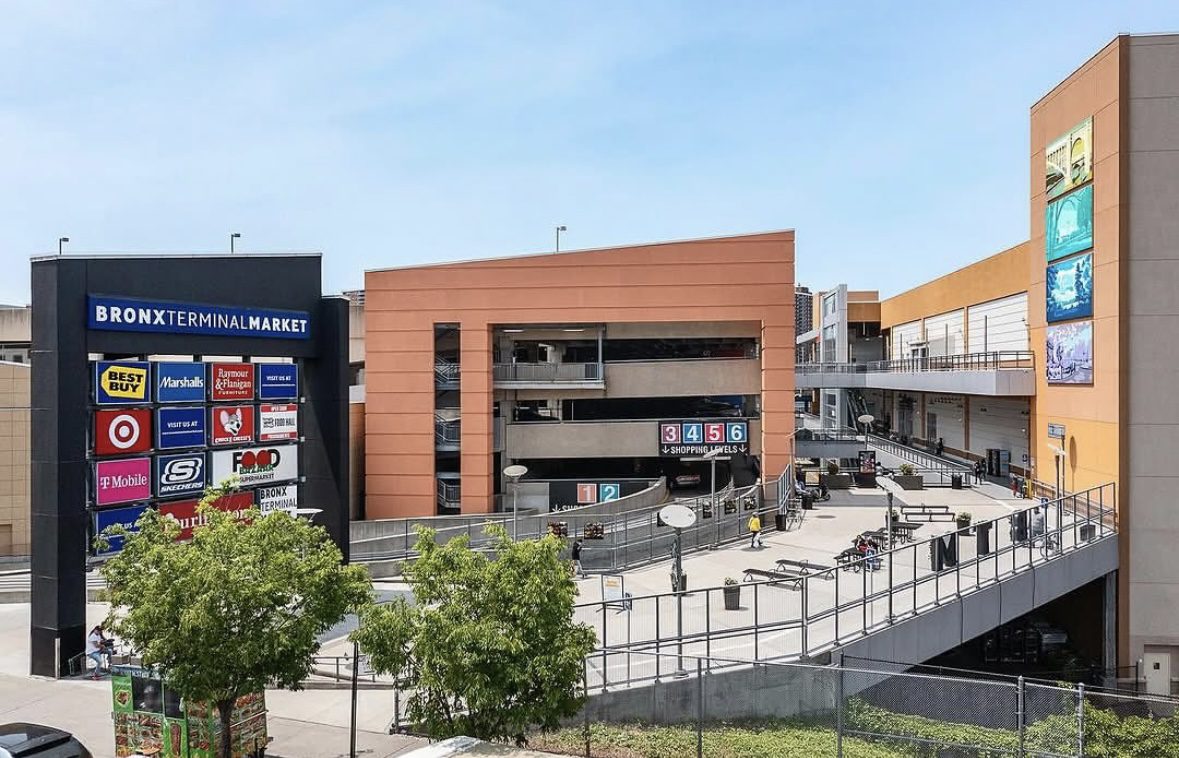
The Home Depot hypermarket was the first major tenant, opening on April 23, 2009. BJ’s followed on August 1, and the rest of the complex’s stores opened on September 12. Among the initial tenants were both large brands and smaller shops: Target, Best Buy, Marshalls, Raymour & Flanigan, Staples, Bed Bath & Beyond, Chase Bank, and a variety of restaurants. It also became home to the first Toys “R” Us “R” format supermarket in New York.
However, not all brands stayed long-term. In 2012, Staples announced a massive closure of 30 stores across the U.S., including its Bronx Terminal Market location, which ceased operations a year later. In June 2018, the Toys “R” Us store closed as part of a nationwide chain shutdown. However, by the fall, it was announced that Food Bazaar, a large supermarket, would move into its premises. Its opening was initially planned for spring 2019 but ultimately occurred in January 2020. This is now the largest supermarket in the entire Bronx.
That same year, the “Revolution of Hip Hop” museum space opened within the complex, serving as a preliminary location for the larger Museum of Hip Hop, slated to open at Bronx Point in 2026.
Today, Bronx Terminal Market is more than just a place to shop. It’s a vivid example of how an industrial area can be transformed into a modern urban space, blending commerce, culture, gastronomy, and history.
Project Challenges and Ongoing Issues
The realization of the Bronx Terminal Market project was a significant engineering challenge. Among the primary difficulties was the need to expand the exit ramp from the Major Deegan Expressway, which required substantial intervention in the road infrastructure. Additionally, all utilities along a 1,400-foot stretch of Exterior Street were completely updated, including the replacement of storm and sanitary sewers, water supply, gas lines, telephone networks, and electricity. The foundation for the highway expansion was laid from scratch. Simultaneously, the entire 16.5-acre site was cleaned and prepared for construction under the Brownfields program, coordinated by the U.S. Environmental Protection Agency (EPA) – a program that promotes the environmental revitalization of industrial and contaminated lands.
However, feedback regarding Bronx Terminal Market hasn’t always been entirely positive, with some visitors criticizing the technical condition of the infrastructure. Elevators frequently break down, and escalators stop at the most inconvenient times. Stair alternatives aren’t always convenient or accessible, especially for seniors or parents with strollers.
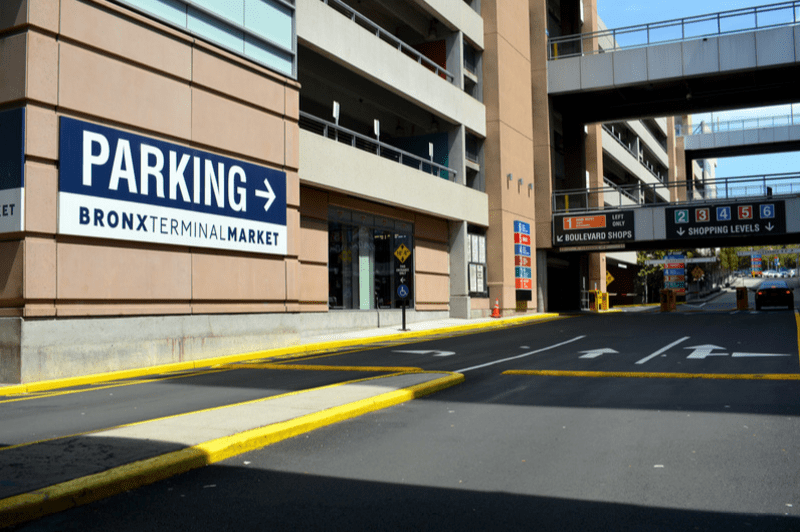
Another topic that sparks discussion is parking. While there’s ample space in the multi-level garage, it’s paid. Some consider $3-5 for a convenient location a reasonable price, while others are convinced it’s too much for the Bronx. Nevertheless, despite these drawbacks, Bronx Terminal Market remains a popular shopping destination – convenient, diverse, and dynamic.
Environmental Focus and Key Awards
The Bronx Terminal Market project stands as an example of modern urban renovation with an emphasis on environmental responsibility and sustainable development. One of its key elements was adherence to the principles of LEED certification – “Leadership in Energy and Environmental Design.” This commitment meant that construction was required to reuse as many materials as possible. The team successfully met this challenge: almost all brick and concrete from the old buildings were not discarded but rather transformed on-site into secondary aggregate. Thanks to specialized crushing equipment directly on the project site, a new construction resource – recycled concrete – was created and used in the new development.
This responsible approach to the environment did not go unnoticed. Bronx Terminal Market received numerous awards and recognitions from both the architectural community and public organizations. Notably, these include:
- The «Best Project» Award from New York Construction;
- The 2010 Impact Award for excellent planning;
- The 2010 Henry J. Muller Achievement Award for vision in the development of New York City;
- The 2010 Pinnacle Award for the best new construction in New York;
- A 2022 Certificate of Appreciation from Bronx Borough President Vanessa Gibson.
All these accolades are merely an external manifestation of what Bronx Terminal Market has become for the borough. It’s not just a shopping center but an example of how new life can be breathed into former industrial zones while preserving the historical identity of the place. Bronx Terminal Market offers more than just shopping and discounts; it’s a place where the spirit of urban transformation endures, from a farmers’ bazaar to a modern hub with stores for every taste.