

Casa Amadeo is a legendary music store in the South Bronx. As one of the most important hubs of Latin music culture in New York, its story began with the Puerto Rican Hernández family. Founded by Victoria and Rafael Hernández, the shop evolved into a unique cultural archive over the years. It intertwines the destinies of entire generations of musicians, rare vinyl records, instruments, and the rich traditions of the Latin American community. In this article on bronx1.one, we dive into the history of Casa Amadeo and its founding by the Hernández family. You will learn about the store’s role in the musical life of the South Bronx and the legendary artists connected to it. We will also talk about Mike Amadeo, who continued the family’s legacy and helped preserve New York’s unique musical heritage.
From Aguadilla to New York: The Musical Roots of the Hernández Family
The history of the Hernández musical dynasty begins in the Puerto Rican town of Aguadilla. Victoria, Rafael, and their brother Jesús were born into a modest family of Afro-Puerto Ricans who worked at a tobacco factory. Over time, music became more than just a hobby for all three—it became their life’s work.
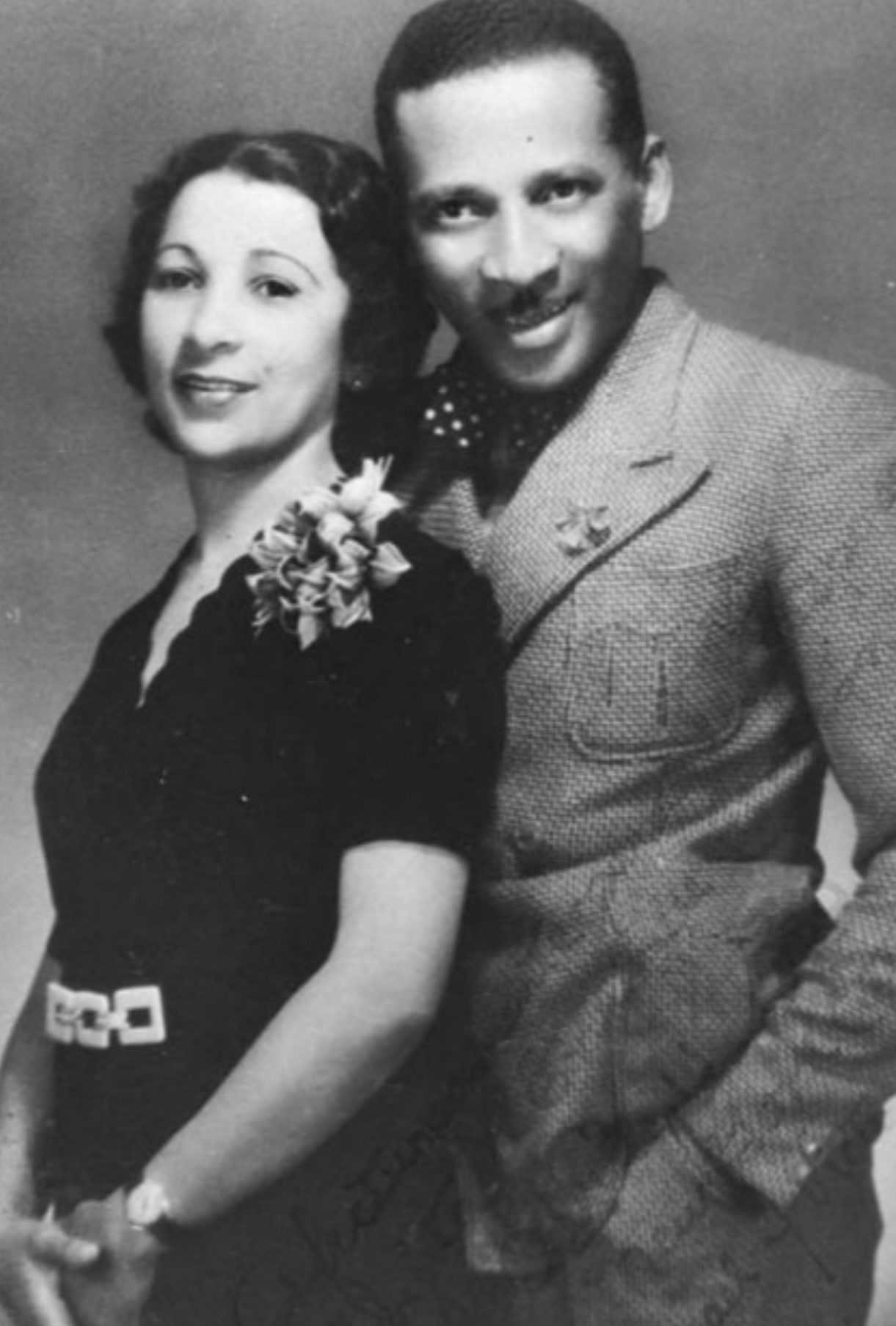
The most famous member of the family was Rafael Hernández. His musical career received a massive boost during World War I. Rafael played in the orchestra of the U.S. Army’s 369th Infantry Regiment, famously known as the Harlem Hellfighters. The ensemble was led by the prominent American conductor and composer James Reese Europe.
The Hellfighters’ orchestra became a true symbol of that musical era. While touring Europe, the musicians performed compositions that seamlessly blended military marches with the sounds of African American music, which was entirely new to European audiences. The performances of this band are often cited as one of the key factors that helped popularize jazz in Europe.
For Rafael Hernández, military service was not just a tour of duty, but a crucial stepping stone in his professional growth. After the war ended and he was demobilized, he moved to New York with his family.
In 1919, the Hernández family settled in a city that was rapidly transforming into the cultural capital of the United States. It was here that the musical talents of the siblings found new opportunities to flourish. Eventually, the family’s Puerto Rican roots naturally wove themselves into New York’s multinational cultural fabric.
Almacenes Hernández: East Harlem’s First Puerto Rican Store
In New York, Victoria Hernández worked as a seamstress in a factory while giving private piano lessons. In 1927, she opened the Almacenes Hernández store on Madison Avenue (between 113th and 114th Streets) in East Harlem. It became the first music store in the city owned by Puerto Ricans.
The store’s profits helped support the family and gave Rafael the financial freedom to fully dedicate himself to writing music. Playing the piano in the store’s back room, he composed many of his famous songs, which later made him one of Latin America’s most prominent composers.
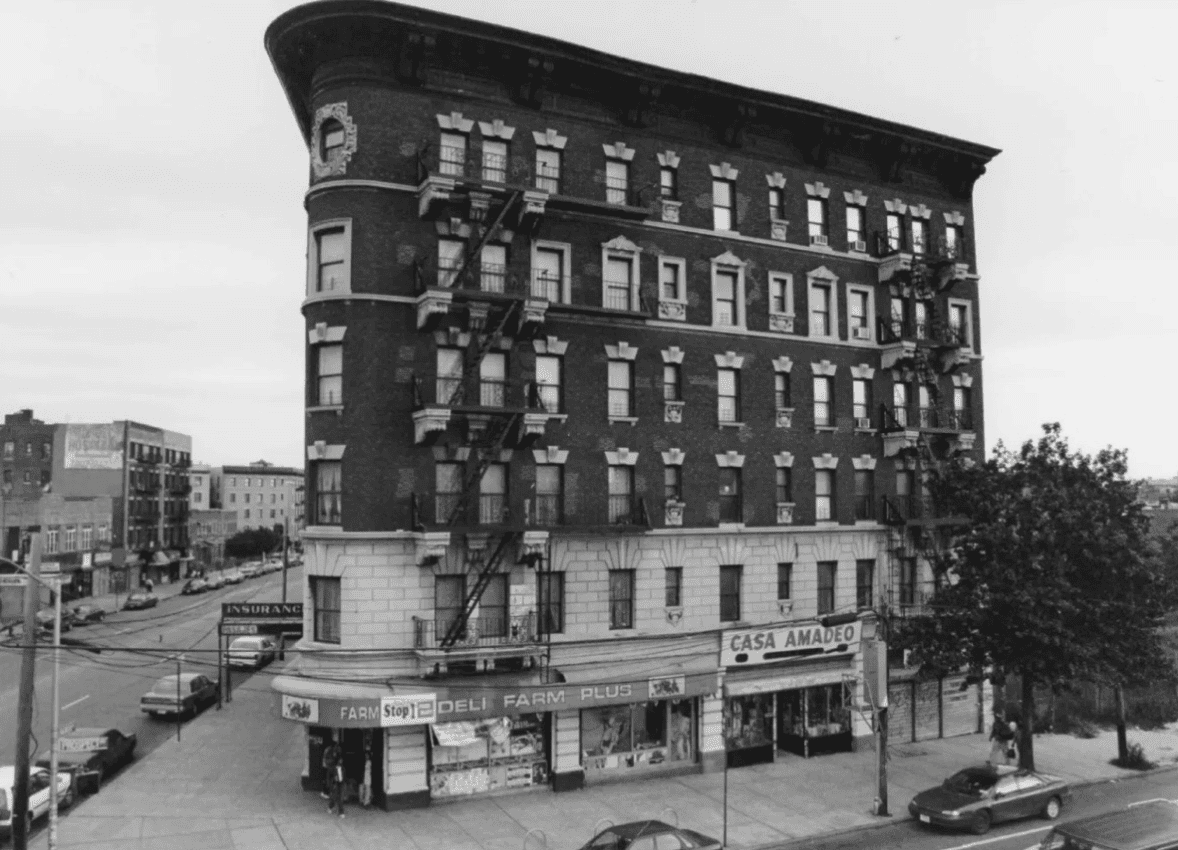
Victoria also continued to teach piano to local residents. One of her students was a young Tito Puente. In 1939, the siblings sold Almacenes Hernández to music producer Luis Cuevas.
Moving to the Bronx: The Founding of the Legendary Casa Hernández
After selling their first business, the Hernández siblings opened a second music store in 1941. Located in the Longwood neighborhood of the South Bronx, it was named Casa Hernández. The shop occupied the ground floor of The Manhanset, a neo-Renaissance residential building constructed in 1905. Victoria lived in this very building, and Rafael would stay there during his visits to New York.
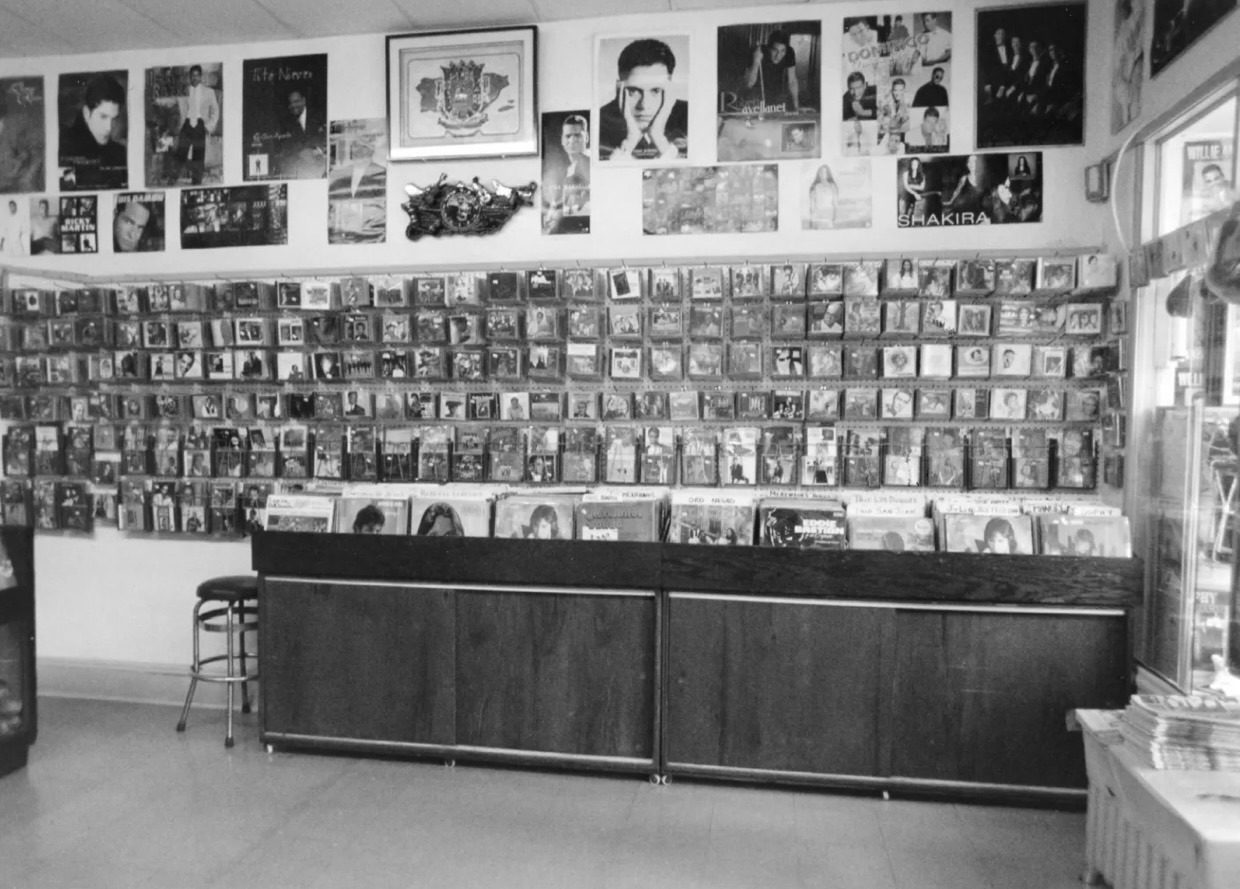
The opening of Casa Hernández happened just before a massive wave of Puerto Rican immigration to New York following World War II. The store quickly became the beating heart of the Latin American community. Newly arrived immigrants flocked here to listen to and buy records featuring familiar melodies from home. Through the store, musicians found work and built valuable connections with each other, record label reps, and concert venues. The establishment essentially served as an unofficial hub for the city’s entire Latin music scene.
Mike Amadeo and the New Era of Casa Amadeo
In 1969, a new chapter began in the music store’s history. Victoria Hernández sold it to musician and composer Miguel Ángel “Mike” Amadeo. For the new owner, this was more than just a business deal: he came from a well-known Puerto Rican musical family himself. His father was composer Alberto “Titi” Amadeo, a contemporary of Rafael Hernández.
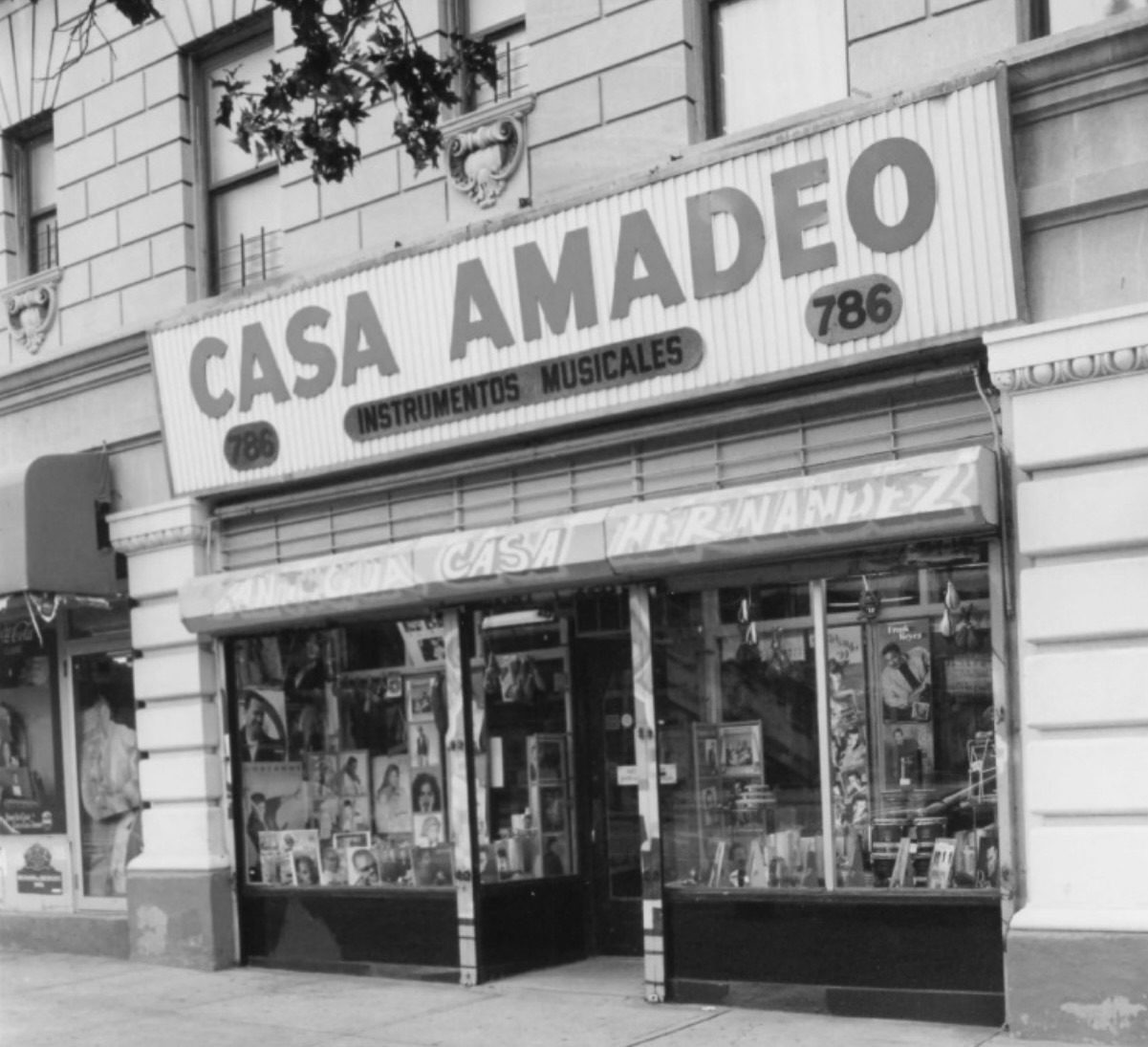
After taking ownership, Mike Amadeo changed the sign to “Casa Amadeo, antigua Casa Hernández,” which translates to “Amadeo House, formerly Hernández House.” As mentioned, the store was located in the historic 1905 Manhanset building. Thus, Casa Amadeo stood at the crossroads of multiple histories—Puerto Rican musical emigration, the Latin American culture of the Bronx, and New York’s architectural heritage. The transition of the store from the Hernández family to Mike Amadeo didn’t sever a long-standing tradition; rather, it breathed new life into it for the next generation.
Mike Amadeo kicked off his music career in 1954. He collaborated with famous labels like Alegre Records and Fania Records, working alongside prominent artists such as Héctor Lavoe, Eddie Palmieri, Charlie Palmieri, Tito Nieves, Juan Luis Guerra, La Lupe, and many others.
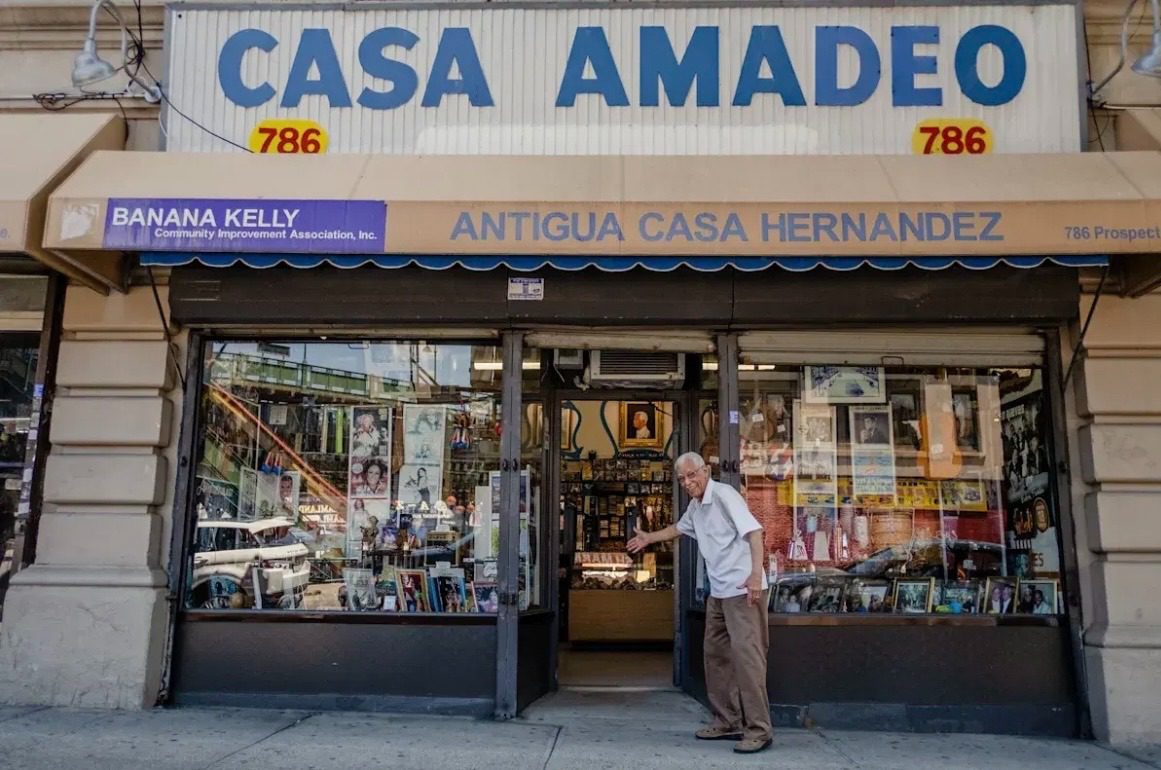
Mike is famous for his unique ability to identify the forgotten melodies his customers are looking for:
“Most of the time when people come into the store, they can’t remember the name of the song. They hum just a little line, and 80 percent of the time, I recognize it.”
In the 1970s and 1980s, the South Bronx became a national symbol of urban decay and relentless fires. Yet even in those dark times, Casa Amadeo remained a safe haven for local youth and musicians. Researchers note that while the borough was literally burning, the store served as a secure oasis, helping the younger generation stay connected to their native Latin music.
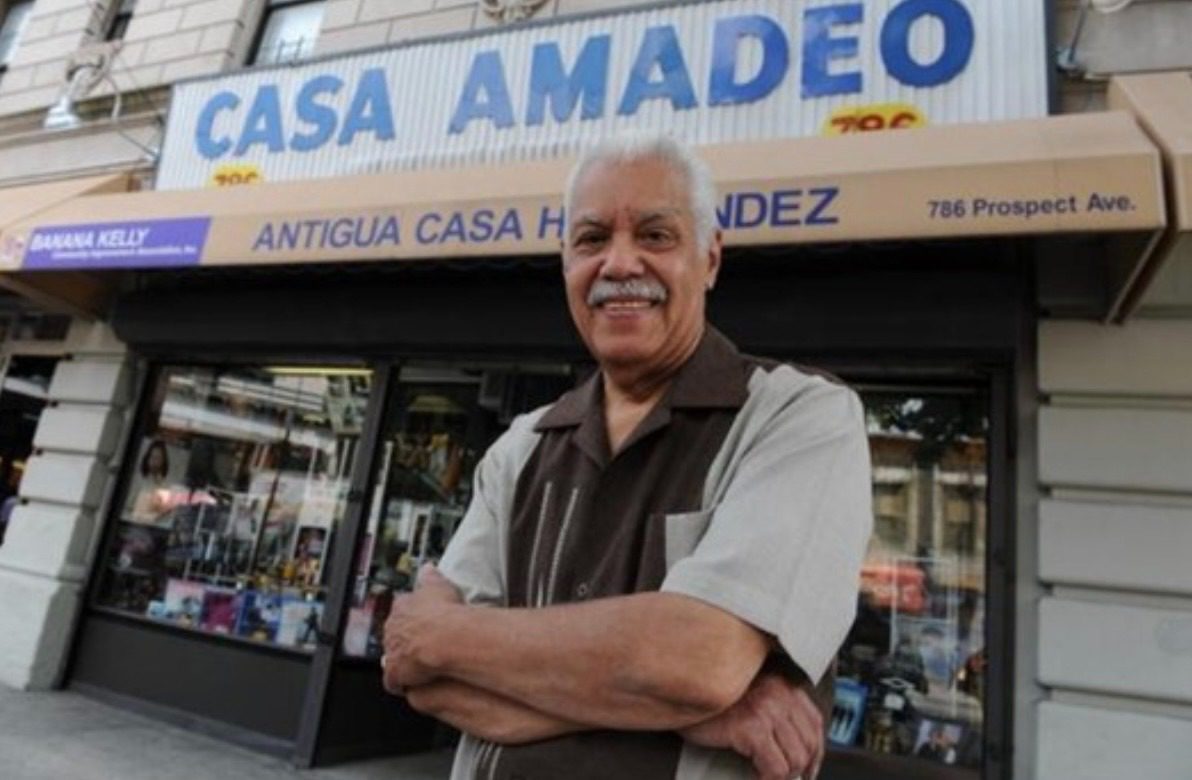
During the mambo era and the subsequent salsa boom, Casa Amadeo acted as an unofficial musical “archive.” Musicians searched here for rare tracks for their new albums, while music lovers found unique recordings from the days before mambo’s mainstream popularity.
Cultural Recognition and the Legacy of Casa Amadeo
Over decades of operation, Casa Amadeo evolved from a small music shop into a major cultural landmark of the Bronx. Its history is about much more than just selling musical instruments and vinyl records. It is a story of preserving the Puerto Rican musical tradition in New York. Thanks to this cultural significance, the building was officially added to the National Register of Historic Places in 2001.
It’s important to note that Casa Amadeo hasn’t turned into a museum frozen in time, disconnected from reality. The store lives alongside the local Latin American community and actively supports cultural initiatives. These include annual summer concerts of Latin music in the local park, which help keep the tradition of live performances alive and introduce it to new generations of listeners.
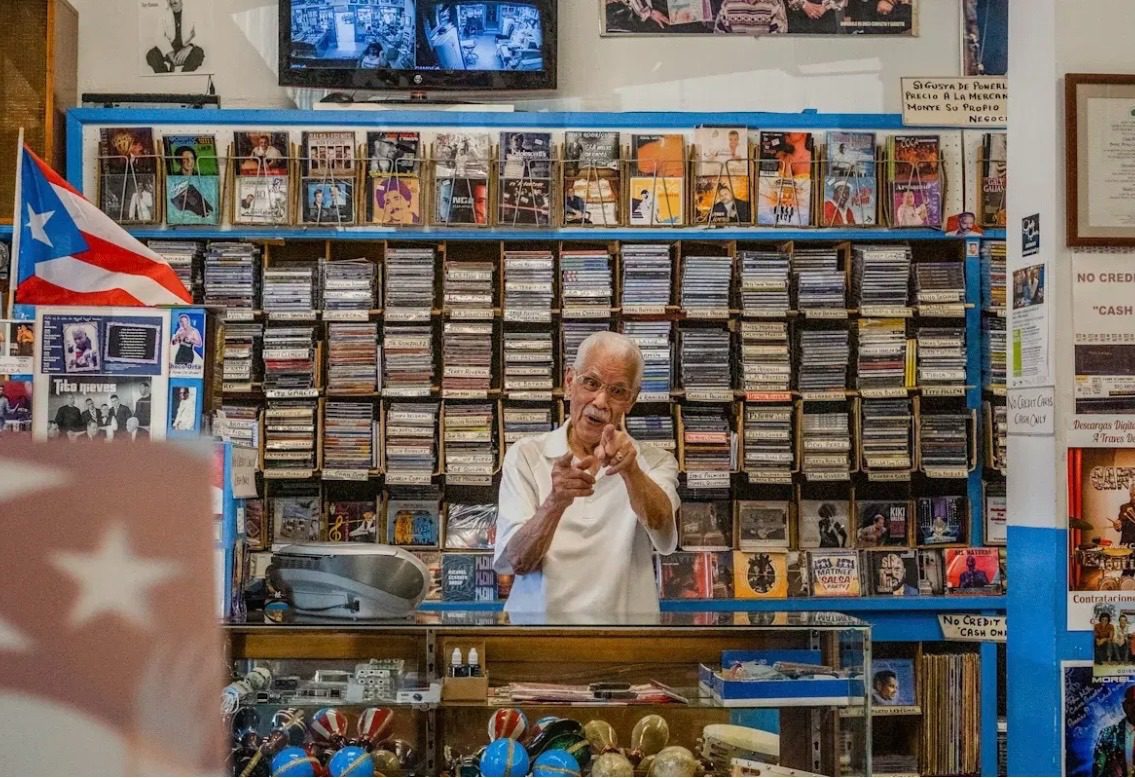
The physical space of the store holds just as much value. Casa Amadeo has carefully preserved its authentic interior elements, allowing visitors to see it almost exactly as it looked for decades. Here, history doesn’t gather dust in the form of old photos or archival documents—it remains a living, breathing part of everyday life.
This is precisely the phenomenon of Casa Amadeo. It is simultaneously a music store, a historic landmark, and a vibrant hub of Puerto Rican culture in New York. Its story is a shining example of how music helps people preserve their identity even far from their homeland, passing the memory of their roots from one generation to the next.