

Eli Broad is known worldwide as the businessman who twice built companies from scratch into Fortune 500 giants. Starting as a young, ordinary accountant who once taught classes at night, Broad transformed into a billionaire who left an indelible mark on U.S. business, politics, and cultural life. Broad also became a famous philanthropist, investing his wealth in art, education, and civic projects. Read on bronx1.one to learn more about this remarkable individual.
The Humble Accountant
Eli Broad was born on June 6, 1933, in the Bronx, to Rebecca and Leo, Jewish immigrants from Lithuania. His father worked as a house painter and also ran small “five-and-dime” stores, while his mother worked as a seamstress. When Eli was six, the family moved to Detroit—the city that became a true training ground for the future businessman.
Even as a teenager, Eli understood the value of hard work. He sold women’s shoes, went door-to-door selling garbage bags, and later worked on a drill press at the Packard Motor factory. In high school and college, he wasn’t afraid of any job, and this instilled the tenacity that would later lead to great success.
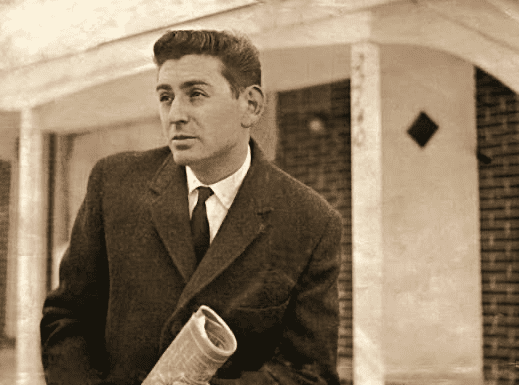
In 1951, Eli graduated from Detroit Central High School, and just three years later, he graduated from Michigan State University, where he studied accounting and economics. At just 20 years old, Broad passed the Certified Public Accountant exam for the state of Michigan, becoming the youngest person to do so at the time.
The Adventurous and Ambitious Entrepreneur
In the mid-1950s, young accountant Eli Broad was working in Detroit and just starting his career. He supplemented his income by teaching and even opened his own accounting firm. It was then that fate introduced him to Donald Kaufman, a relative of his wife who ran a small home construction business. Broad began handling his books, but he soon realized that the real money wasn’t in accounting reports, but in real estate itself.
He carefully studied the market, poured over professional magazines, and calculated financing schemes. In 1956, Broad decided to take a risk. He borrowed $12,500 from his wife’s parents and, with Kaufman, started a joint venture.
They developed a simple but revolutionary model home for young families: no basement, with a carport, built quickly, and at a lower price than competitors. The first homes cost $13,700. Sales took off after just one weekend—seventeen deals immediately. Within two years, they had built over 600 homes in the Detroit suburbs.
The success pushed the partners to seek new horizons. They went to Arizona, and then to California. In 1963, the company, named Kaufman and Broad (now KB Home), moved its headquarters to Los Angeles. It was the first homebuilder to go public, and later list on the New York Stock Exchange. KB Home gradually became one of the largest players in the U.S. housing market.
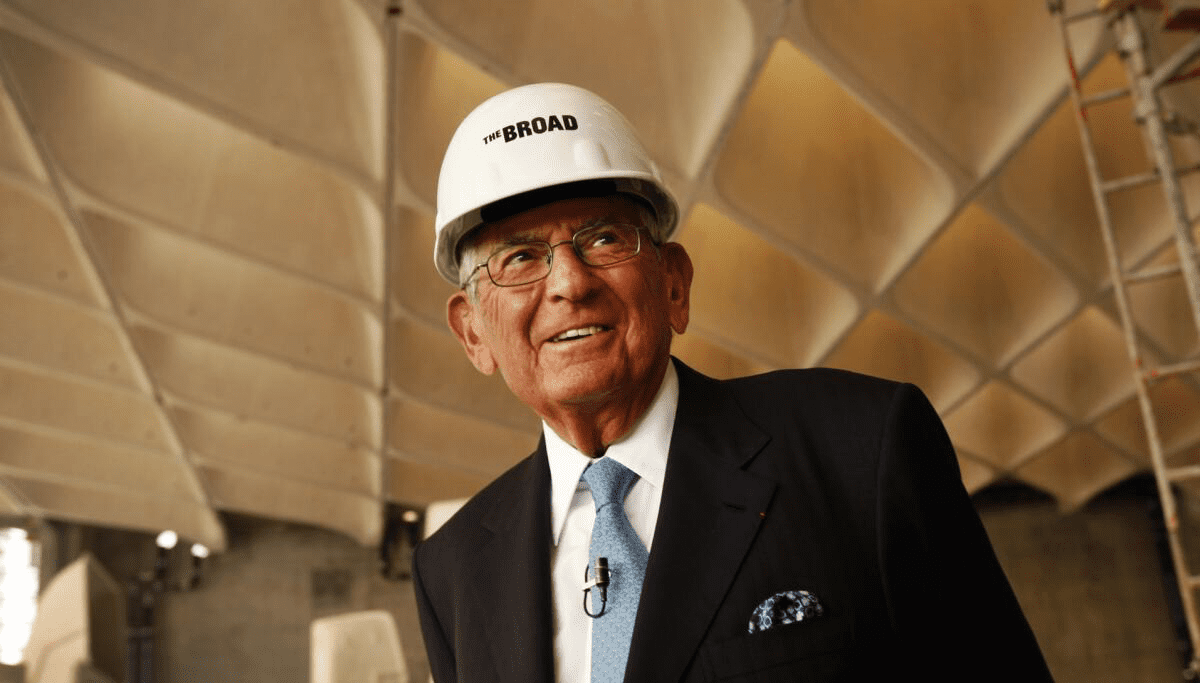
But Broad didn’t stop there. In 1971, he bought the Sun Life Insurance Company of America. Just as he had in construction, he immersed himself in the new field and saw enormous potential in financial products for future retirees. This led to the creation of SunAmerica, which specialized in annuities and retirement savings. It went public in 1989, and in 1998, Broad sold it to AIG for a record $17.8 billion.
By that time, Eli Broad had become one of America’s wealthiest individuals, with a net worth estimated in the billions. He earned a reputation as an uncompromising and goal-oriented businessman who wasn’t afraid to take risks.
“If you play it safe all the time, you’re not going to go very far,” Broad often repeated.
A Legacy of Generosity
Eli and Edythe Broad never viewed wealth merely as a personal privilege. For them, it became a tool for creating a better future. Together, they founded two institutions—The Eli and Edythe Broad Foundation and The Broad Art Foundation. Through these organizations, the couple donated over $5 billion to support education, science, medicine, and culture.
In science, the Broads thought big. They invested hundreds of millions in genomics, biomedical research, and the search for new treatments for diseases. The most notable partnership was with Harvard and the Massachusetts Institute of Technology. In 2003, the couple donated $100 million to create the Broad Institute. Its goal is to unlock the secrets of the human genome and make discoveries accessible to scientists worldwide. Over two decades, the Institute’s funding exceeded a billion dollars.
Their attention also focused on stem cell research. With the couple’s support, powerful scientific centers emerged in California. The Broad medical research program helped scientists develop new methods for preventing and treating inflammatory bowel diseases, collaborating with international foundations.
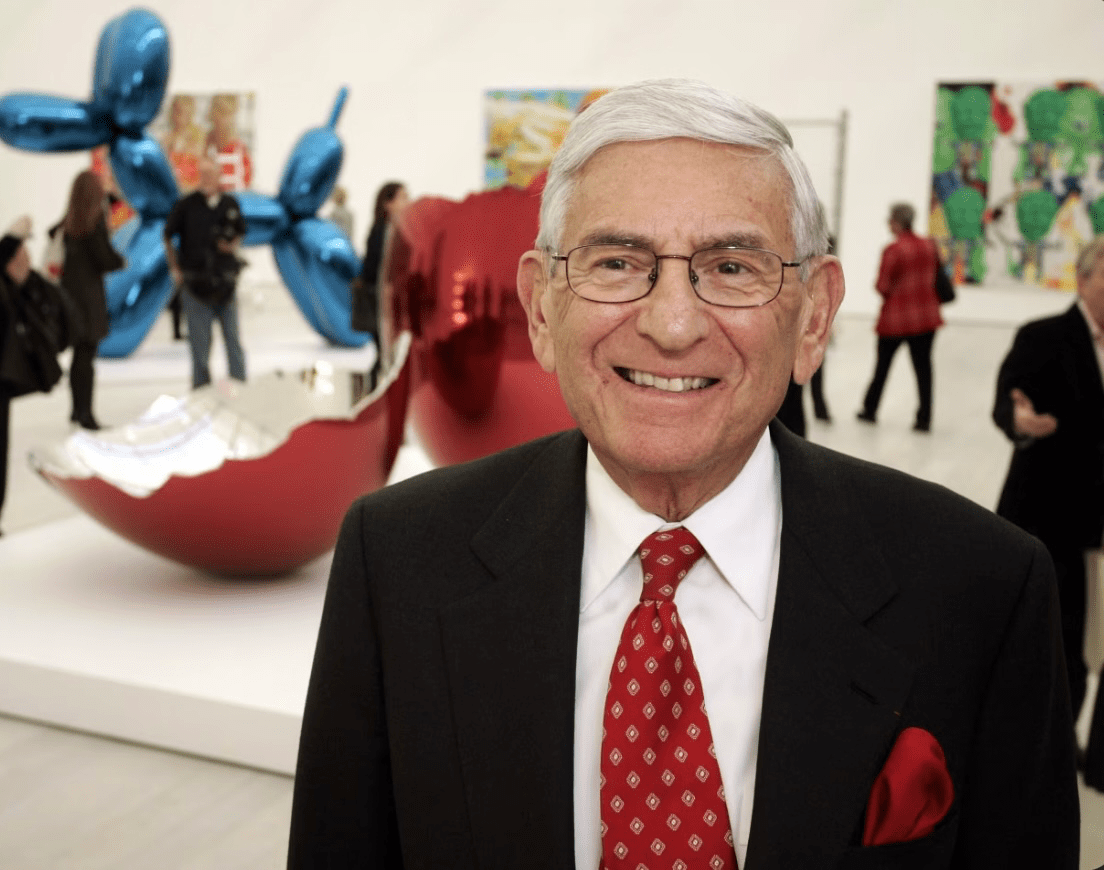
At the same time, Eli and Edythe invested heavily in education. They supported the California Institute of Technology, funding scholarships and laboratories, as well as their alma mater, Michigan State University. There, they founded the business school and the art museum, designed by legendary architect Zaha Hadid.
But the Broads’ philanthropy was most visibly demonstrated in culture. They believed that a great city is impossible without art. Eli co-founded the Museum of Contemporary Art in Los Angeles, and later the couple funded the construction of the Walt Disney Concert Hall, designed by Frank Gehry. In 2015, they opened their own museum, The Broad, which quickly became one of Los Angeles’s main artistic attractions, drawing millions of visitors.
The Broads didn’t just fund museums or universities—they reshaped the face of Los Angeles, made science and culture accessible, and made education more promising.
“Eli Broad was the most consequential private citizen in Los Angeles of his generation,” said Los Angeles Mayor Eric Garcetti. “He loved this city as deeply as anyone I’ve ever known.”Their legacy is not just art collections or new buildings. It’s an entire philosophy: wealth should work for society, not just the owner.
Passions, Recognition, and Legacy
Eli Broad was a man who thought big—in business, art, and public ideas. Financial success was merely the starting point; Broad aimed to leave his mark on the world through his ideas, books, art collections, and civic initiatives.
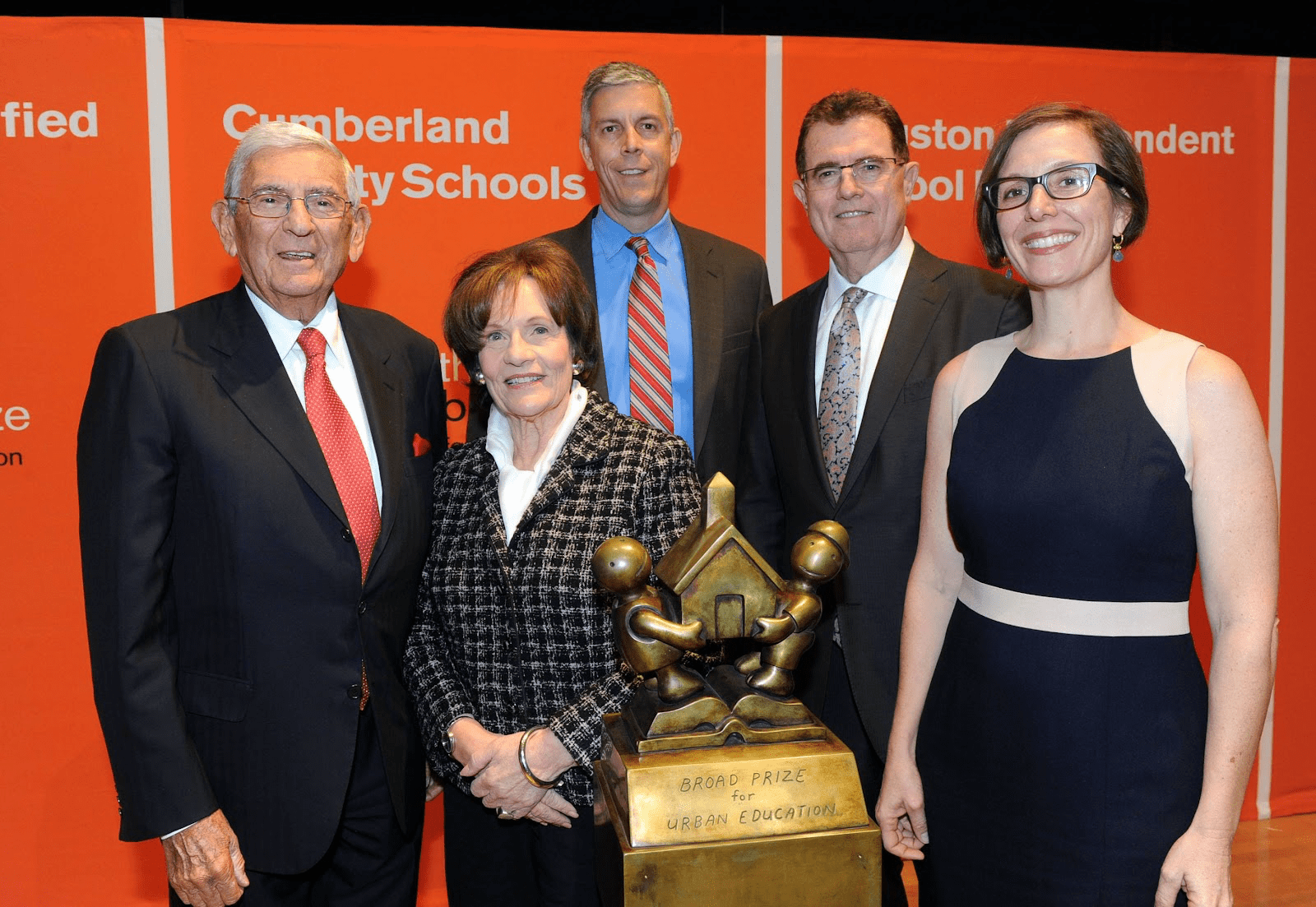
In 2012, his book The Art of Being Unreasonable: Lessons in Uncommon Thinking was published and quickly became a bestseller. In it, Broad urged people to think outside the box, take risks, and look for new paths where others only see problems.
Eli Broad’s influence extended far beyond business. As a Democrat, he held sway in politics, organizing the Democratic National Convention in Los Angeles. But he didn’t hesitate to support Republicans if he saw merit in it. He also openly spoke out on public issues. In a 2019 op-ed for The New York Times, Broad called for taxing the rich, emphasizing that economic inequality undermines the soul of the country. He wrote the piece titled:
“I’m in the 1 Percent. Please Raise My Taxes.” In the article, Broad explained: “It is time for those of us with fortunes to step up and pledge to reduce the income inequality that distorts our society, starting with a demand to be taxed at a higher rate than everyone else.”
Art held a special place in Eli Broad’s life. He and his wife began collecting in 1973 with the purchase of a Van Gogh drawing, Cabins at Saintes-Maries. Over time, the collection grew to nearly 600 works in his private collection and over 1,500 in The Broad Art Foundation, including pieces by Picasso, Matisse, Miró, and other masters of postwar and contemporary art.
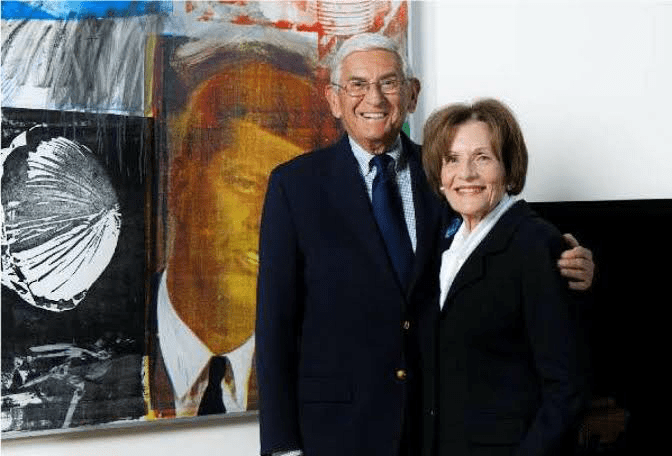
Broad’s personal life was marked by an appreciation for architecture and design. In the 1990s, he and Edythe commissioned a house in Brentwood designed by Frank Gehry, and they built a beachfront house of over 5,000 square feet in Malibu designed by Richard Meier. This passion for aesthetics was combined with a drive for innovation and comfort in every aspect of life.
Eli Broad died on April 30, 2021, at the age of 87 in Los Angeles after a long illness. He is survived by his wife and sons Jeffrey and Gary.
During his lifetime, Broad received numerous honors. He was a member of the American Academy of Arts and Sciences, a Chevalier of the French National Order of the Legion of Honor, and a recipient of the Carnegie Medal, the David Rockefeller Award, and other international accolades. In 2016, Time magazine included him in its list of the 100 Most Influential People in the World.
Eli Broad left a legacy not only as a businessman but also as a thinker, collector, innovator, and inspirer. His life demonstrates that true success is measured not only by wealth but by the ability to change the world around you.